Our Solar System
A lot of people think deep-sky objects - galaxies, nebulae, star clusters - are the main attraction in amateur astronomy. They’re not wrong. Those objects are spectacular when you finally track them down under dark skies. But here’s what beginners often overlook: some of the most rewarding targets in the night sky are right here in our own neighborhood. Planets, the Moon, asteroids, comets - these are objects you can actually see change and move. They’re dynamic. They’re close. And they show real detail even in small telescopes.
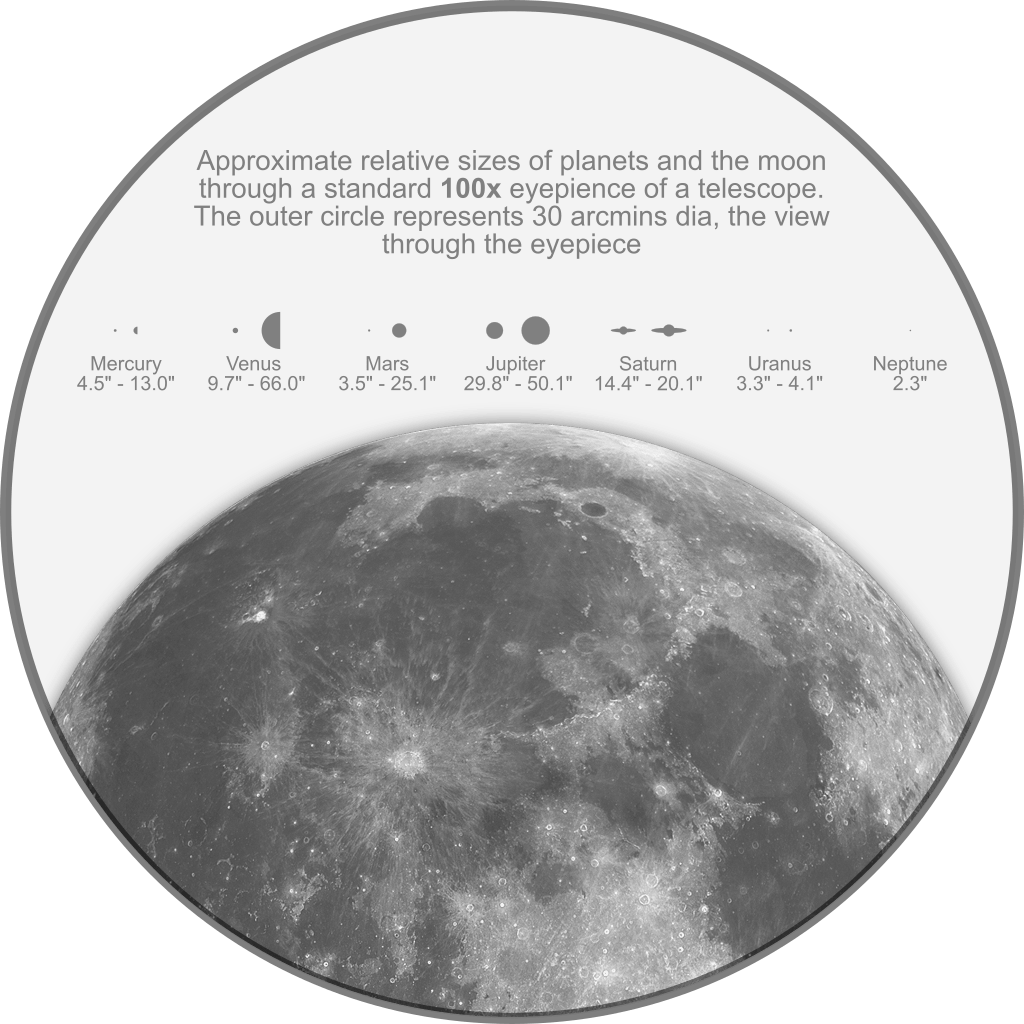
Galaxies millions of light-years away look like faint gray smudges. But Saturn’s rings? Jupiter’s cloud bands? The craters and mountains on the Moon? Those are right there, sharp and clear, looking almost three-dimensional through the eyepiece.
This section covers the major objects in our solar system that you can observe as an amateur - everything except the Sun (which requires specialized equipment and safety precautions we won’t cover here). We’ll talk about what you can realistically see, when to observe each object, and what makes them interesting.
The solar system is where most observers get hooked. You point your telescope at Jupiter, and suddenly you see four tiny moons lined up on either side - the same moons Galileo saw in 1610. You realize you’re looking at actual worlds orbiting another world in real time. That moment shifts something in your perspective.
Unlike deep-sky objects that require dark skies and large apertures to see well, solar system objects are bright. You can observe them from light-polluted cities. You can see impressive detail with modest equipment. And you don’t need to spend hours hunting for them - planets are easy to find once you know where to look.
The downside? Solar system objects are constantly moving. A galaxy sits in the same spot year after year. Planets wander through the constellations, changing position night by night. Some are only visible at certain times of the year. Others disappear behind the Sun for months at a time. You have to plan observations around their orbital positions.
But that’s also what makes them exciting. The sky isn’t static. Jupiter’s moons rearrange themselves every night. Saturn’s rings change their tilt over the years. Mars goes from a tiny orange dot to a respectable disk and back again as it moves closer and farther from Earth. There’s always something new to see.