NGC 2261
4-8 inch Telescope • Variable Nebulae
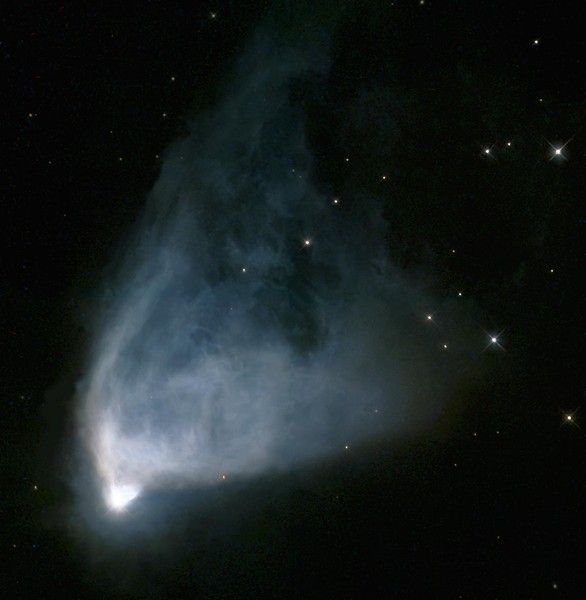
Image: NASA and The Hubble Heritage Team (AURA/STScI)
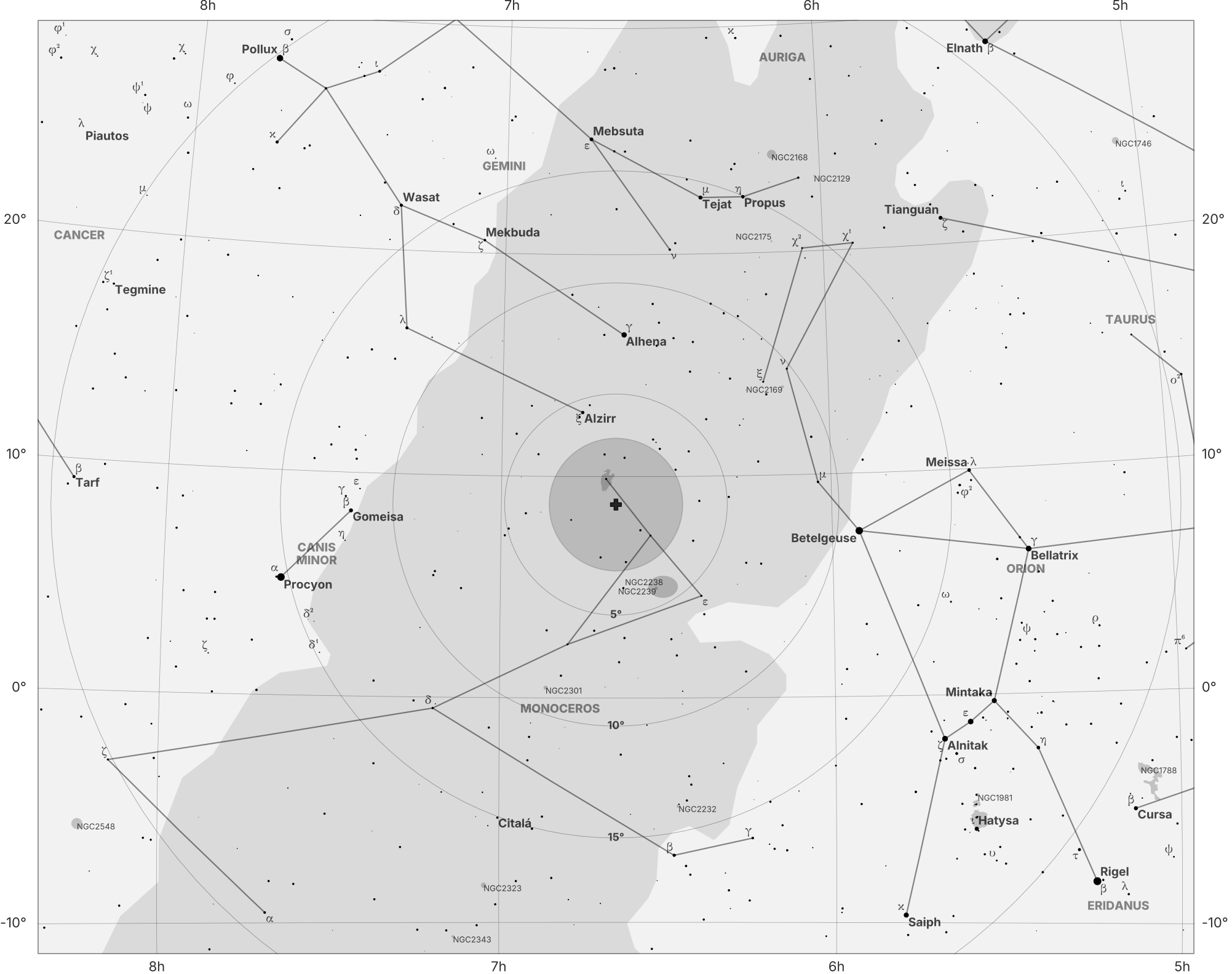
Finder map for NGC 2261
NGC 2261 has historical significance as one of the first recognized variable nebulae and was closely studied by Edwin Hubble, contributing to early understanding of changing nebular illumination. Best observed near culmination, when it is highest in the sky, to improve contrast and make its small, comet-like form easier to detect. Its challenge lies in detecting the small, fan-shaped glow and noticing gradual changes in brightness and overall appearance over weeks or months, rather than dramatic night-to-night variation.
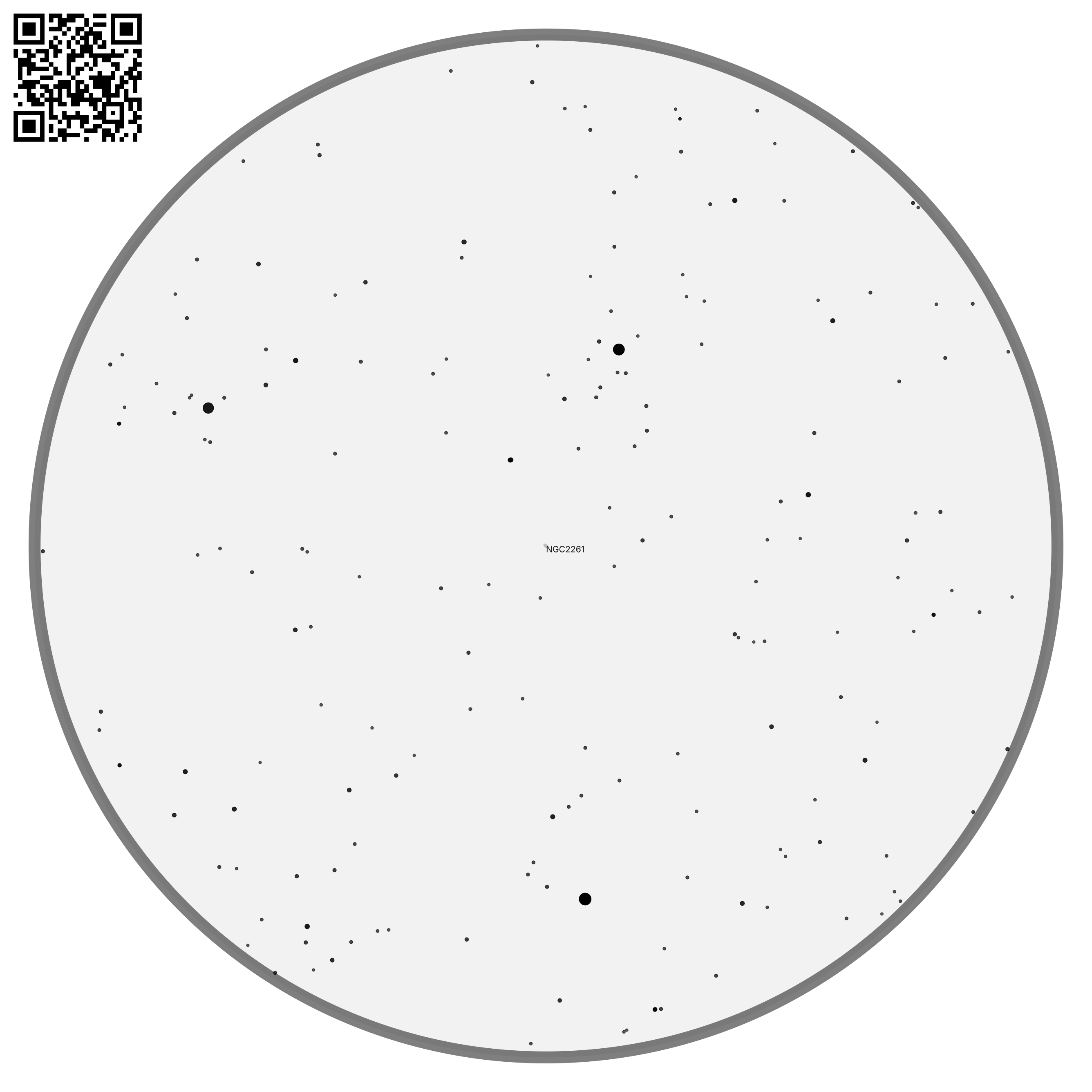
Finder scope & binocular view of NGC 2261
| Property | Value |
|---|---|
| Common names | Hubble’s Variable Nebula, Caldwell 46 |
| Catalog names | C 46, NGC 2261, LBN 920, Ced 83 |
| Type | Young Stellar Object |
| Subtype | Herbig Ae/Be Star |
| Coordinates | 6h 39m 09.95s, +8° 44’ 09.54” |
| Season | December - February |
| Best month | January |
| Beginner friendly | No |
| Visual reward | Low |
| Filters required | None |
| LP tolerance | Low |
| Minimum equipment | Medium telescope |
| Optimal equipment | Medium telescope |
| Magnitude | 9.0 |
| Size | 3.0 arcminutes x 1.0 arcminutes |
| Constellation | Monoceros |
Observation Notes
Naked Eye
Not visible.
Binoculars
Generally not detectable; at best may appear stellar and indistinguishable from a faint star in very large binoculars under pristine, dark skies.
Small Telescope
In 4–6 inch apertures under dark skies, appears as a very small, faint, comet-like smudge with low surface brightness. The fan-shaped form is difficult to discern and requires averted vision.
Medium Telescope
With 8–12 inches, the characteristic fan or cometary shape becomes more apparent, tapering away from the brighter apex at the southern end where R Monocerotis is located. The nebula remains diffuse with soft edges.
Large Telescope
In apertures of roughly 14 inches and larger under excellent conditions, subtle unevenness in brightness and gentle darkening within the fan may be suspected with careful observation, reflecting the nebula’s variable nature; all internal detail remains low contrast and seeing-dependent.