NGC 6960
4-8 inch Telescope • Supernova Remnants
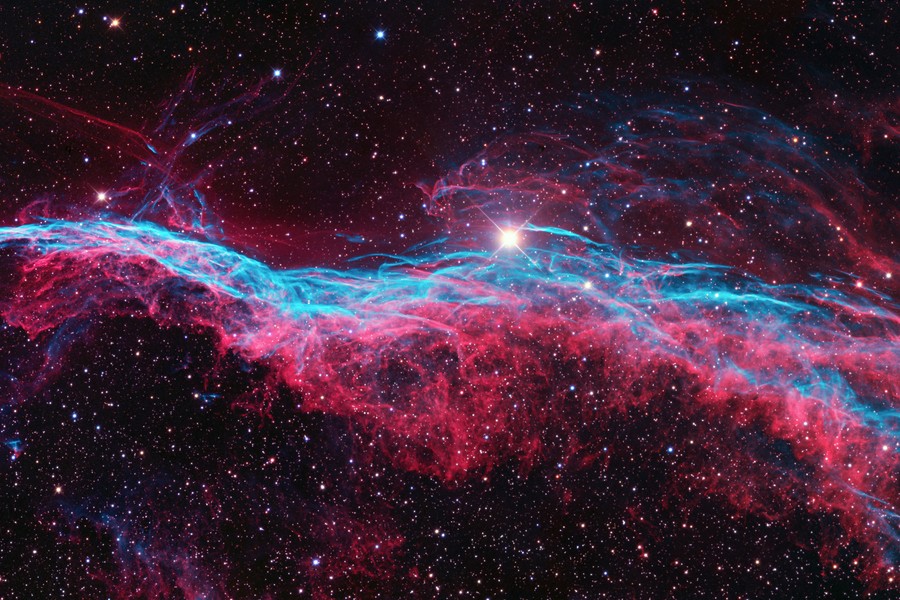
Image: Ken Crawford
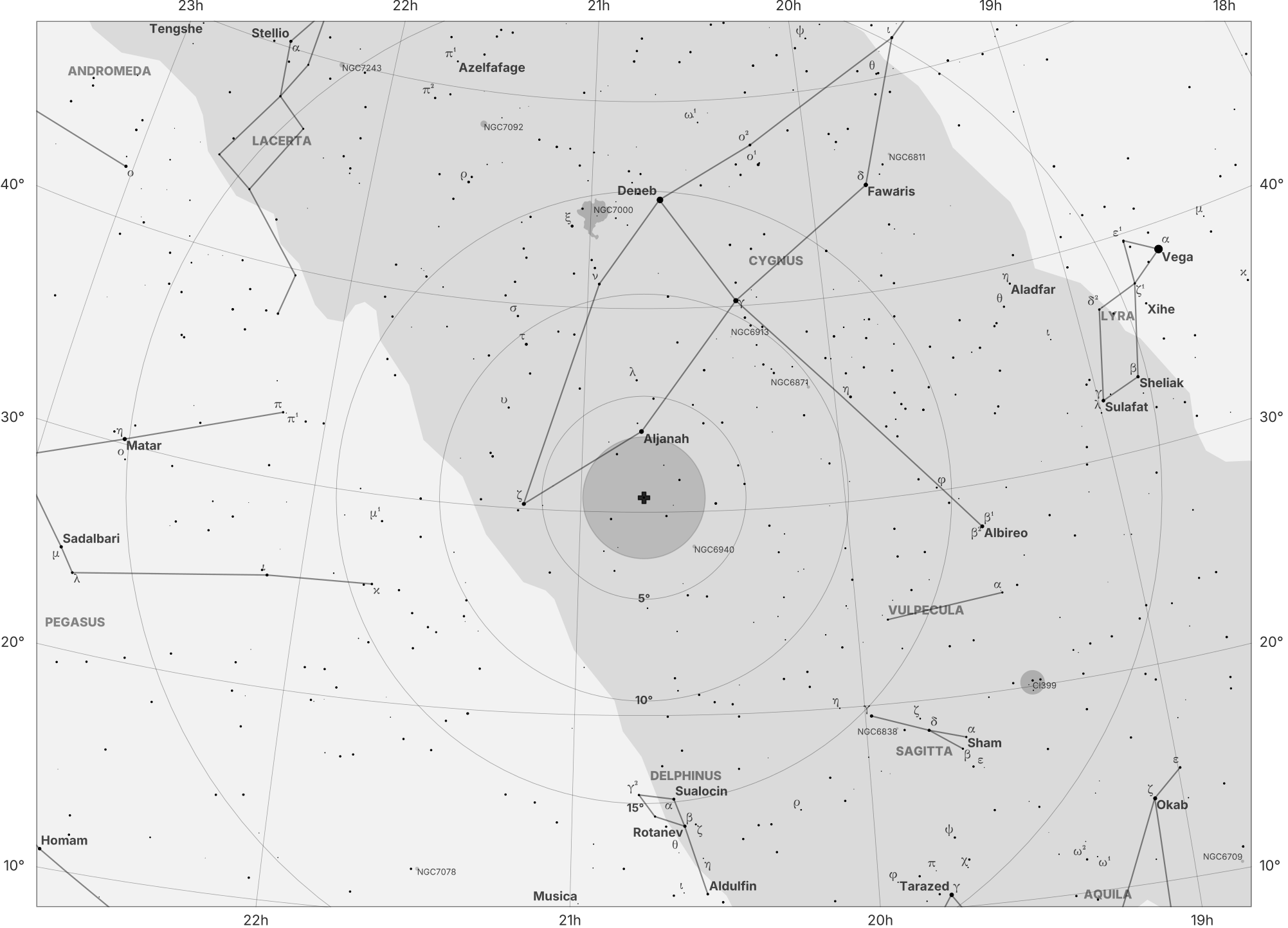
Finder map for NGC 6960
Popularly known as the ‘Witch’s Broom Nebula’ due to its evocative shape. It is a classic and highly sought-after target for amateur astronomers and astrophotographers. Best viewed when high in the sky (above 40° altitude) to minimize atmospheric extinction, which is critical due to its low surface brightness. Its very low surface brightness makes it highly sensitive to light pollution. The nebula’s large angular extent means it is best explored with low magnification and wide-field eyepieces, often by sweeping along its length rather than viewing it all at once.
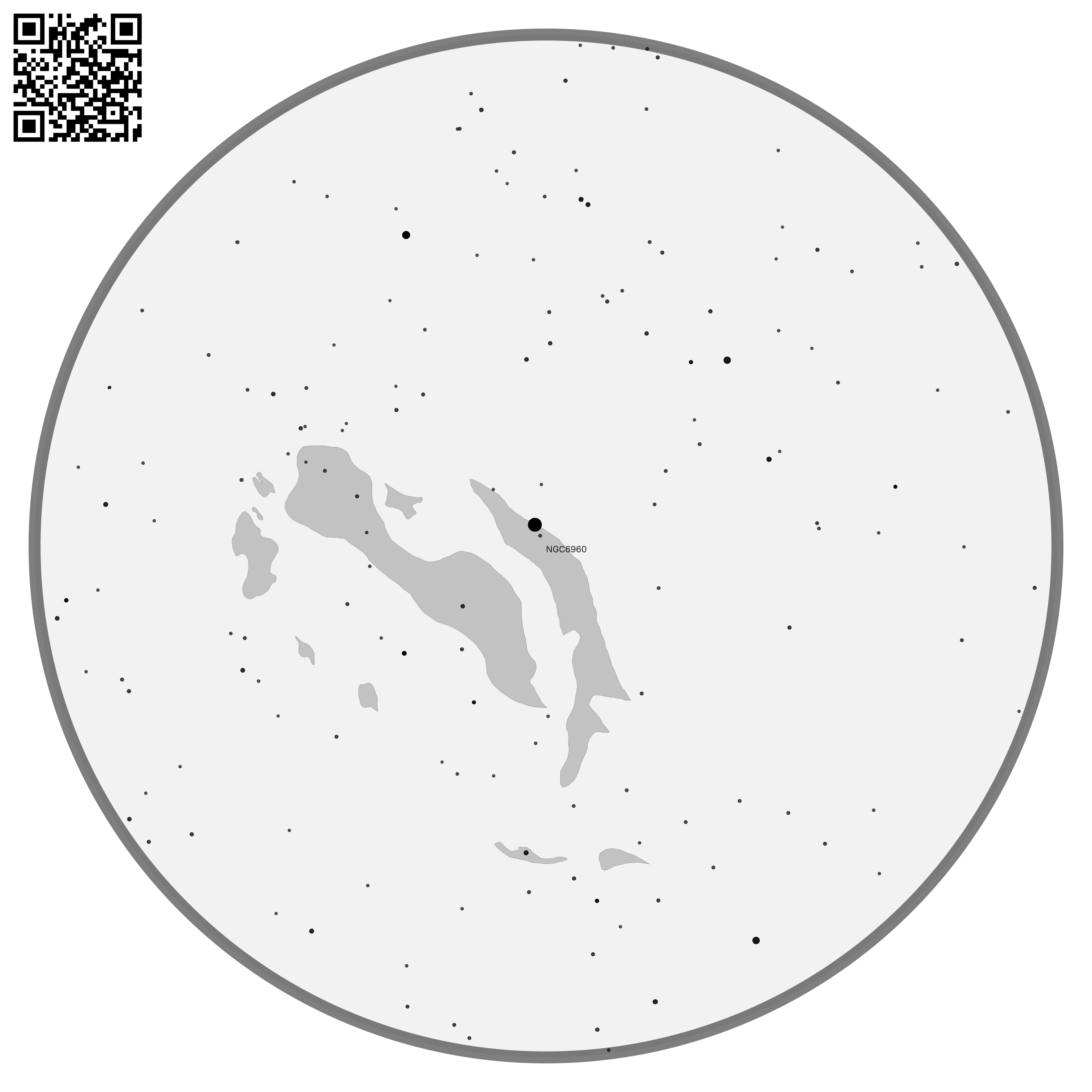
Finder scope & binocular view of NGC 6960
| Property | Value |
|---|---|
| Common names | Witch’s Broom Nebula, Western Veil Nebula, Filamentary Nebula |
| Catalog names | C 34, NGC 6960, LBN 191, PGC 3517684, Ced 182a |
| Type | Interstellar Medium |
| Subtype | - |
| Coordinates | 20h 45m 38.00s, +30° 42’ 30.00” |
| Season | July - September |
| Best month | August |
| Beginner friendly | Marginal |
| Visual reward | Moderate |
| Filters required | OIII, UHC |
| LP tolerance | Low |
| Minimum equipment | Binoculars |
| Optimal equipment | Medium telescope |
| Magnitude | 7.0 |
| Size | 70.0 arcminutes x 6.0 arcminutes |
| Constellation | Cygnus |
Observation Notes
Naked Eye
Not visible.
Binoculars
Extremely difficult; even from pristine dark-sky sites it is usually invisible. Some observers report fleeting, uncertain hints by holding a UHC or O-III filter over a binocular eyepiece, but detection is marginal and not reliable.
Small Telescope
In 4–6 inch apertures under dark skies, an O-III or UHC filter is essential. At low power, appears as a very faint, elongated wisp of nebulosity running near the star 52 Cygni, with low contrast against the background.
Medium Telescope
With 8–12 inches and an O-III filter, the filament becomes easier to follow, and the characteristic broom-like form is more apparent. The nebula shows increased contrast and length, but detail remains subtle and diffuse.
Large Telescope
In apertures of roughly 14 inches and larger under excellent conditions, the filament breaks into finer, thread-like strands with faint extensions visible using averted vision. The structure remains delicate and contrast-limited, appearing as overlapping wisps rather than sharply defined or truly three-dimensional features.