NGC 2068
4-8 inch Telescope • Reflection Nebulae
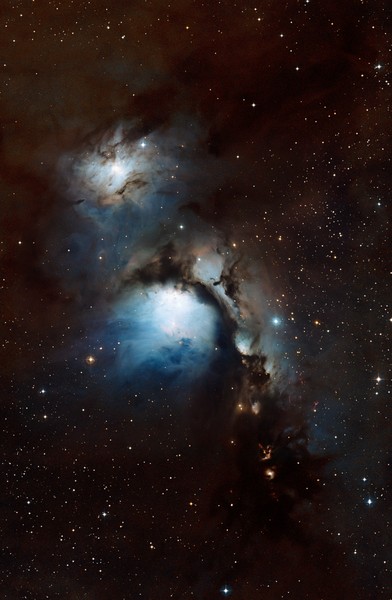
Image: ESO
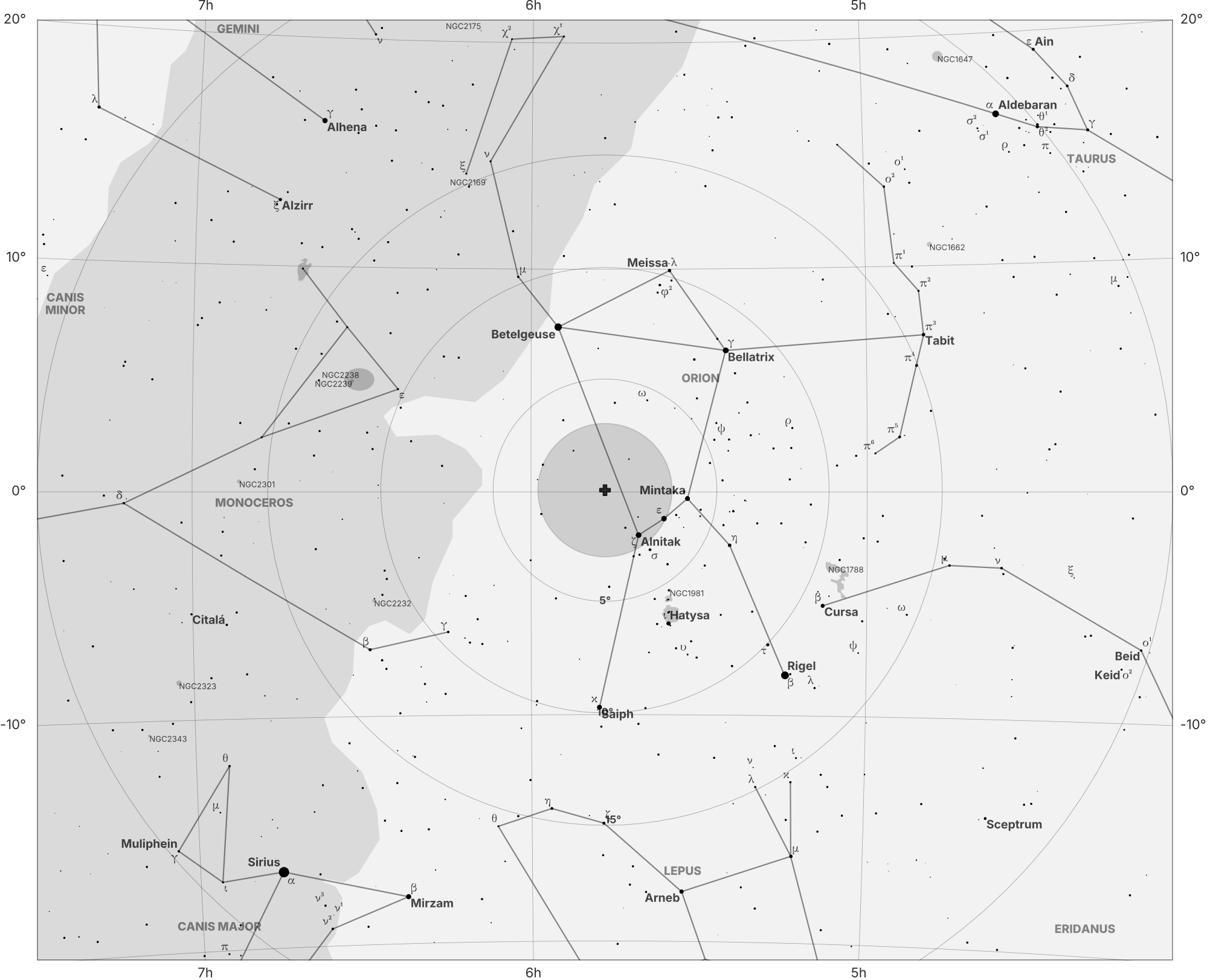
Finder map for NGC 2068
A well-known Messier object and one of the brightest reflection nebulae in the sky, M78 is a classic target for amateur astronomers and a frequent subject of astrophotography. Visible from most latitudes worldwide. It culminates highest during winter in the Northern Hemisphere and summer in the Southern Hemisphere, and is best observed when near the meridian. The visual challenge lies in discerning the uneven brightness of the nebula’s two main illuminated regions and noticing subtle variations in the surrounding glow. Any central dust structure seen in images is only hinted at visually, while the embedded illuminating stars can be seen shining through the nebulosity.
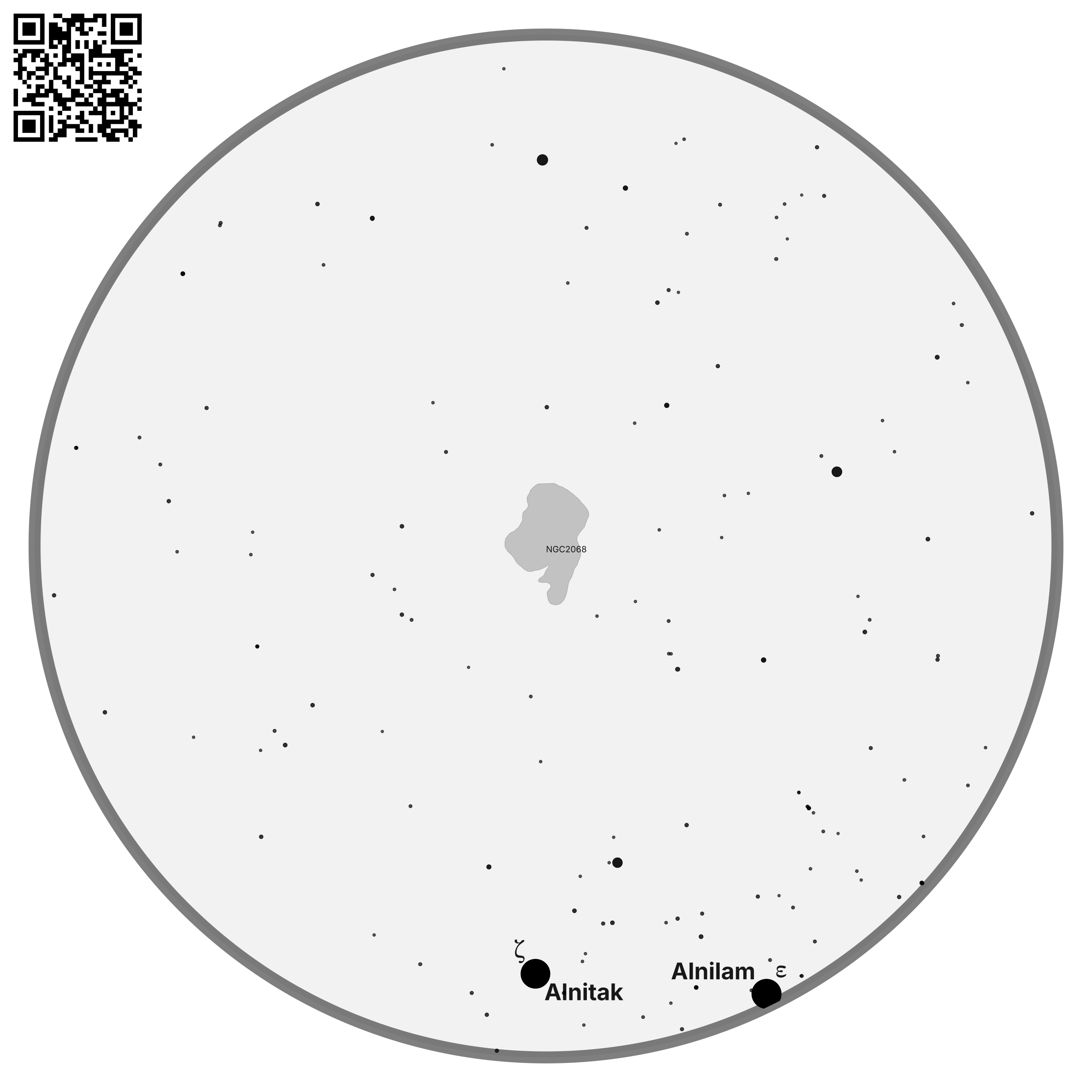
Finder scope & binocular view of NGC 2068
| Property | Value |
|---|---|
| Common names | Messier 78, M78 |
| Catalog names | M 78, NGC 2068, vdB 59, Ced 55u |
| Type | Galactic Nebula |
| Subtype | Reflection Nebula |
| Coordinates | 5h 46m 45.80s, +0° 04’ 45.00” |
| Season | November - January |
| Best month | Mid-December |
| Beginner friendly | Yes |
| Visual reward | Moderate |
| Filters required | None |
| LP tolerance | Low |
| Minimum equipment | Small telescope |
| Optimal equipment | Medium telescope |
| Magnitude | 8.3 |
| Size | 8.0 arcminutes x 6.0 arcminutes |
| Constellation | Orion |
Observation Notes
Naked Eye
Not visible.
Binoculars
Generally too faint for binoculars; under exceptional dark-sky conditions it may be suspected as an extremely faint, diffuse smudge with averted vision, but detection is uncertain and not routine.
Small Telescope
In 4–6 inch apertures, appears as a very faint, ghostly glow with uneven brightness, sometimes giving the impression of two brighter regions within a diffuse haze. Its low surface brightness can cause it to be mistaken for a small comet.
Medium Telescope
With 8–12 inches under dark skies, the nebula shows a more definite, elongated glow with two brighter condensations suggested within the haze. Any apparent separation between them is subtle and contrast-based rather than a sharply defined dark lane, and embedded stars are difficult and seeing-dependent.
Large Telescope
In apertures of roughly 14 inches and larger, the nebulosity becomes more extensive, with gentle brightness variations and soft internal structure visible using averted vision. A faint bluish tint may be noticed under pristine conditions, and the nearby reflection nebula NGC 2071 is readily visible in the same field.