AG Draconis
4-8 inch Telescope • Symbiotic Stars
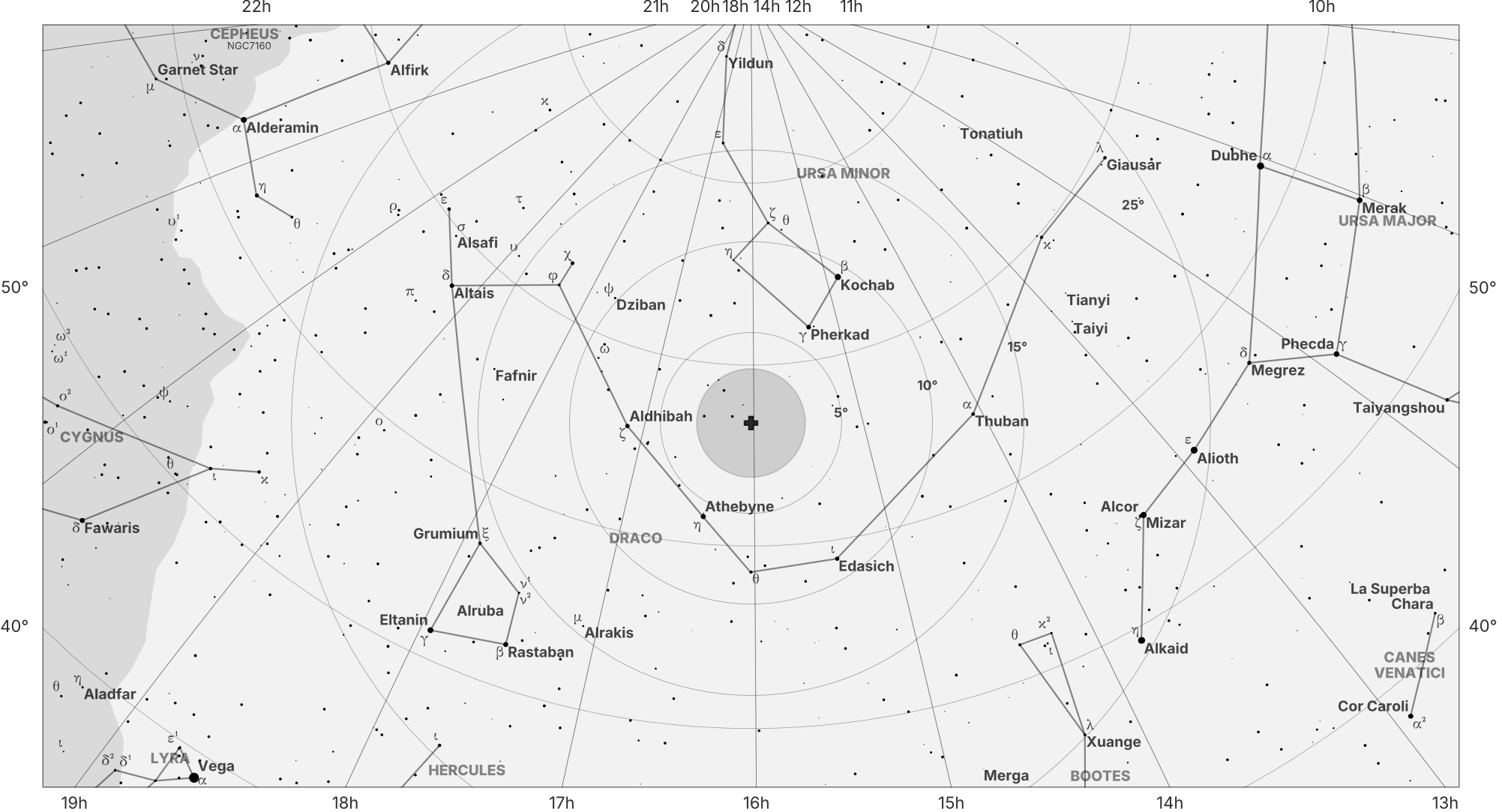
Finder map for AG Draconis
Circumpolar from mid to high northern latitudes, allowing year-round visibility. From lower northern latitudes it is best observed when high in the sky. It is very low or not visible from most of the Southern Hemisphere. Its challenge lies in long-term visual monitoring: AG Draconis shows slow brightness variations over many months, with occasional unpredictable outbursts. These changes are subtle on any single night and require repeated observations over extended periods.
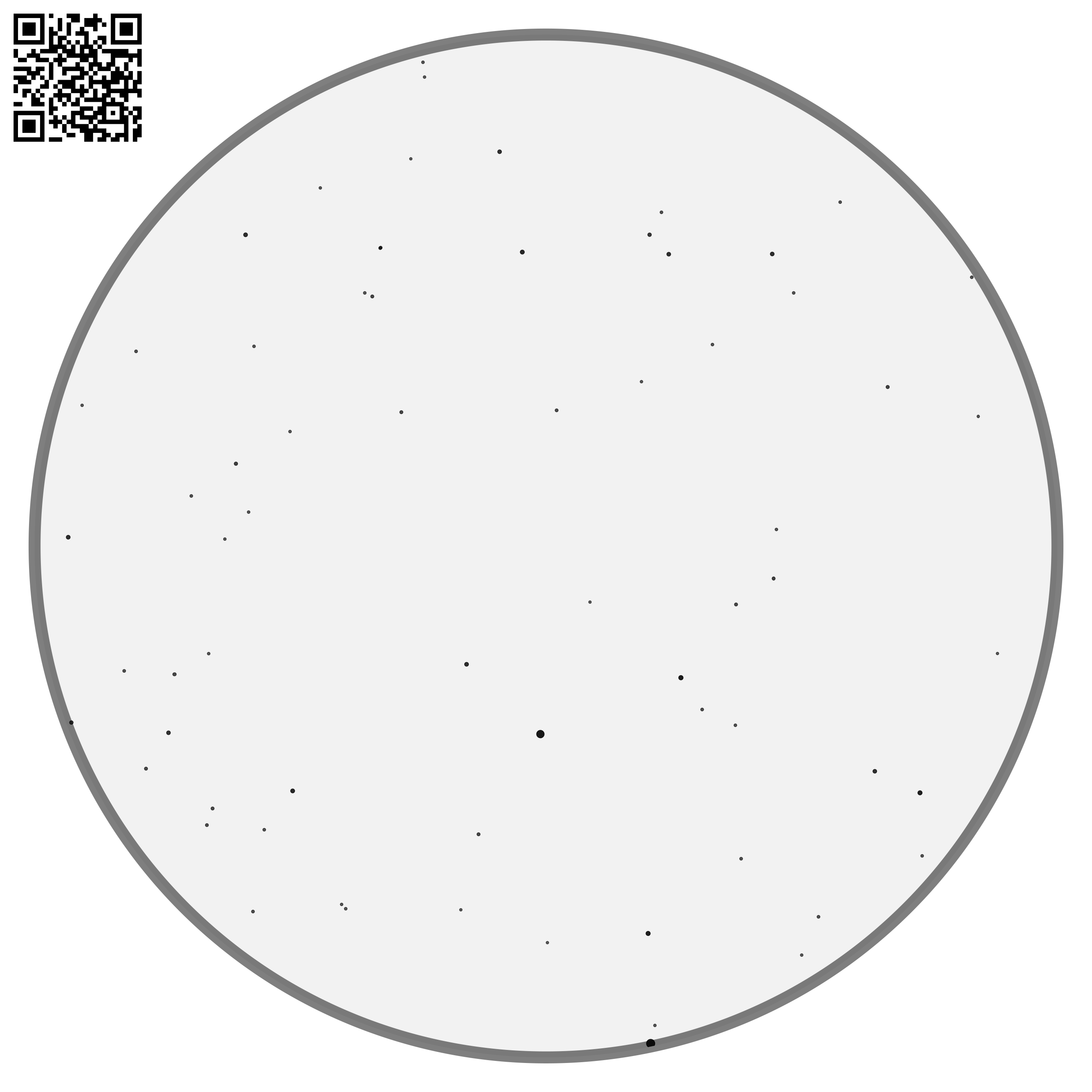
Finder scope & binocular view of AG Draconis
| Property | Value |
|---|---|
| Common names | AG Dra |
| Catalog names | - |
| Type | Double Star |
| Subtype | Seyfert Galaxy |
| Coordinates | 16h 01m 41.01s, +66° 48’ 10.14” |
| Season | April - June |
| Best month | Mid-May |
| Beginner friendly | No |
| Visual reward | Low |
| Filters required | None |
| LP tolerance | High |
| Minimum equipment | Binoculars |
| Optimal equipment | Medium telescope |
| Magnitude | 9.7 |
| Size | - |
| Constellation | Draco |
Observation Notes
Naked Eye
Not visible.
Binoculars
Generally not visible in typical binoculars; detection usually requires a telescope.
Small Telescope
In 4–6 inch apertures, appears as a faint, stellar point with no visible structure. Its brightness can be monitored by comparison with nearby field stars of known magnitude.
Medium Telescope
With 8–12 inches, the star is easily identified and well suited for visual brightness estimates. A very subtle warm or orange tint from the K-type giant component may be noticed under good conditions, though color perception is not guaranteed.
Large Telescope
In apertures of roughly 14 inches and larger, the star remains a point source with no resolvable detail. The primary benefit of increased aperture is improved ease of photometric monitoring and, occasionally, slightly more evident color, rather than any change in appearance.