R Aquarii
4-8 inch Telescope • Symbiotic Stars
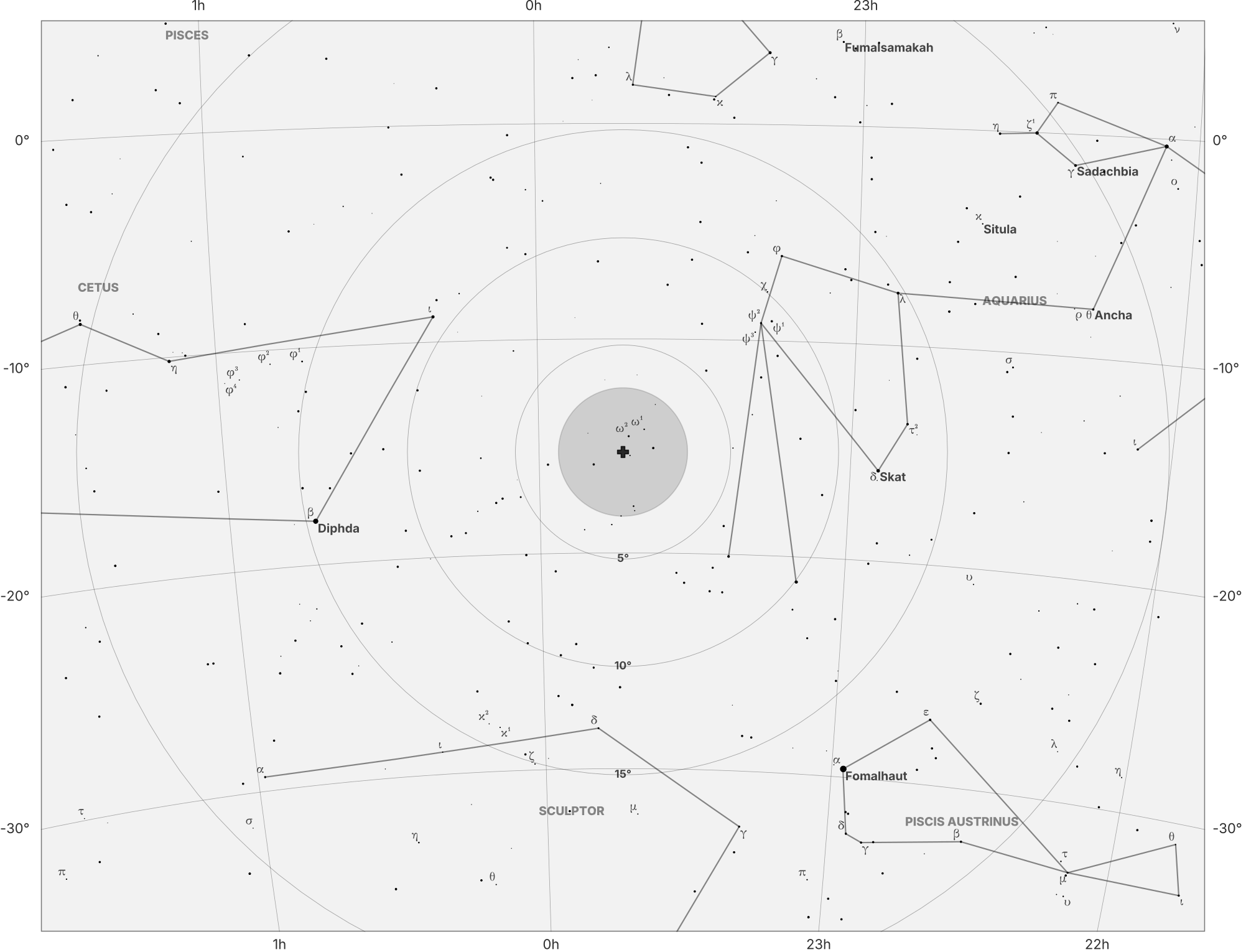
Finder map for R Aquarii
Best observed when high in the sky near transit. As a southern-declination object, it culminates higher for southern hemisphere observers. The primary challenge is its wide and sometimes extreme brightness variation: near minimum light the star can fade beyond the reach of smaller telescopes, making it difficult even for an 8-inch under less-than-ideal skies. The surrounding nebula (Cederblad 211) is primarily an astrophotographic target and is not visually detectable in this aperture class.
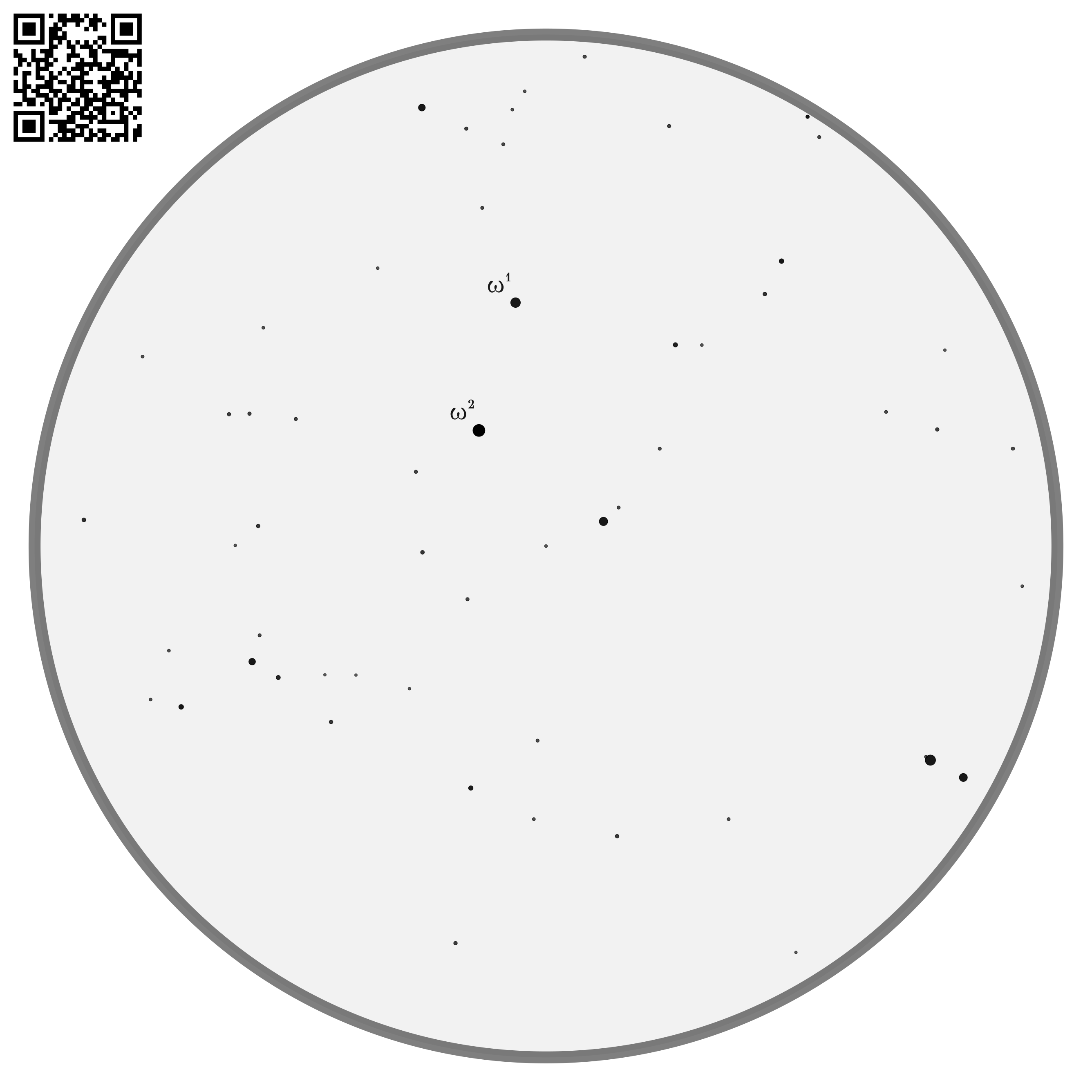
Finder scope & binocular view of R Aquarii
| Property | Value |
|---|---|
| Common names | R Aqr |
| Catalog names | - |
| Type | Double Star |
| Subtype | Seyfert Galaxy |
| Coordinates | 23h 43m 49.46s, -15° 17’ 04.18” |
| Season | August - October |
| Best month | Mid-September |
| Beginner friendly | Marginal |
| Visual reward | Moderate |
| Filters required | None |
| LP tolerance | Medium |
| Minimum equipment | Small telescope |
| Optimal equipment | Medium telescope |
| Magnitude | 7.7 |
| Size | - |
| Constellation | Aquarius |
Observation Notes
Naked Eye
Rarely visible, and only near maximum brightness (around magnitude 5–6) from very dark sites; naked-eye detection is phase-dependent and not routine.
Binoculars
Easily visible in most binoculars when brighter than about magnitude 8, appearing as a distinctly reddish star.
Small Telescope
In 4–6 inch apertures, visibility varies strongly with its brightness cycle. Near minimum light (around magnitude 12–12.5), it can be difficult or impossible in typical skies. When bright, its deep red color is prominent. The surrounding nebulosity is generally not visible.
Medium Telescope
With 8–12 inches under dark skies, the associated nebula Cederblad 211 may be suspected as a very faint, small haze using averted vision, often aided by an O-III filter; detection is uncertain and challenging.
Large Telescope
In apertures of roughly 14 inches and larger under excellent conditions, the nebula can be detected more reliably as a faint, irregular glow. Subtle elongation or uneven brightness may be suspected, but the bipolar or hourglass structure is not clearly defined visually. The jet itself is not visible and remains an advanced imaging target only.