T Coronae Borealis
4-8 inch Telescope • Symbiotic Stars
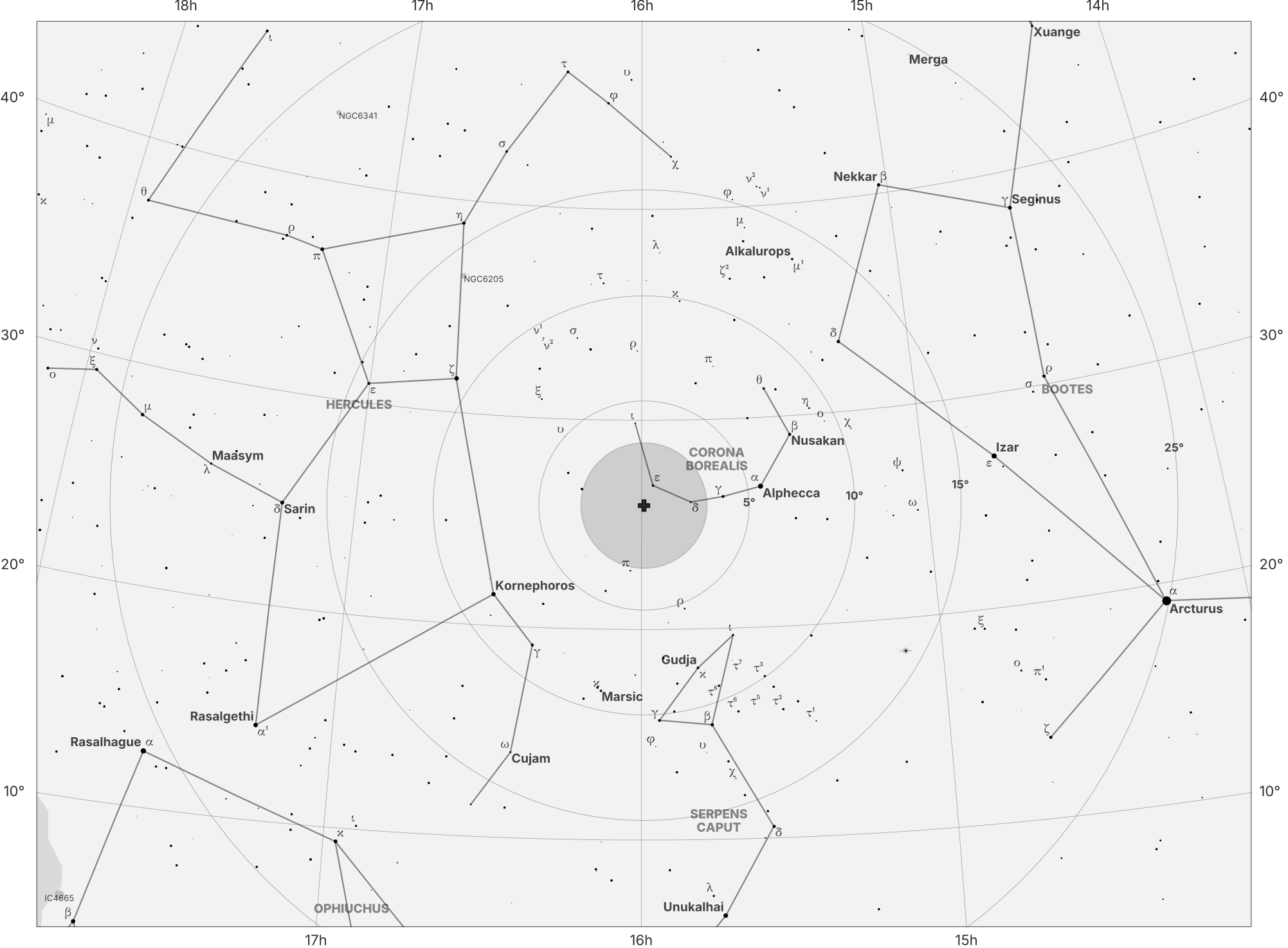
Finder map for T Coronae Borealis
Known as “The Blaze Star,” T Coronae Borealis is one of the best-known recurrent novae. Its rare historical eruptions briefly brightened it to naked-eye visibility, creating the appearance of a sudden “new star.” Best observed from the Northern Hemisphere where it reaches high altitude. In its faint quiescent state, it is a non-descript star that requires a detailed finder chart to distinguish from other field stars of similar magnitude.
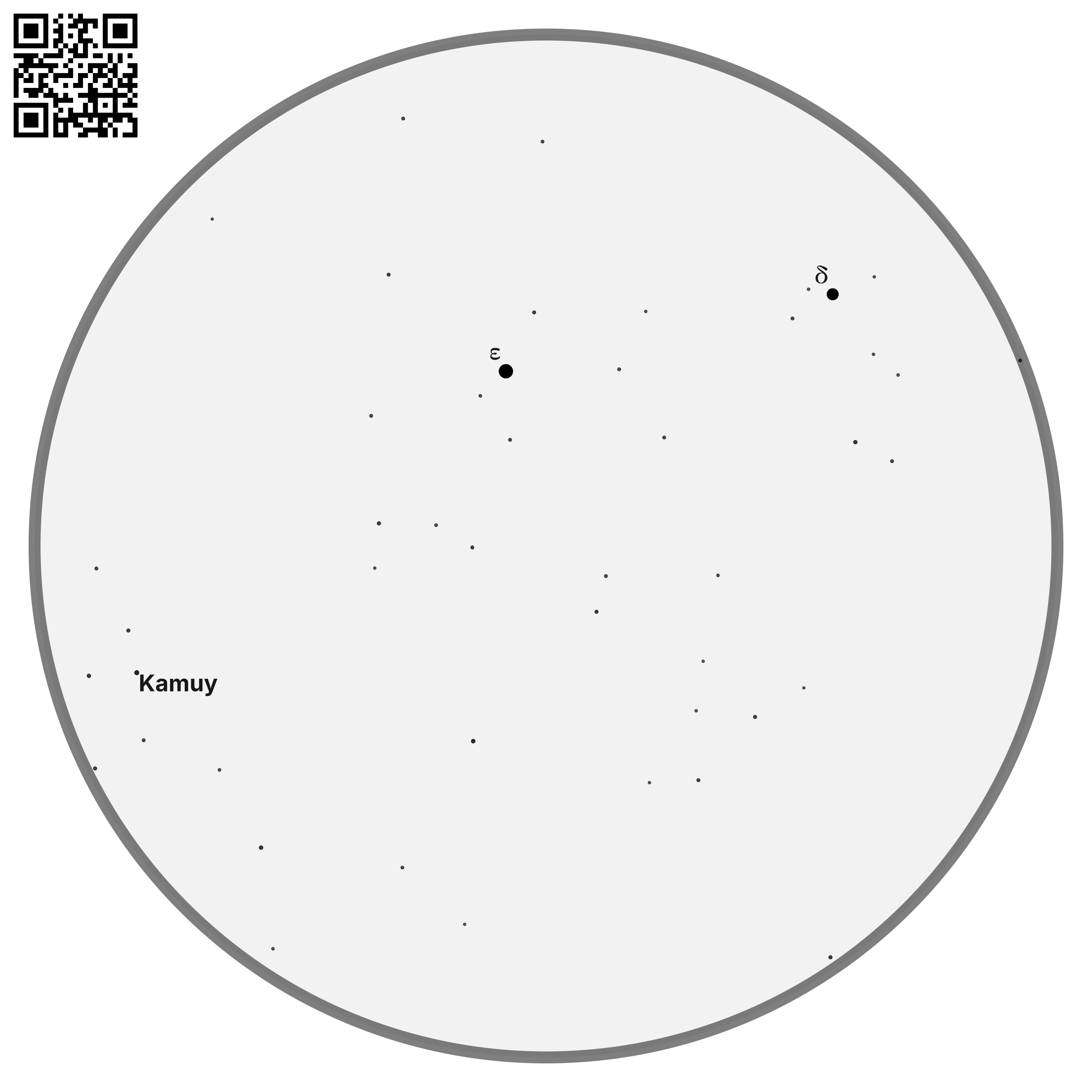
Finder scope & binocular view of T Coronae Borealis
| Property | Value |
|---|---|
| Common names | T CrB, The Blaze Star |
| Catalog names | - |
| Type | Double Star |
| Subtype | Seyfert Galaxy |
| Coordinates | 15h 59m 30.16s, +25° 55’ 12.61” |
| Season | April - June |
| Best month | Mid-May |
| Beginner friendly | No |
| Visual reward | Moderate |
| Filters required | None |
| LP tolerance | High |
| Minimum equipment | Naked eye |
| Optimal equipment | Binoculars |
| Magnitude | 10.2 |
| Size | - |
| Constellation | Corona Borealis |
Observation Notes
Naked Eye
Visible only during a major outburst, when it can brighten to around magnitude 2–3 and appear as a conspicuous “new star” in Corona Borealis; naked-eye visibility is rare and confined to these eruptive events.
Binoculars
Easily visible as a bright star during an outburst. In its quiescent state it is generally beyond typical binocular reach.
Small Telescope
In its quiescent state (around magnitude 10), it is visible in 4–6 inch apertures from reasonably dark sites as a faint, stellar point with no visible structure.
Medium Telescope
With 8–12 inches, the star is easily followed in quiescence, allowing reliable visual brightness estimates by comparison with nearby field stars.
Large Telescope
Increased aperture does not reveal additional visual detail, as the object remains a point source; the primary benefit is improved accuracy for monitoring brightness changes rather than any change in appearance.