NGC 147
4-8 inch Telescope • Dwarf Galaxies
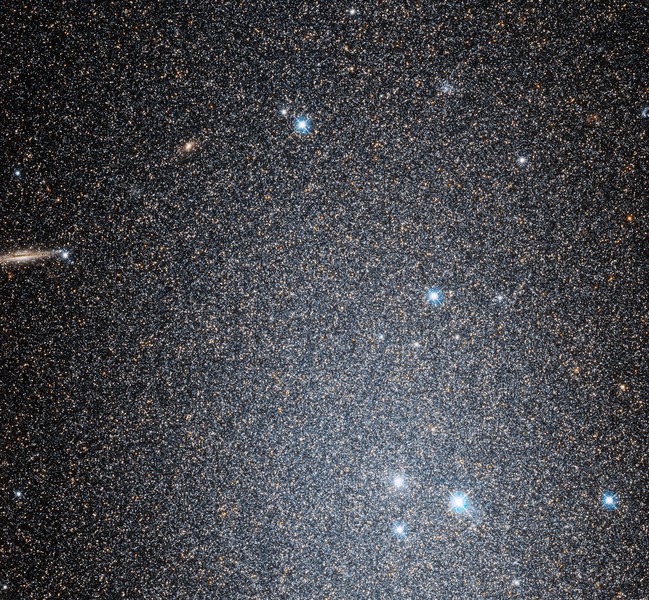
Image: NASA Hubble Space Telescope
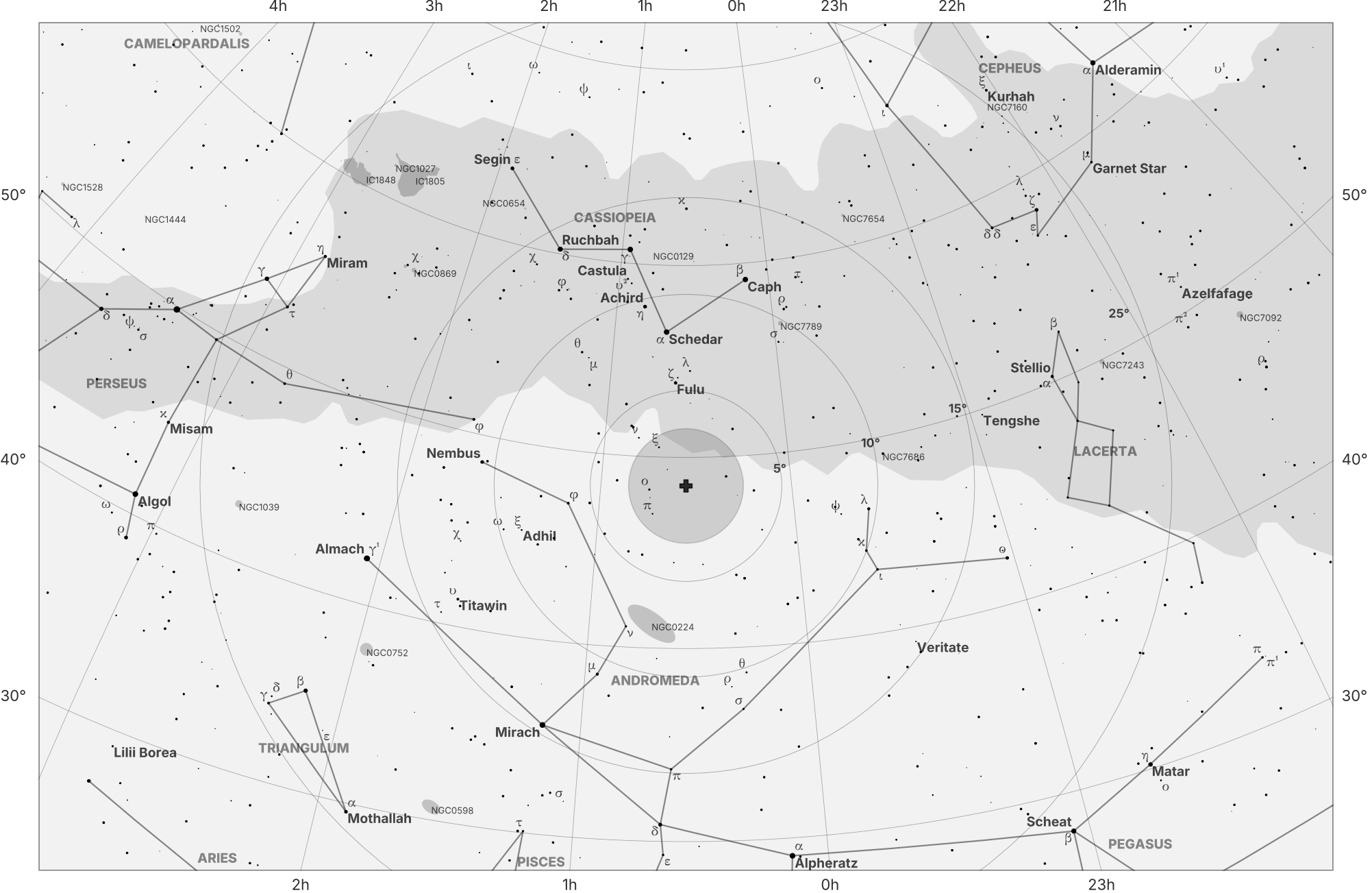
Finder map for NGC 147
Best observed when well above the horizon to reduce atmospheric extinction and maximize contrast, as the galaxy has very low surface brightness. Its extremely low surface brightness makes it one of the more challenging NGC objects. It appears as a very large, faint, diffuse glow requiring dark skies and averted vision.
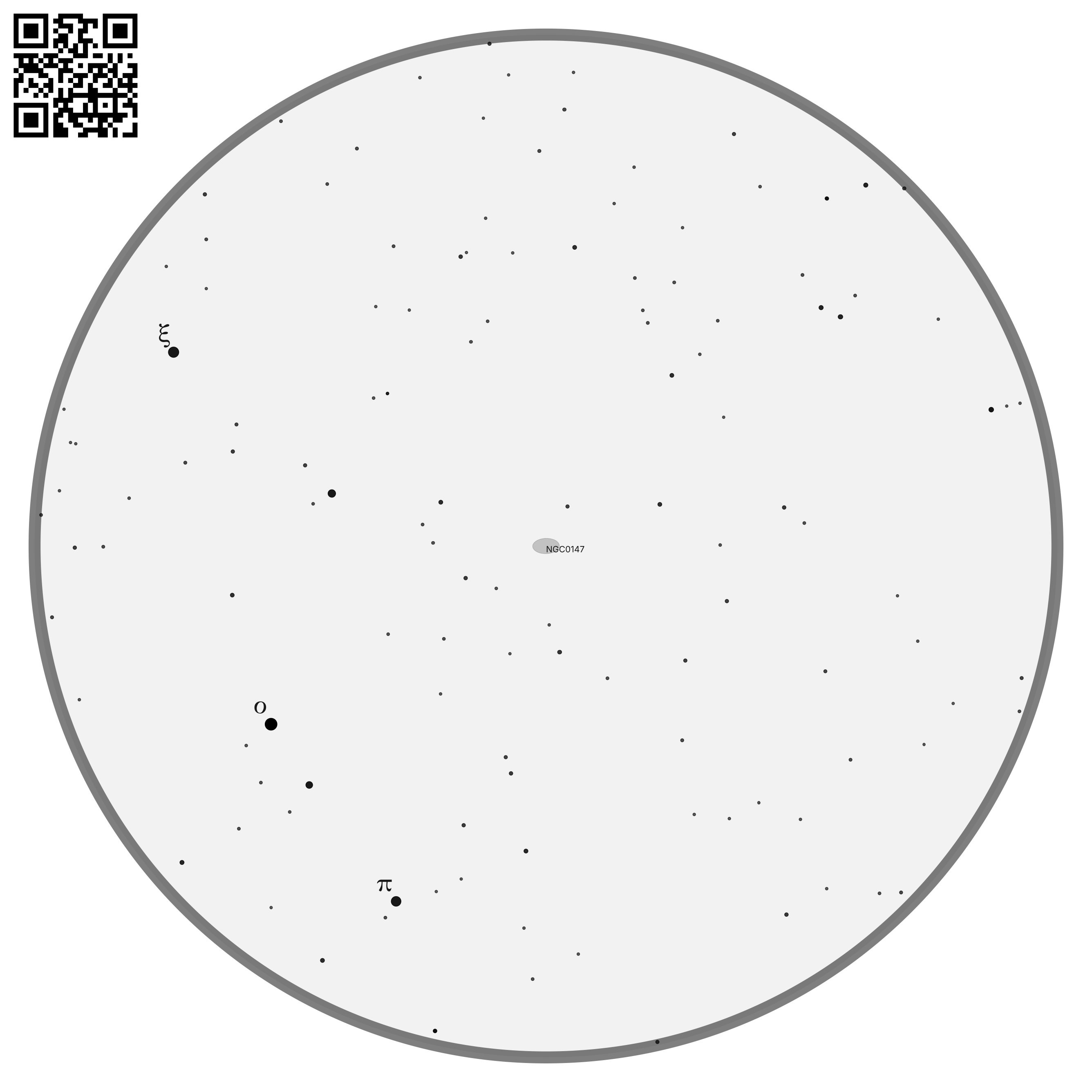
Finder scope & binocular view of NGC 147
| Property | Value |
|---|---|
| Common names | Caldwell 17 |
| Catalog names | C 17, NGC 147, PGC 2004, UGC 326 |
| Type | Galaxy |
| Subtype | Galaxy in Group |
| Coordinates | 0h 33m 12.12s, +48° 30’ 31.46” |
| Season | September - November |
| Best month | October |
| Beginner friendly | No |
| Visual reward | Low |
| Filters required | None |
| LP tolerance | Low |
| Minimum equipment | Medium telescope |
| Optimal equipment | Large telescope |
| Magnitude | 9.5 |
| Size | 13.18 arcminutes x 7.76 arcminutes |
| Constellation | Cassiopeia |
Observation Notes
Naked Eye
Not visible.
Binoculars
Not visible.
Small Telescope
Extremely difficult and generally beyond reliable reach. Under very dark skies, a 4–6 inch telescope may at best show an uncertain, diffuse brightening with averted vision, but positive identification is unlikely.
Medium Telescope
Under pristine dark skies (Bortle 1–2), an 8–12 inch telescope can reveal NGC 147 as a very large, extremely faint, elongated glow. The surface brightness is very low, and detection relies entirely on averted vision and careful field sweeping. A slightly brighter central region may be suspected, but no structure is visible.
Large Telescope
In apertures of roughly 14 inches and larger, the galaxy becomes more secure as a diffuse, ghostly patch with a gently elongated shape. The mild central brightening is more apparent, but the galaxy remains featureless and very low in contrast. Low magnification is essential; higher power quickly causes it to fade from view.