NGC 185
4-8 inch Telescope • Dwarf Galaxies
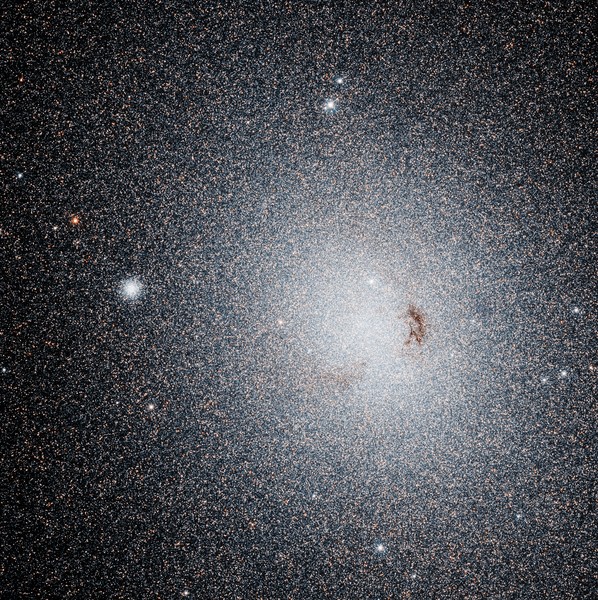
Image: NASA Hubble Space Telescope
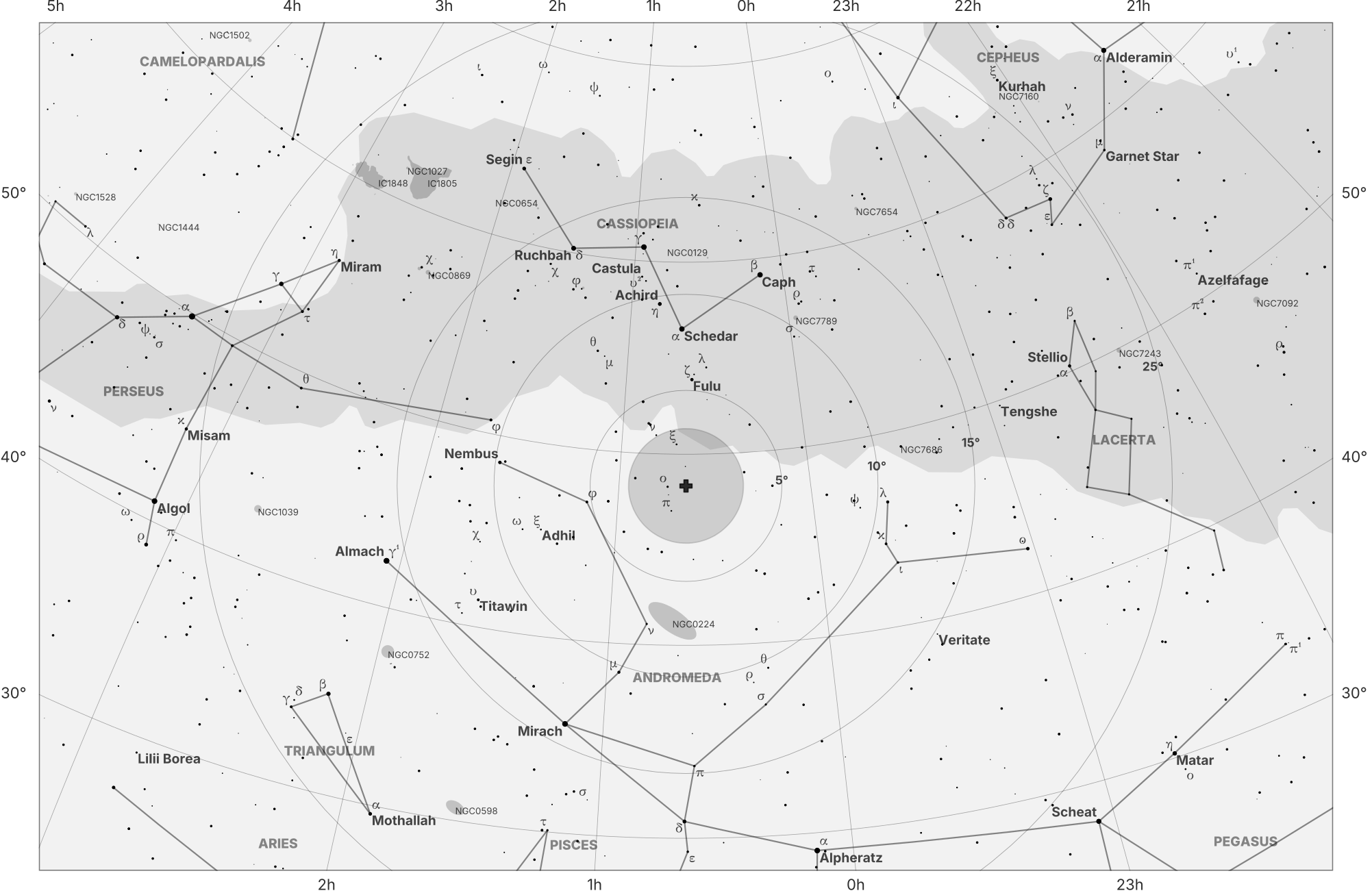
Finder map for NGC 185
Best observed from mid-to-high northern latitudes where it can be circumpolar or reach a high altitude. Very difficult from the Southern Hemisphere. The primary challenge is detecting the galaxy’s very low surface brightness. In small telescopes it appears as a diffuse, weakly condensed glow that blends gradually into the sky background, with little structural detail.
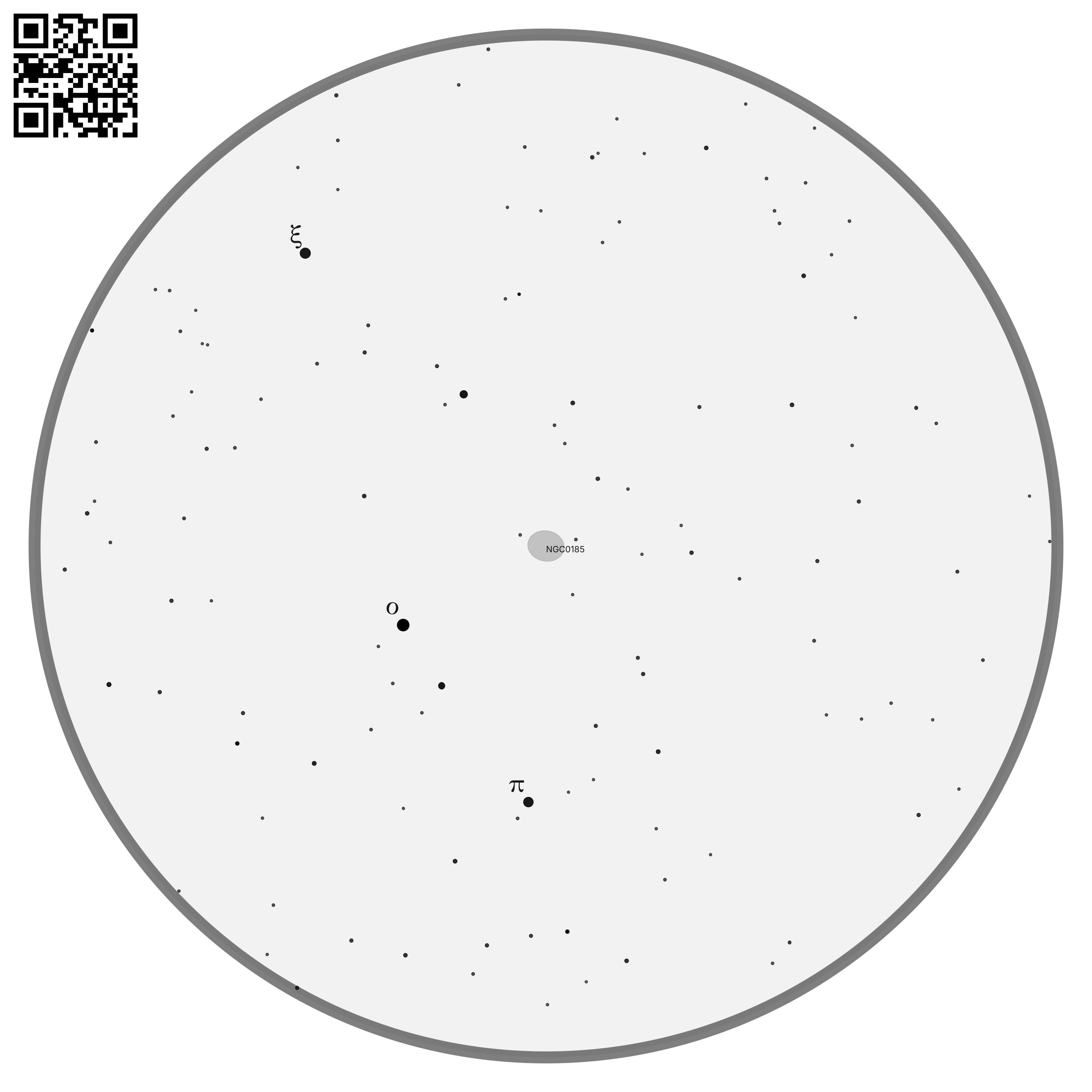
Finder scope & binocular view of NGC 185
| Property | Value |
|---|---|
| Common names | Caldwell 18, Dwarf Spheroidal Galaxy in Cassiopeia |
| Catalog names | C 18, NGC 185, PGC 2329, UGC 396 |
| Type | Seyfert Galaxy |
| Subtype | Seyfert 2 Galaxy |
| Coordinates | 0h 38m 57.94s, +48° 20’ 15.04” |
| Season | September - November |
| Best month | October |
| Beginner friendly | Marginal |
| Visual reward | Low |
| Filters required | None |
| LP tolerance | Low |
| Minimum equipment | Small telescope |
| Optimal equipment | Medium telescope |
| Magnitude | 9.2 |
| Size | 11.75 arcminutes x 10.0 arcminutes |
| Constellation | Cassiopeia |
Observation Notes
Naked Eye
Not visible.
Binoculars
Under exceptionally dark, transparent skies, larger binoculars may at best suggest a very faint, diffuse brightening, but reliable detection is uncertain and not to be expected.
Small Telescope
In apertures of about 4–6 inches under dark skies, appears as a small, faint, round to slightly oval smudge with a gentle central brightening. The core is diffuse rather than stellar, and the object can be mistaken for a faint globular cluster or a tailless comet without careful identification.
Medium Telescope
With 8–12 inches and good sky conditions, the galaxy becomes more secure, showing a definite oval shape and a clearly brighter central region. The outer halo remains very low in surface brightness and requires averted vision. No internal structure is visible.
Large Telescope
In apertures of roughly 14 inches and larger, the central brightening is more obvious and the halo appears somewhat more extended, though still diffuse and featureless. Highly experienced observers may suspect slight unevenness in the glow, but no true detail is resolved. With very wide fields, NGC 147 can be included in the same view, offering a useful contrast between the two dwarf galaxies.