NGC 1275
10+ inch Telescope • Active Galaxies
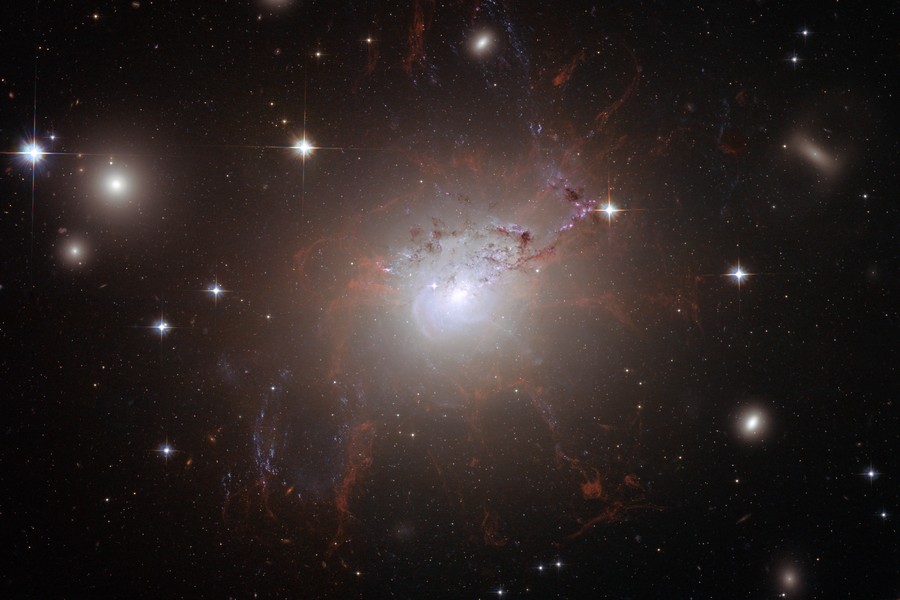
Image: NASA, ESA, and the Hubble Heritage (STScI/AURA)-ESA/Hubble Collaboration
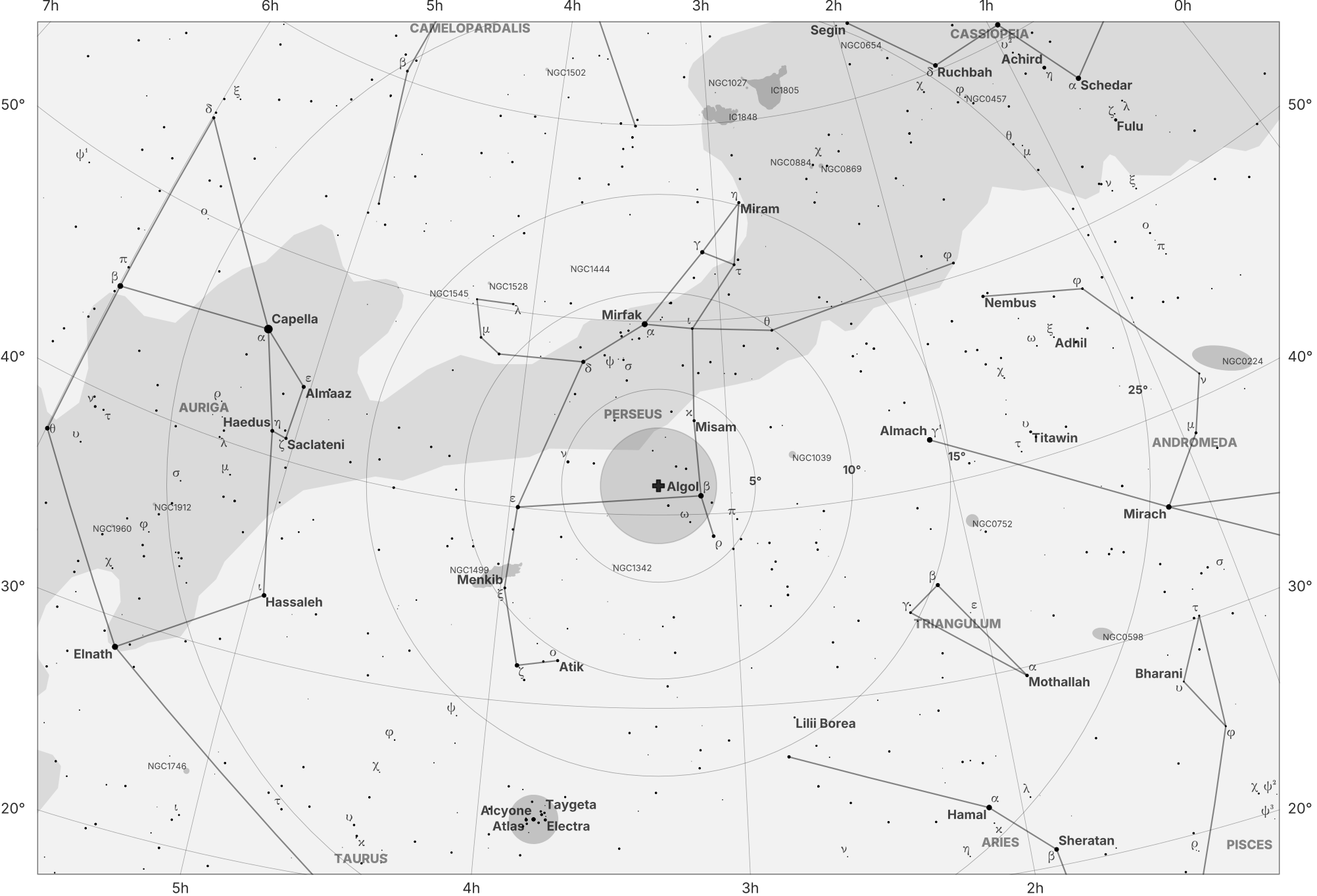
Finder map for NGC 1275
Requires high altitude in the northern sky for best viewing. Remains very low on the northern horizon for most Southern Hemisphere observers. Distinguishing the galaxy from the dense field of faint stars and other fainter galaxies in the Perseus Cluster. Visually detecting any structure is extremely difficult.
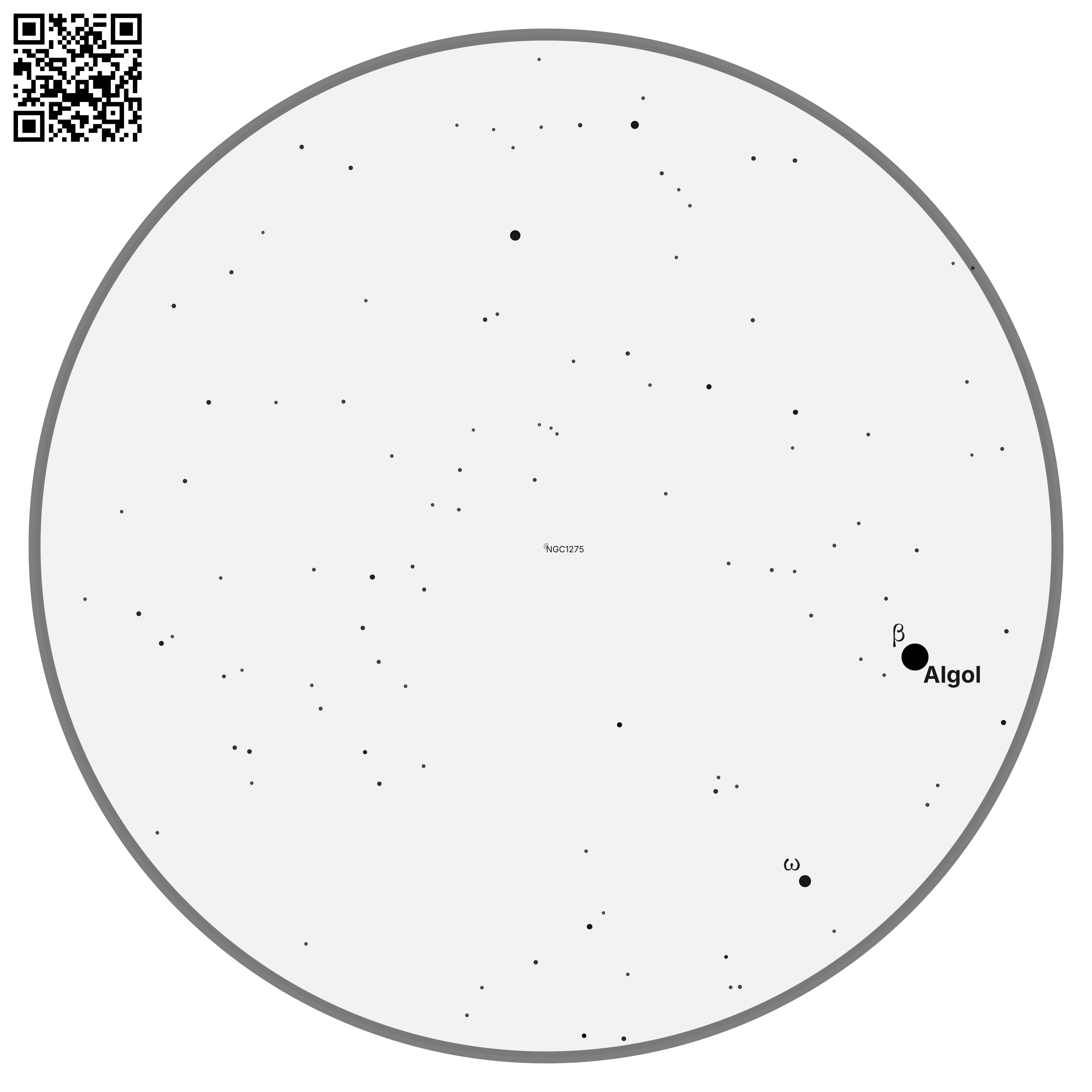
Finder scope & binocular view of NGC 1275
| Property | Value |
|---|---|
| Common names | Perseus A, Per A |
| Catalog names | C 24, NGC 1275, PGC 12429, UGC 2669 |
| Type | Seyfert Galaxy |
| Subtype | Seyfert 2 Galaxy |
| Coordinates | 3h 19m 48.16s, +41° 30’ 42.11” |
| Season | October - December |
| Best month | Mid-November |
| Beginner friendly | No |
| Visual reward | Moderate |
| Filters required | None |
| LP tolerance | Medium |
| Minimum equipment | Large telescope |
| Optimal equipment | Large telescope |
| Magnitude | 11.9 |
| Size | 2.19 arcminutes x 1.66 arcminutes |
| Constellation | Perseus |
Observation Notes
Naked Eye
Not visible.
Binoculars
Not visible.
Small Telescope
Not visible under typical conditions.
Medium Telescope
Extremely difficult. Under dark, transparent skies, it may be detected as a very small, faint, round patch of light with a strongly condensed center, but many observers will fail to see it at all in apertures below about 8 inches.
Large Telescope
Appears as a compact, round galaxy with a bright, condensed nucleus surrounded by a small, low-contrast halo. Even in large apertures, little structure is visible. With careful observation, a few other Perseus Cluster galaxies (such as NGC 1272) may be detected nearby as faint, diffuse glows, providing limited cluster context.