NGC 4038 and NGC 4039
10+ inch Telescope • Galaxy Groups
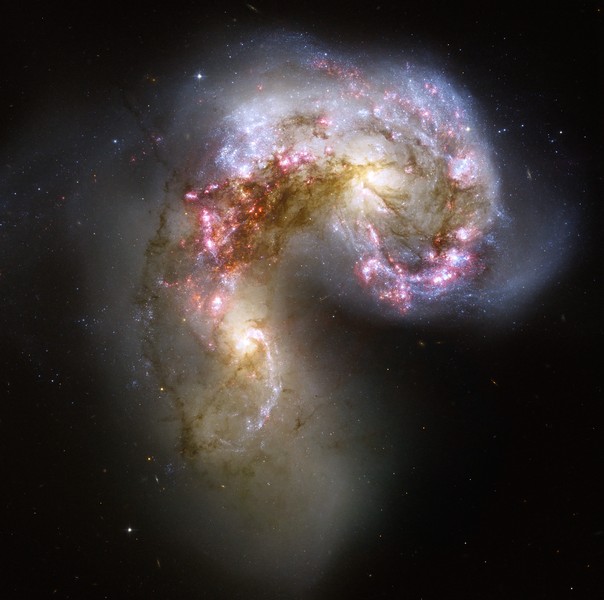
Image: NASA, ESA, and the Hubble Heritage Team (STScI/AURA)-ESA/Hubble Collaboration
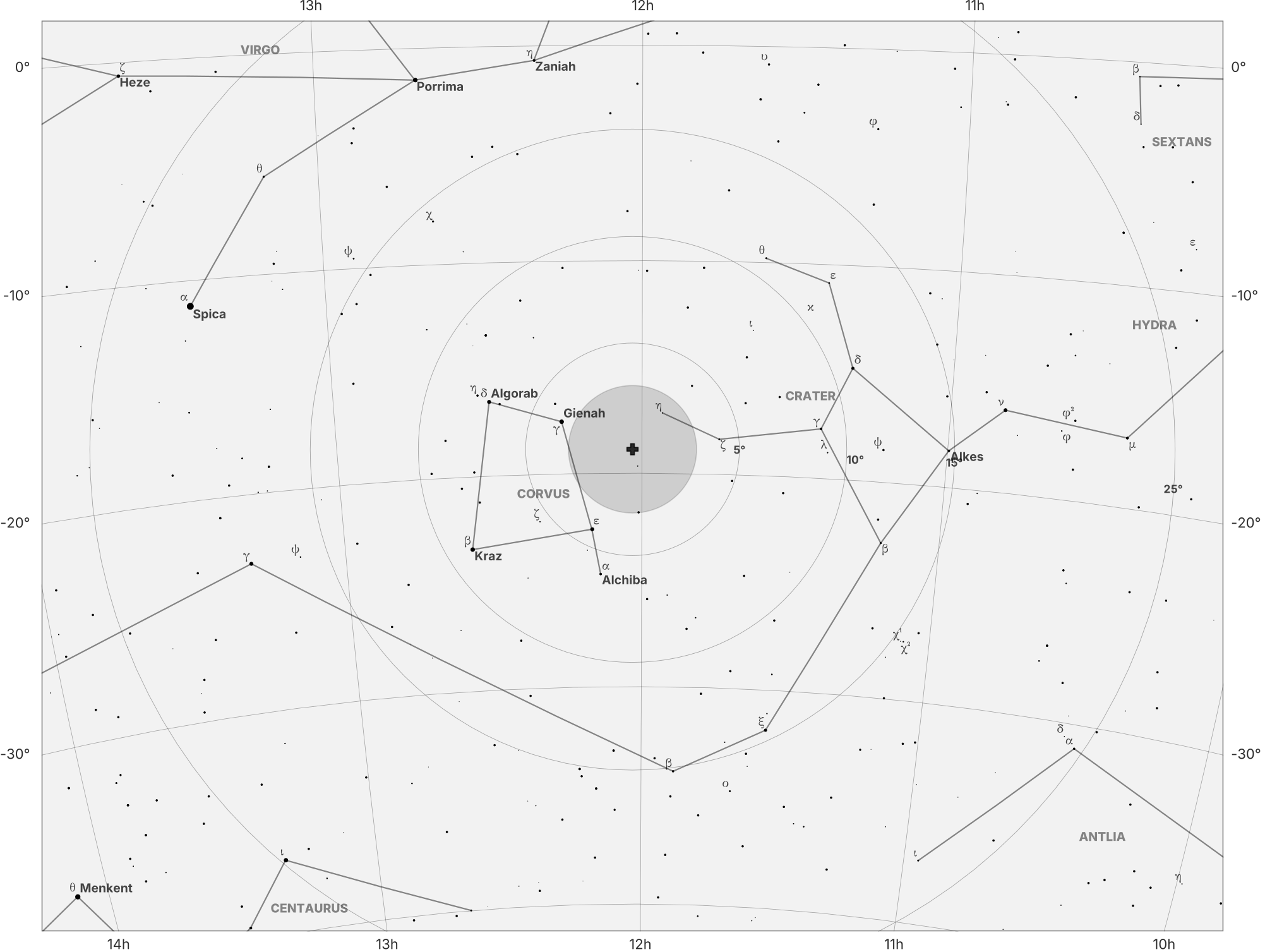
Finder map for NGC 4038 and NGC 4039
The Antennae Galaxies are among the most iconic subjects in astronomical imaging and are widely used in education and outreach as a textbook example of a galactic merger. Their dramatic tidal features, however, are primarily revealed through long-exposure imaging rather than visual observation. Well placed for Southern Hemisphere observers. From mid- to high-northern latitudes the system remains lower in the southern sky and benefits from a clear southern horizon. The two interacting galactic cores are readily distinguishable in large amateur telescopes. The primary visual challenge lies in detecting the extremely faint tidal extensions, which demand very dark skies, careful observing technique, and substantial aperture.
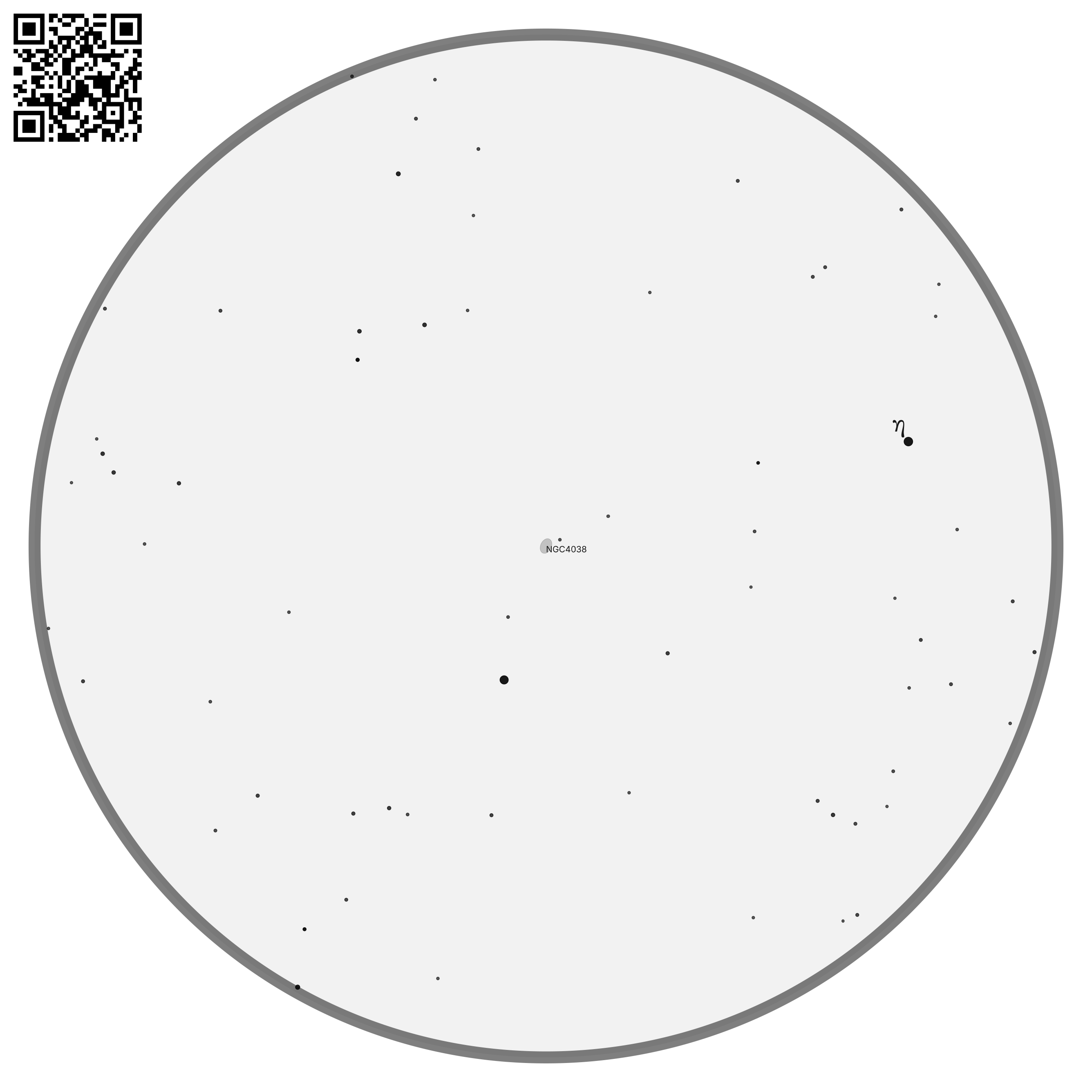
Finder scope & binocular view of NGC 4038 and NGC 4039
| Property | Value |
|---|---|
| Common names | Antennae Galaxies, Ring Tail Galaxy |
| Catalog names | C 60, NGC 4038, PGC 37967, Arp 244, VV 245, … |
| Type | Galaxy |
| Subtype | Emission-line Galaxy |
| Coordinates | 12h 01m 53.00s, -18° 52’ 03.32” |
| Season | February - April |
| Best month | Mid-March |
| Beginner friendly | Marginal |
| Visual reward | Moderate |
| Filters required | None |
| LP tolerance | Low |
| Minimum equipment | Large telescope |
| Optimal equipment | Large telescope |
| Magnitude | 10.4 |
| Size | 5.25 arcminutes x 3.09 arcminutes |
| Constellation | Corvus |
Observation Notes
Naked Eye
Not visible.
Binoculars
Not visible.
Small Telescope
Extremely difficult and often invisible. Under exceptionally dark southern skies, a small telescope may only hint at a very faint, amorphous glow, with no clear shape and no separation of components.
Medium Telescope
Detectable as a very faint, irregular patch of light. With averted vision under excellent conditions, two slightly brighter condensations corresponding to the interacting galaxies may be suspected, but the view remains low contrast and poorly defined.
Large Telescope
Reveals the interacting pair as two close, faint galaxy cores embedded in a shared, irregular halo. Brightness variations may be noted across the main bodies, but no sharp structure is seen. The famous long tidal “antennae” tails are not visible visually and remain a photographic feature only.