NGC 4676
10+ inch Telescope • Galaxy Groups
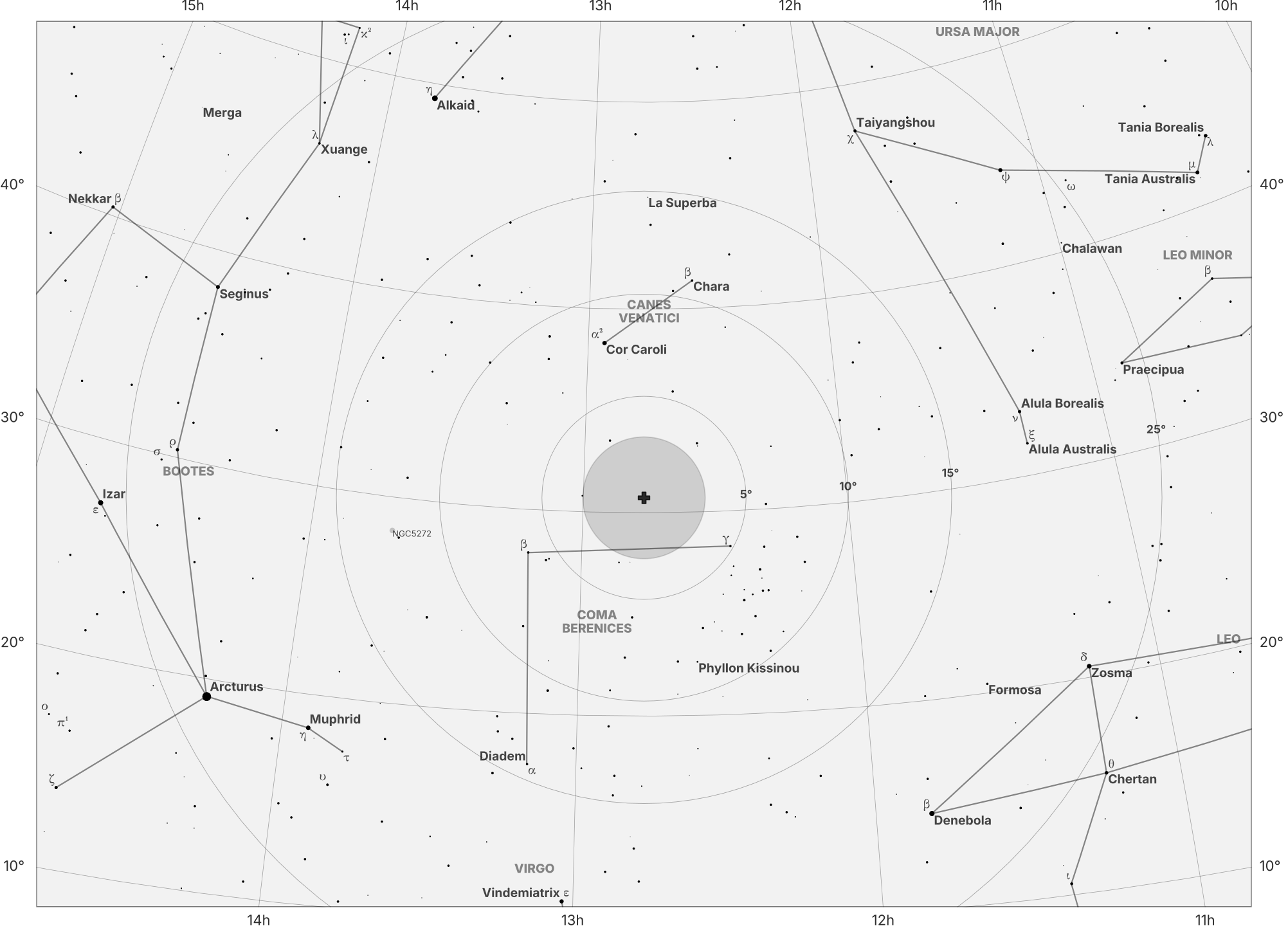
Finder map for NGC 4676
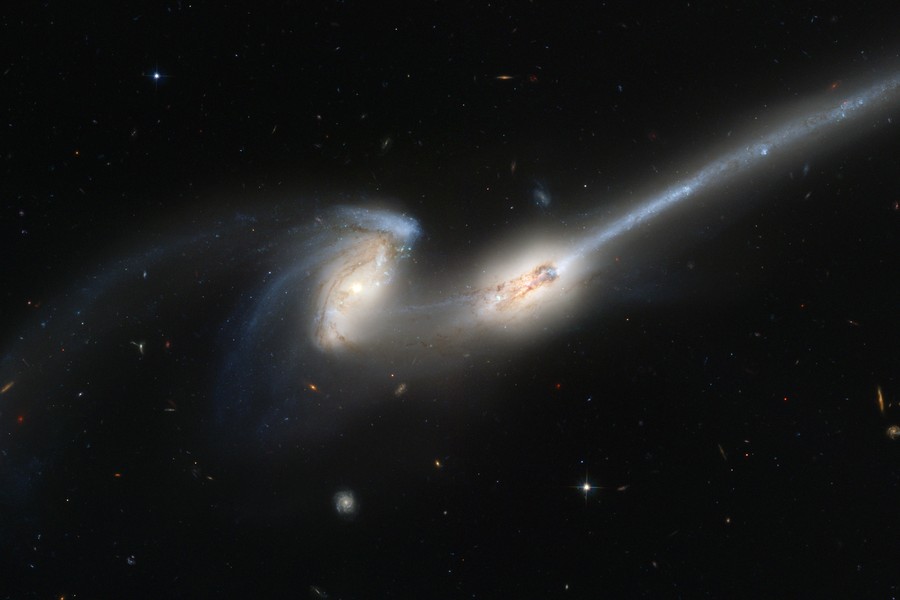
Known as “The Mice” from the prominent tidal tails revealed in deep images, this interacting galaxy pair is a well-known textbook example of galactic interaction and is frequently featured in astronomy education and documentaries. Best observed when near culmination to maximize contrast and minimize atmospheric effects. The two interacting galactic cores are readily distinguishable in large amateur telescopes. The true challenge lies in detecting the extremely faint tidal tails, which demand pristine dark skies, careful observing technique, and substantial aperture.
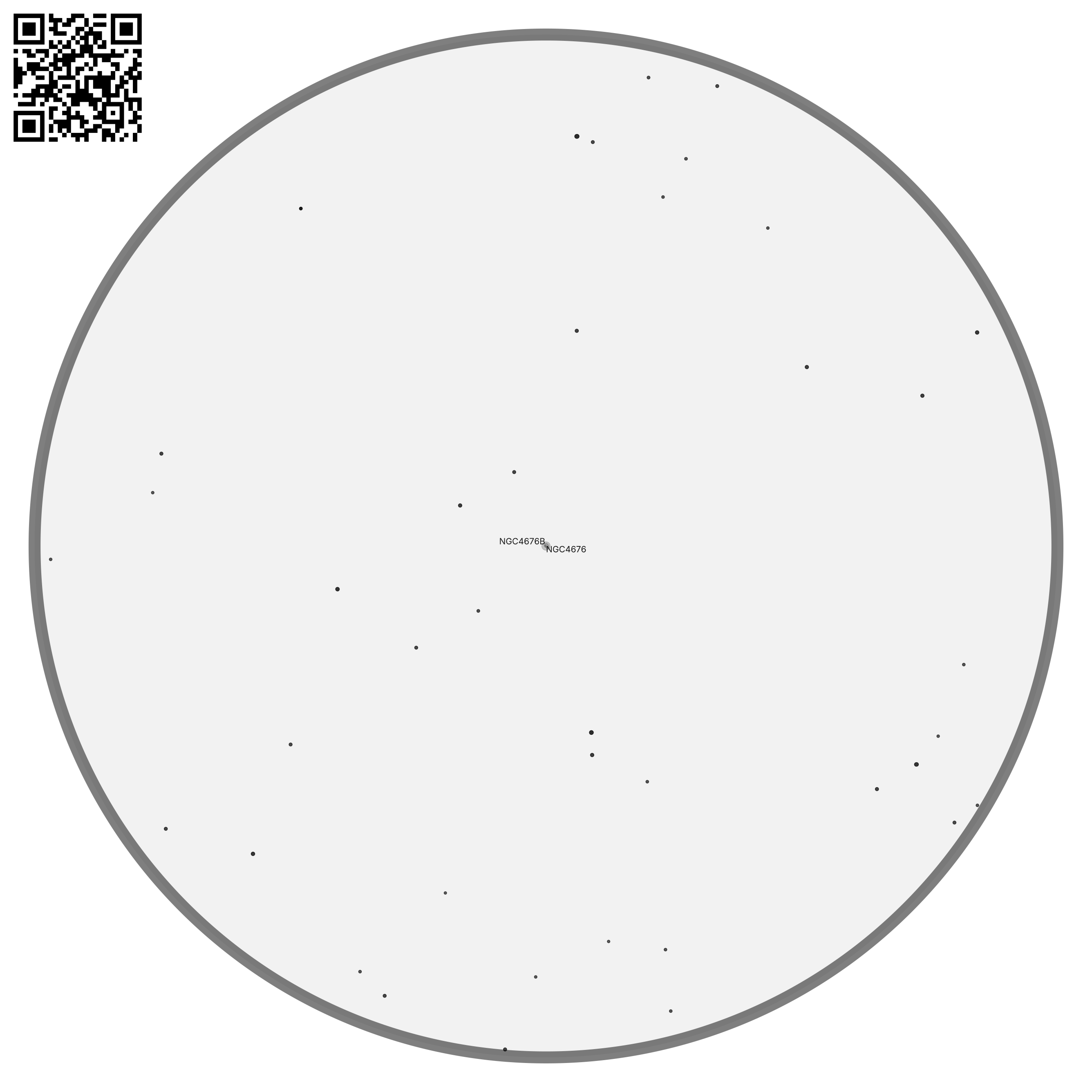
Finder scope & binocular view of NGC 4676
| Property | Value |
|---|---|
| Common names | The Mice Galaxies |
| Catalog names | NGC 4676, IC 819, Arp 242, VV 224 |
| Type | Interacting Galaxy |
| Subtype | - |
| Coordinates | 12h 46m 10.18s, +30° 43’ 53.70” |
| Season | March - May |
| Best month | April |
| Beginner friendly | No |
| Visual reward | Low |
| Filters required | None |
| LP tolerance | Low |
| Minimum equipment | Large telescope |
| Optimal equipment | Large telescope |
| Magnitude | 14.1 |
| Size | 1.29 arcminutes x 0.7 arcminutes |
| Constellation | Coma Berenices |
Observation Notes
Naked Eye
Not visible.
Binoculars
Not visible.
Small Telescope
Essentially invisible. At best, an extremely faint, barely detectable smudge may be suspected under exceptional skies, but this is not a reliable observation.
Medium Telescope
Very difficult. Under very dark, transparent skies, the object may appear as a small, faint, elongated haze with little contrast. Separation of the two interacting galaxies is unlikely.
Large Telescope
In apertures of roughly 18 inches or larger under excellent conditions, the interacting pair can be detected as two close, condensed galaxy cores embedded in a shared, faint halo. Even at this level, structure remains subtle. The famous tidal tails are not reliably visible visually and should be considered photographic features only.