Stephan’s Quintet
10+ inch Telescope • Galaxy Groups
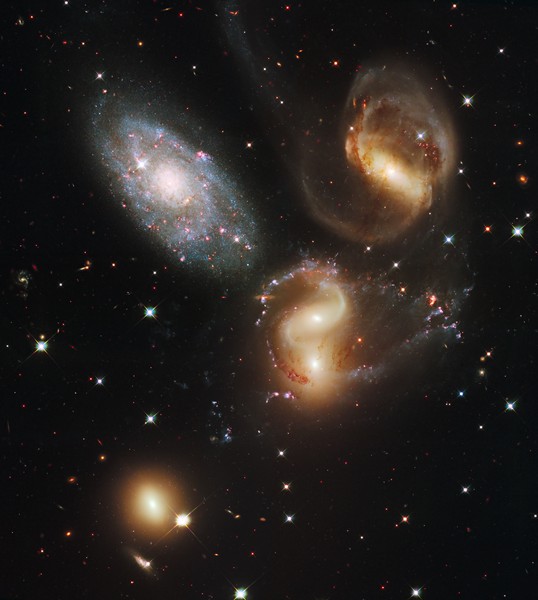
Image: NASA, ESA, and the Hubble SM4 ERO Team
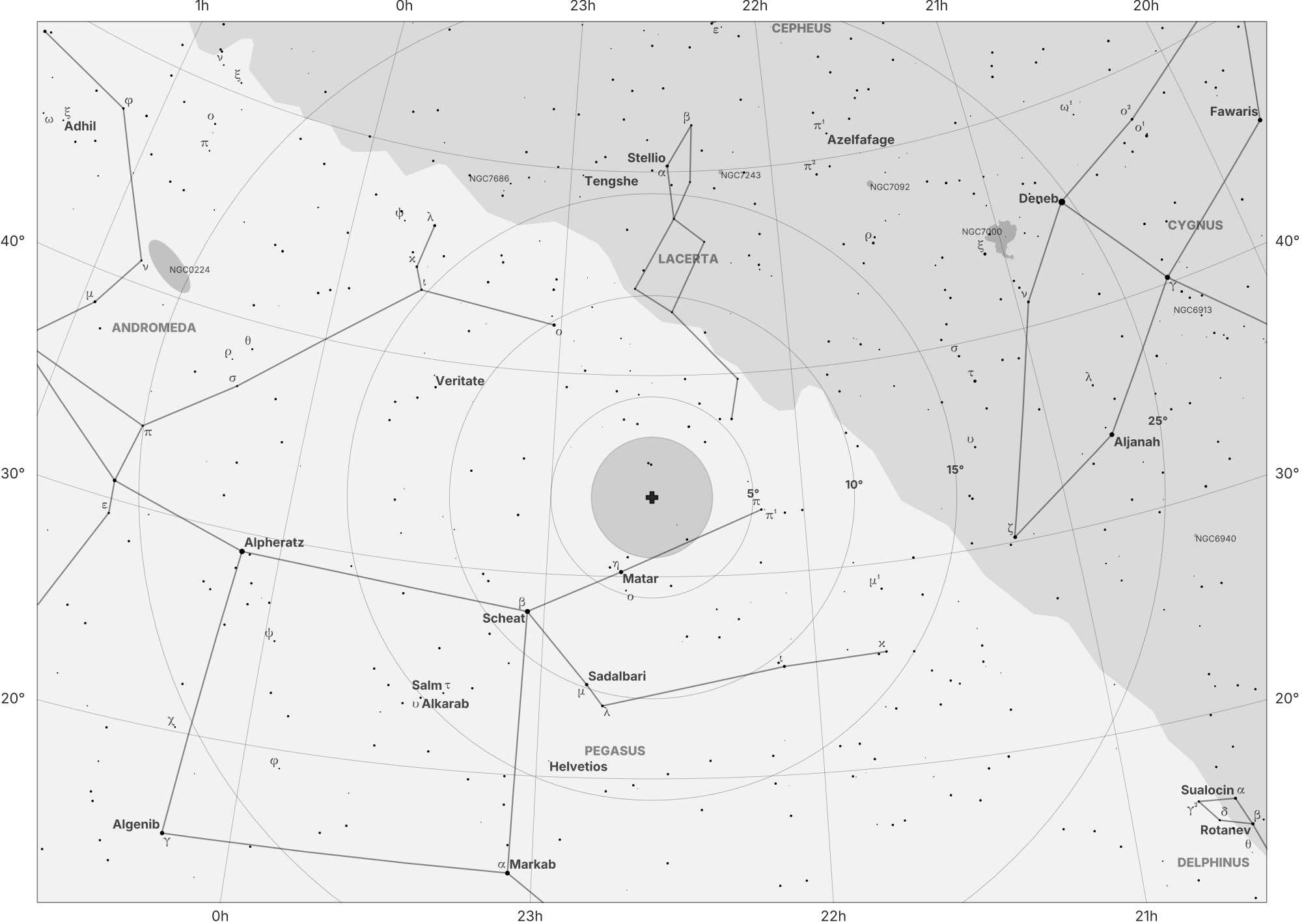
Finder map for Stephan's Quintet
NGC 7317 is a member of Stephan’s Quintet, a compact interacting galaxy group that has become iconic in modern astronomy. The system gained renewed public attention in the 21st century when it was selected as one of the first showcase targets for the James Webb Space Telescope. It has no known historical or cultural significance prior to modern astronomy. Best observed when near culmination to maximize contrast and minimize atmospheric effects. While the brighter galaxies in Stephan’s Quintet are readily distinguishable in large amateur telescopes, detecting the fainter members and appreciating the group as an interacting system requires dark skies and careful observing. Subtle interaction features and tidal distortions remain extremely difficult visually.
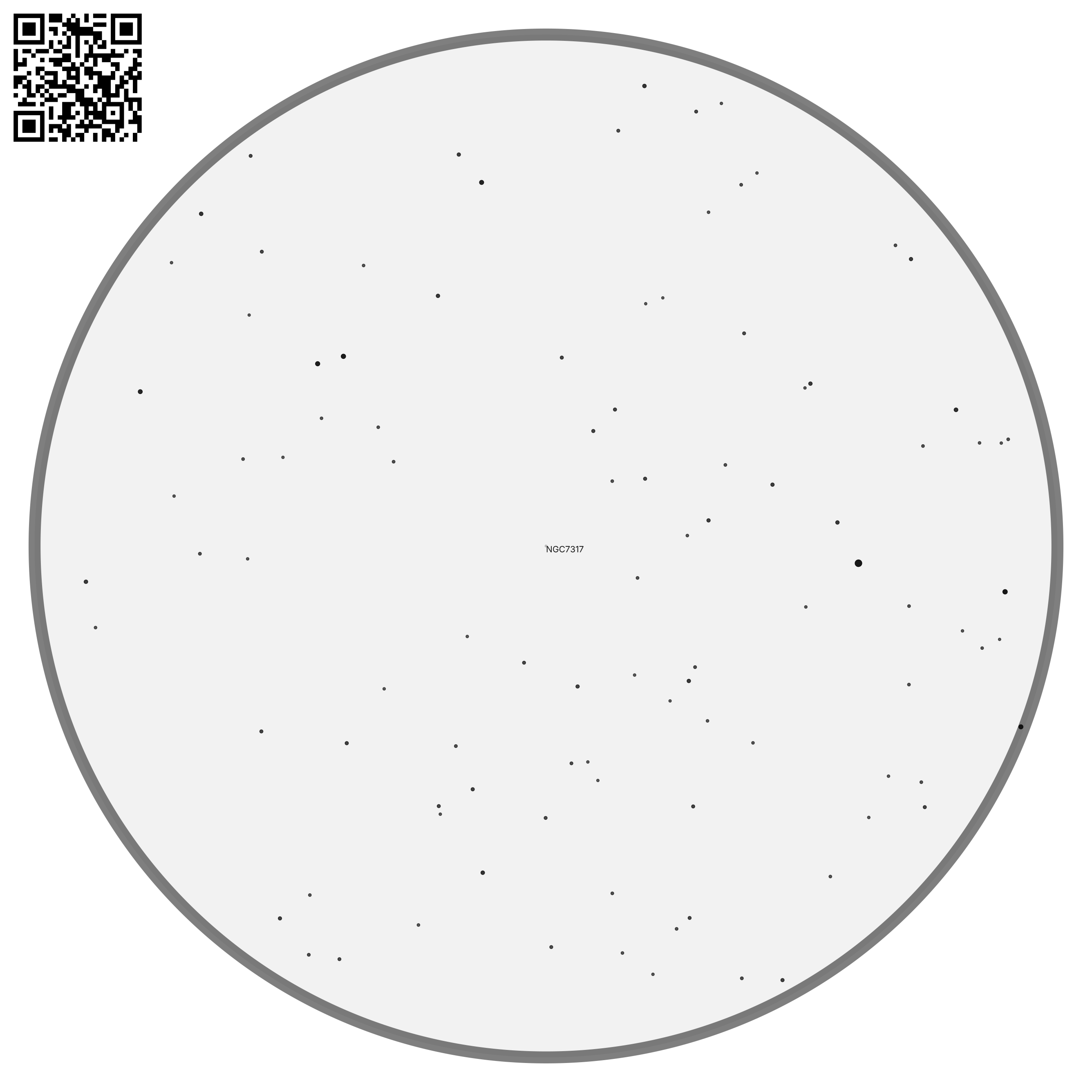
Finder scope & binocular view of Stephan's Quintet
| Property | Value |
|---|---|
| Common names | Stephan’s Quintet |
| Catalog names | NGC 7317, PGC 69256, Arp 319, VV 288, HCG 92e |
| Type | Galaxy Group |
| Subtype | Compact Group of Galaxies |
| Coordinates | 22h 35m 51.87s, +33° 56’ 41.76” |
| Season | August - October |
| Best month | September |
| Beginner friendly | No |
| Visual reward | Low |
| Filters required | None |
| LP tolerance | Low |
| Minimum equipment | Large telescope |
| Optimal equipment | Large telescope |
| Magnitude | 13.6 |
| Size | 1.12 arcminutes x 1.1 arcminutes |
| Constellation | Pegasus |
Observation Notes
Naked Eye
Not visible.
Binoculars
Not visible.
Small Telescope
Effectively invisible. NGC 7317 itself is far too faint and diffuse to be reliably detected in small apertures.
Medium Telescope
Very difficult. Even under very dark skies, NGC 7317 is usually not individually identifiable; at best, a vague, low-contrast glow may be suspected in the general Stephan’s Quintet region without clear separation of members.
Large Telescope
In apertures of roughly 16 inches or larger under excellent transparency, multiple members of Stephan’s Quintet can be detected as distinct, small, diffuse patches. NGC 7317 remains one of the fainter components. The foreground spiral NGC 7320 is typically the easiest member to see, though it is not physically associated with the interacting group.