EZ Canis Majoris
4-8 inch Telescope • Wolf Rayet Stars
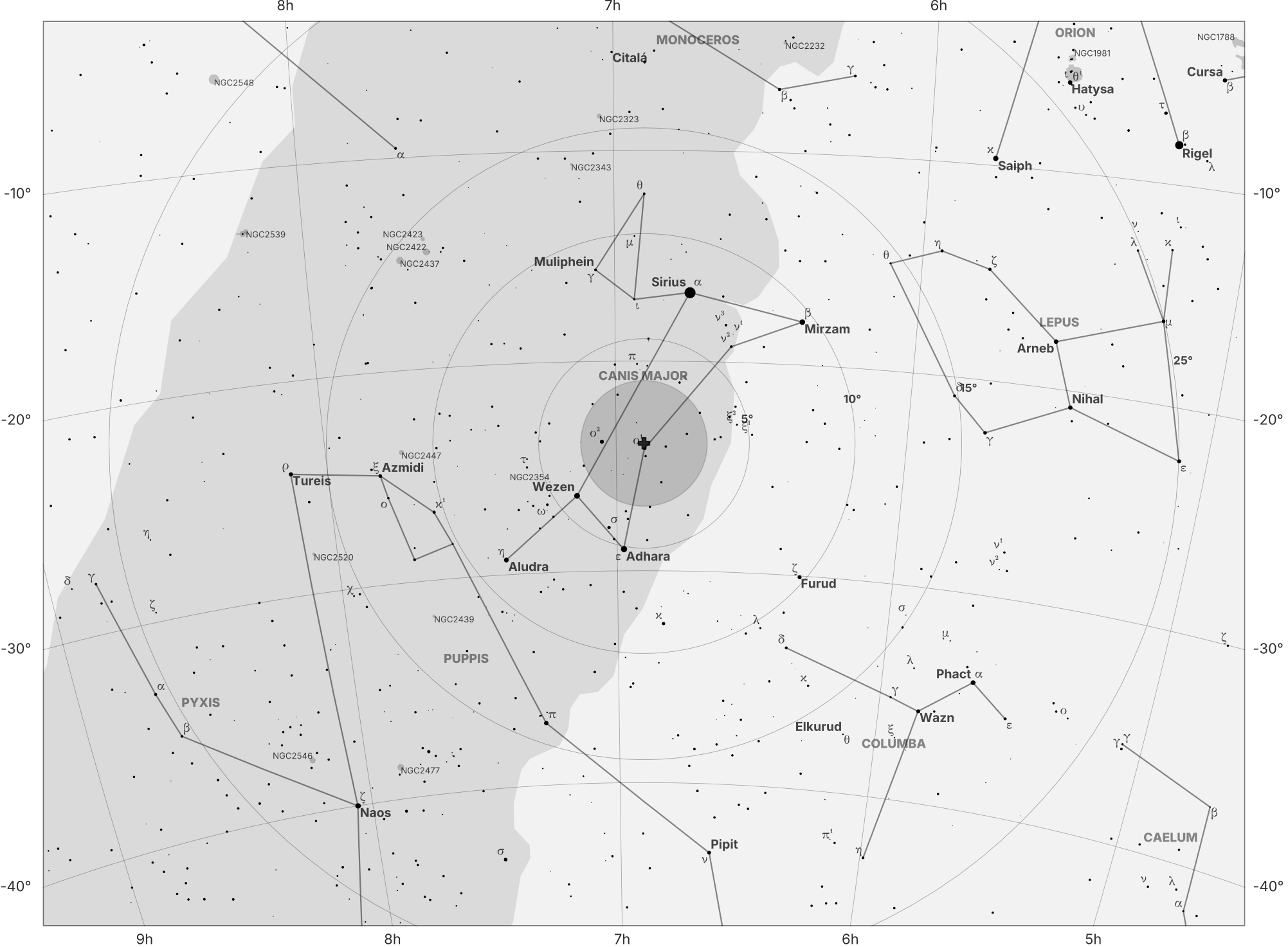
Finder map for EZ Canis Majoris
Best observed from the Southern Hemisphere, where it reaches a high altitude. From mid-northern latitudes it remains relatively low in the southern sky and is best observed near culmination. The challenge lies in recognizing EZ Canis Majoris as an ordinary-looking star at the eyepiece despite its extreme physical nature; no distinctive color or surrounding nebulosity is visible in small telescopes.
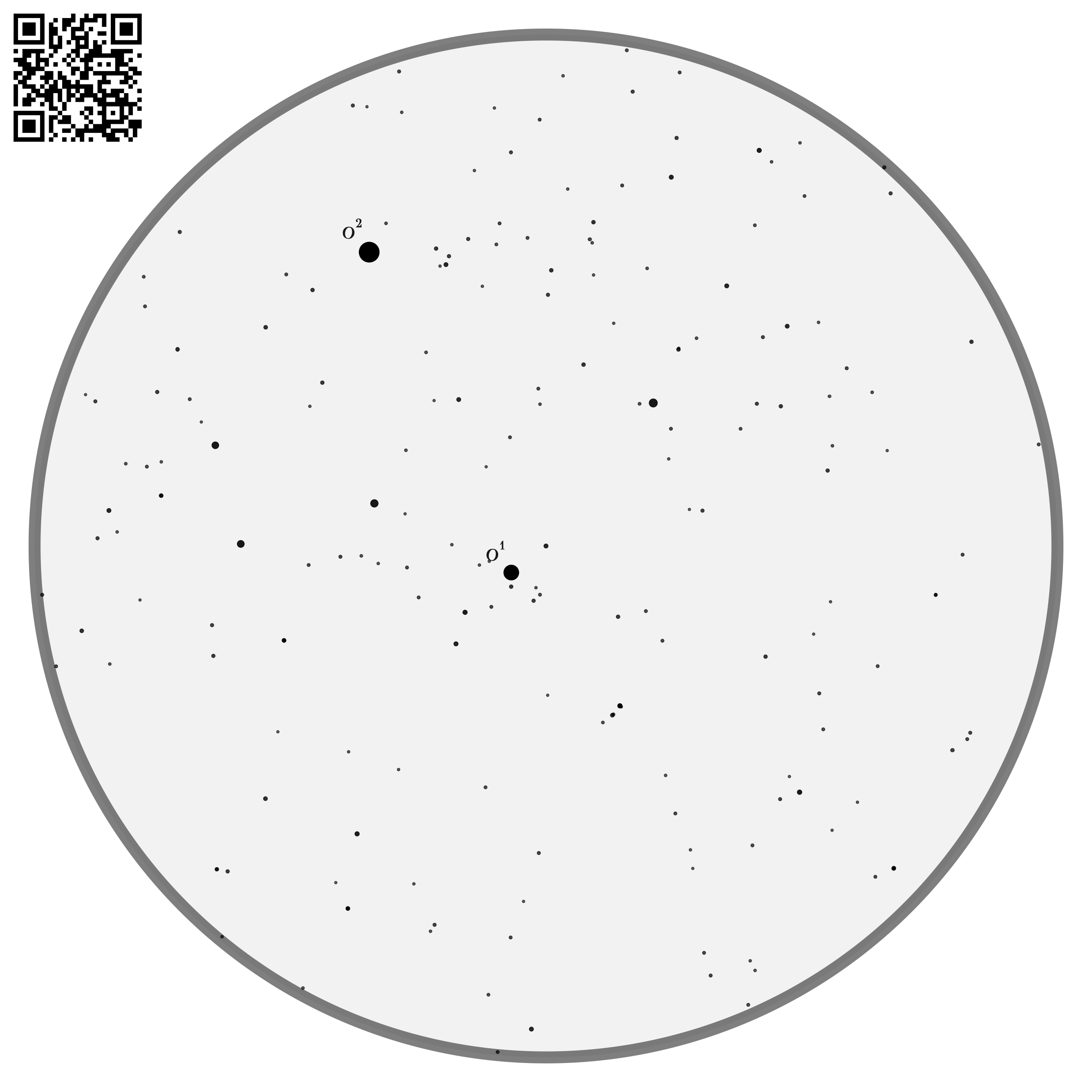
Finder scope & binocular view of EZ Canis Majoris
| Property | Value |
|---|---|
| Common names | EZ CMa, WR 6 |
| Catalog names | - |
| Type | Blue Supergiant |
| Subtype | Wolf-Rayet Star |
| Coordinates | 6h 54m 13.04s, -23° 55’ 42.02” |
| Season | December - February |
| Best month | January |
| Beginner friendly | No |
| Visual reward | Low |
| Filters required | None |
| LP tolerance | High |
| Minimum equipment | Small telescope |
| Optimal equipment | Medium telescope |
| Magnitude | 6.9 |
| Size | - |
| Constellation | Canis Major |
Observation Notes
Naked Eye
Generally not visible; detection without optical aid is uncertain and not reliable.
Binoculars
Easily visible in 7×50 or 10×50 binoculars as a faint but distinct stellar point with no surrounding nebulosity.
Small Telescope
In 4–6 inch apertures, appears as a cleanly resolved, moderately faint star, often showing a subtle bluish-white color. No additional features are visible.
Medium Telescope
With 8–12 inches, the star remains a point source; the blue-white coloration may be slightly more apparent under good conditions. No surrounding nebulosity is visible.
Large Telescope
In apertures of roughly 12–14 inches and larger under exceptionally dark, transparent skies, the very faint arc of the surrounding Sharpless 2-308 nebula may be suspected using an O-III filter and low power. Detection is extremely difficult and typically limited to brief, low-contrast impressions rather than a continuous arc.