Gamma Velorum
4-8 inch Telescope • Wolf Rayet Stars
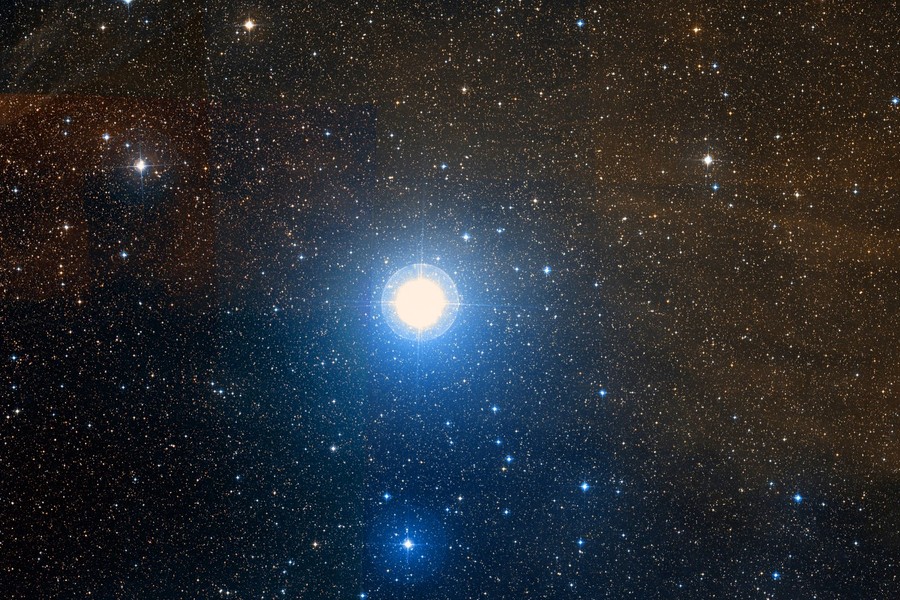
Image: Strasbourg Astronomical Data Center and DSS
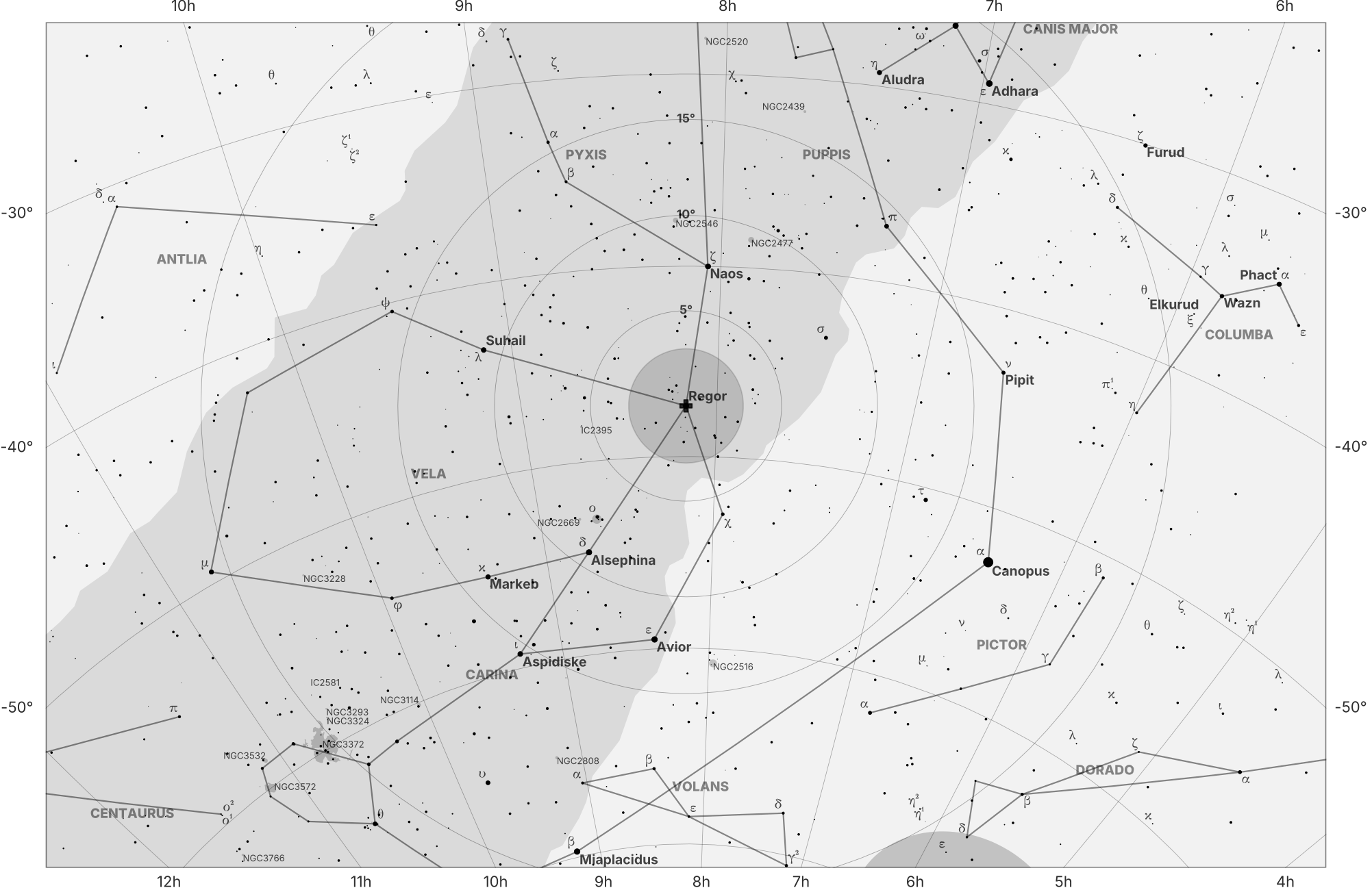
Finder map for Gamma Velorum
As part of the former constellation Argo Navis, Regor lay within the region of sky traditionally associated with the mythological ship of the Argonauts. The star itself has no distinct, well-attested individual mythological identity. High in the sky for Southern Hemisphere observers. From mid-northern latitudes it remains very low in the southern sky, and it is unobservable from far-northern locations. The challenge lies in observing a Wolf–Rayet star that appears visually ordinary at the eyepiece; even the close primary pair is difficult to resolve in smaller telescopes and may appear stellar under typical seeing.
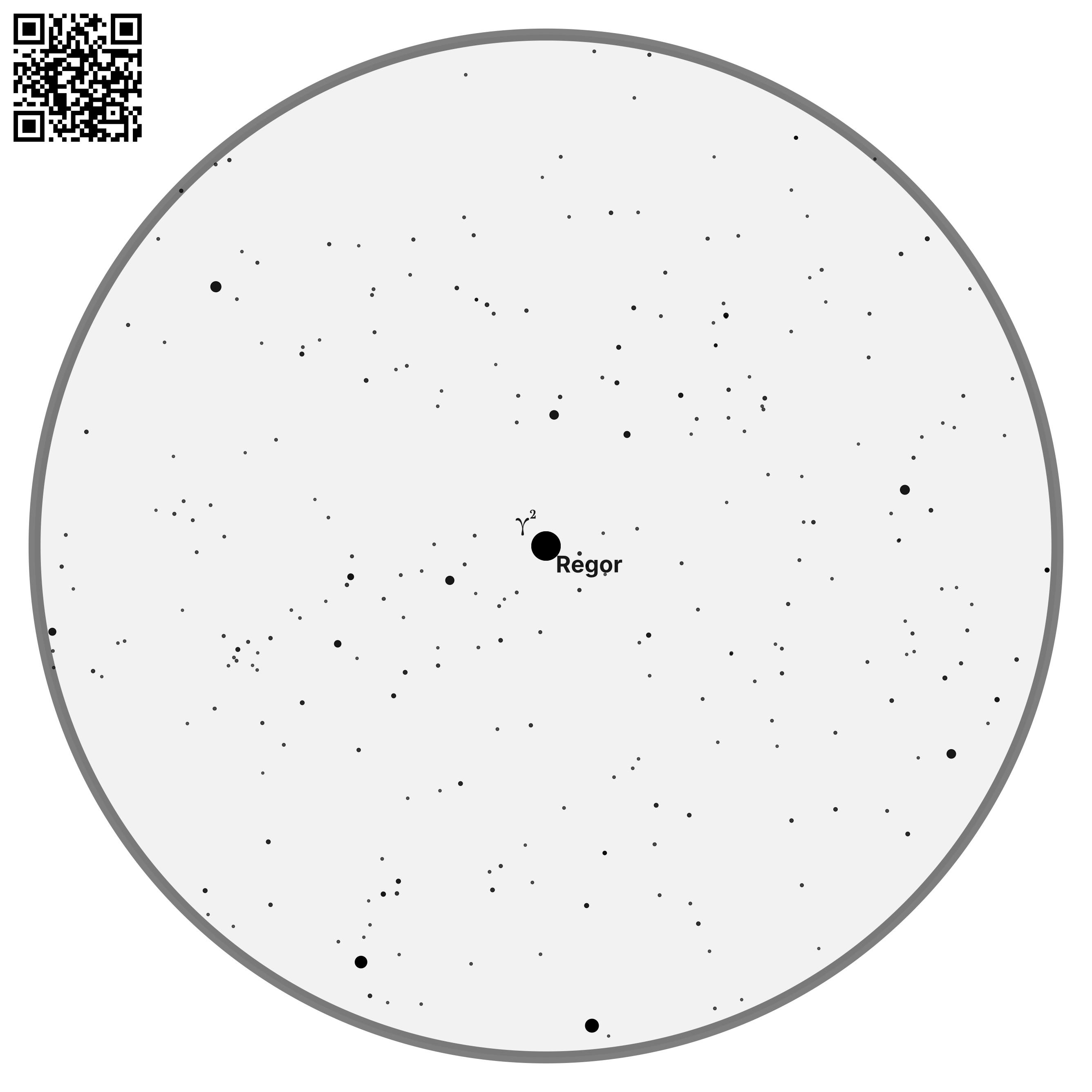
Finder scope & binocular view of Gamma Velorum
| Property | Value |
|---|---|
| Common names | Regor, Suhail al-Muhlif |
| Catalog names | - |
| Type | Blue Supergiant |
| Subtype | Wolf-Rayet Star |
| Coordinates | 8h 09m 31.95s, -47° 20’ 11.71” |
| Season | January - March |
| Best month | February |
| Beginner friendly | Yes |
| Visual reward | Low |
| Filters required | None |
| LP tolerance | High |
| Minimum equipment | Naked eye |
| Optimal equipment | Binoculars |
| Magnitude | 1.8 |
| Size | - |
| Constellation | Vela |
Observation Notes
Naked Eye
A bright blue-white star and the brightest in the constellation Vela, easily seen near the prominent asterism known as the False Cross.
Binoculars
In typical 7× or 10× handheld binoculars, appears as a single bright star; under steady conditions it may appear very slightly elongated. Separating γ¹ and γ² generally requires higher magnification binoculars (around 15×–20×) on a stable mount and good seeing.
Small Telescope
In 4–6 inch apertures, provides a clean and attractive split of γ¹ and γ². The intense blue-white color of γ² is striking, making this a classic double-star target.
Medium Telescope
With 8–12 inches under good seeing, the nearby fainter component (around 9th magnitude) may be glimpsed, though it is not always easy. The darker sky background enhances contrast between the main components.
Large Telescope
In larger apertures, the wide, bright primary pair offers little additional challenge. Attention shifts to the very faint and closer D and E components, which require high magnification, excellent seeing, and careful technique, and are not routine visual targets.