WR 136
4-8 inch Telescope • Wolf Rayet Stars
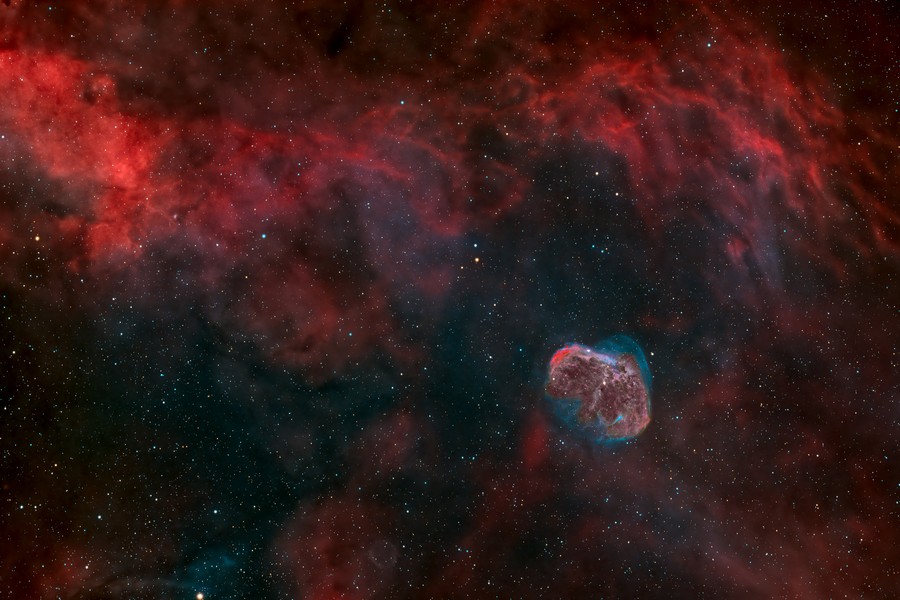
Image: Luc Viatour
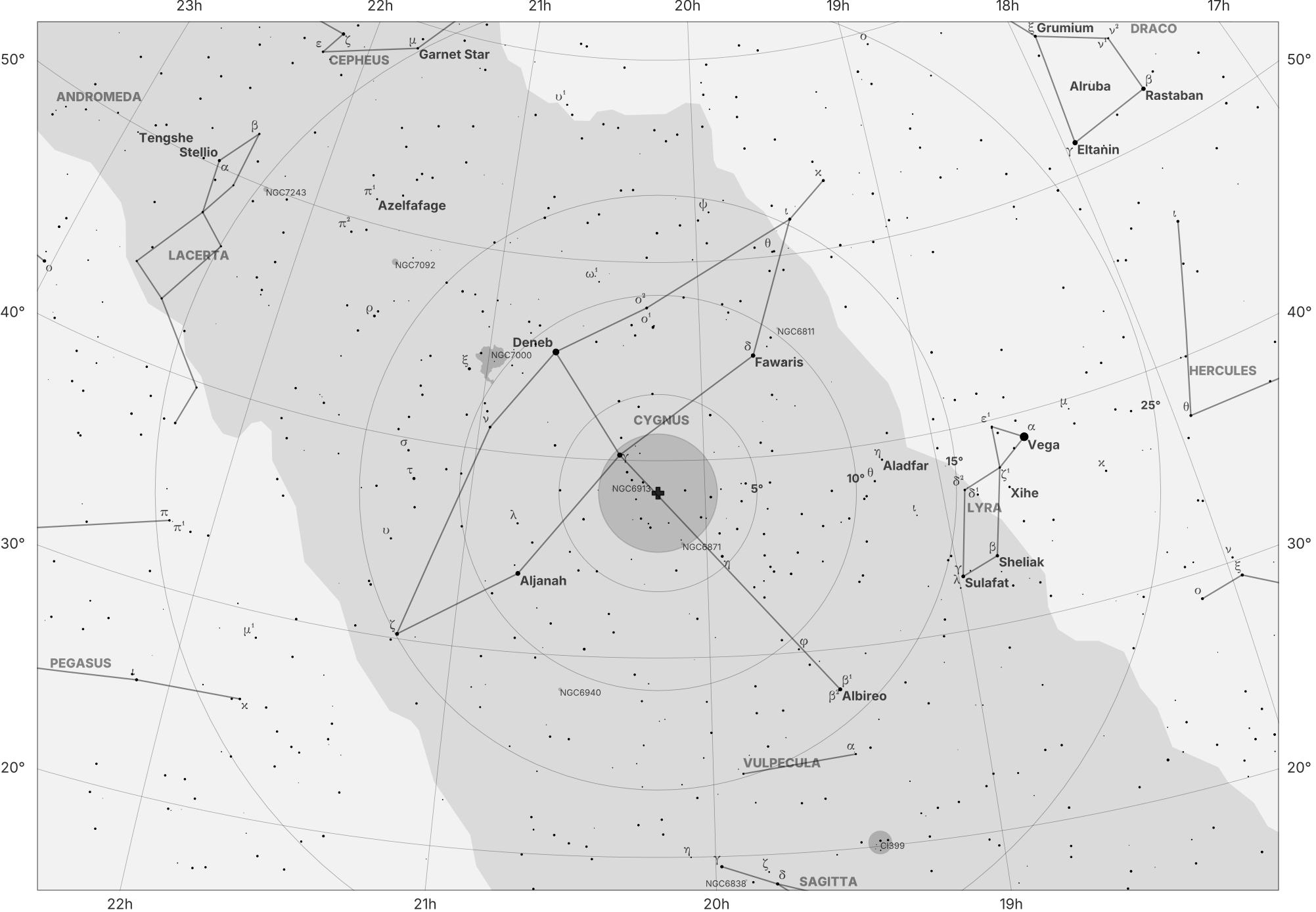
Finder map for WR 136
Best viewed from the Northern Hemisphere where it reaches high altitude. Less favorable for far southern latitudes. The surrounding Crescent Nebula (NGC 6888) is a challenging astrophotographic target and is generally beyond the reach of visual observation in this aperture class.
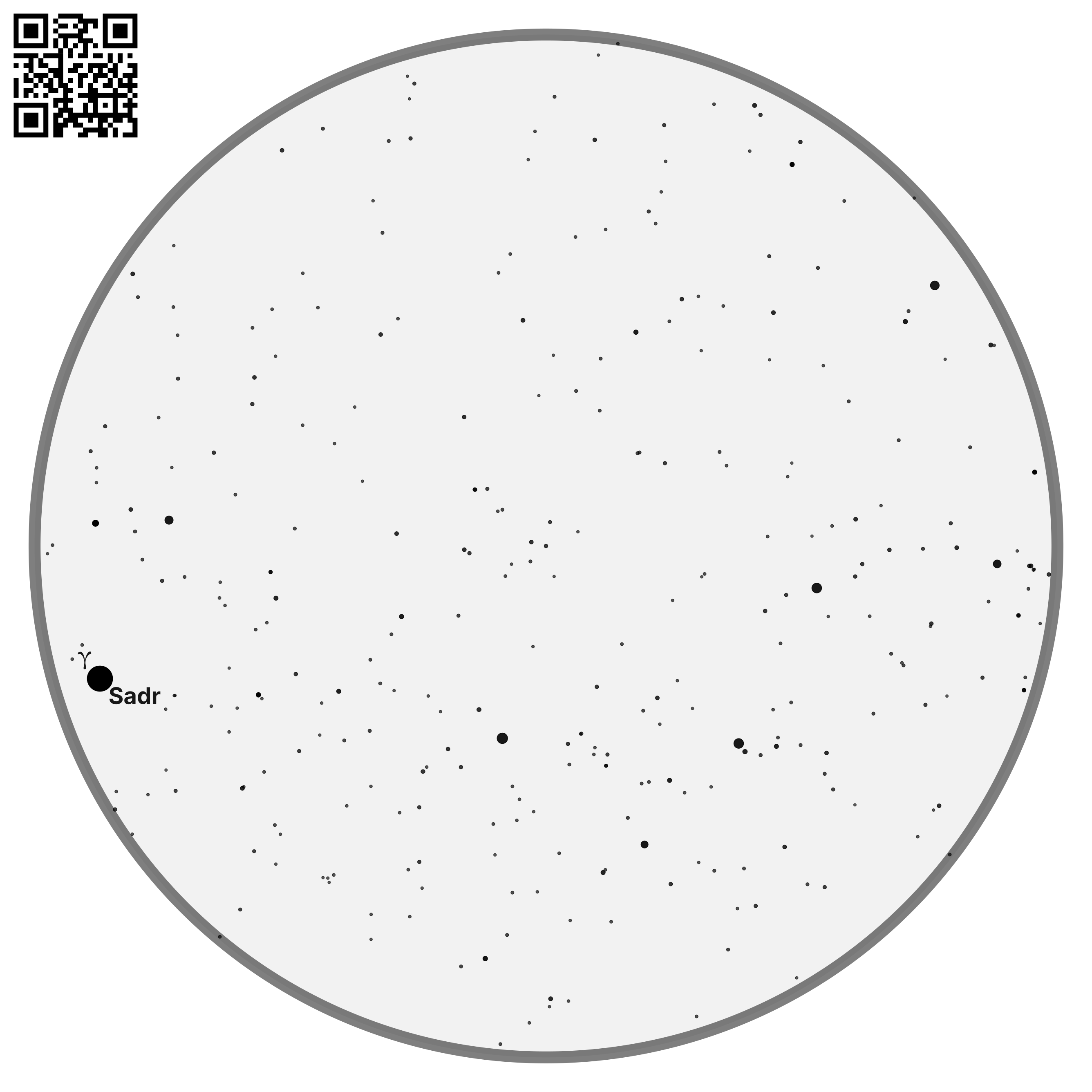
Finder scope & binocular view of WR 136
| Property | Value |
|---|---|
| Common names | HD 192163, V1770 Cygni |
| Catalog names | - |
| Type | Blue Supergiant |
| Subtype | Wolf-Rayet Star |
| Coordinates | 20h 12m 06.54s, +38° 21’ 17.78” |
| Season | July - September |
| Best month | August |
| Beginner friendly | No |
| Visual reward | Low |
| Filters required | None |
| LP tolerance | High |
| Minimum equipment | Small telescope |
| Optimal equipment | Medium telescope |
| Magnitude | 7.5 |
| Size | - |
| Constellation | Cygnus |
Observation Notes
Naked Eye
Not visible.
Binoculars
Visible in 10×50 or larger binoculars from dark sites as a faint stellar point, indistinguishable from surrounding field stars without precise identification.
Small Telescope
In 4–6 inch apertures, the star appears bright and stellar. Under very dark skies and using an O-III filter, the Crescent Nebula may be suspected as an extremely faint, diffuse arc, but detection is uncertain and not routine.
Medium Telescope
With 8–12 inches and an O-III filter under dark skies, the main arc of the Crescent Nebula becomes traceable as a curved band of low-contrast nebulosity surrounding the star. The view remains subtle and contrast-limited.
Large Telescope
In apertures of roughly 14 inches and larger, the nebula shows increased contrast, breaking into uneven, filamentary strands and brightness variations along the arc when observed with an O-III filter. The structure remains delicate and diffuse rather than sharply defined, while the central Wolf–Rayet star remains a bright point source.