Barnard 142 and 143
4-8 inch Telescope • Dark Nebulae
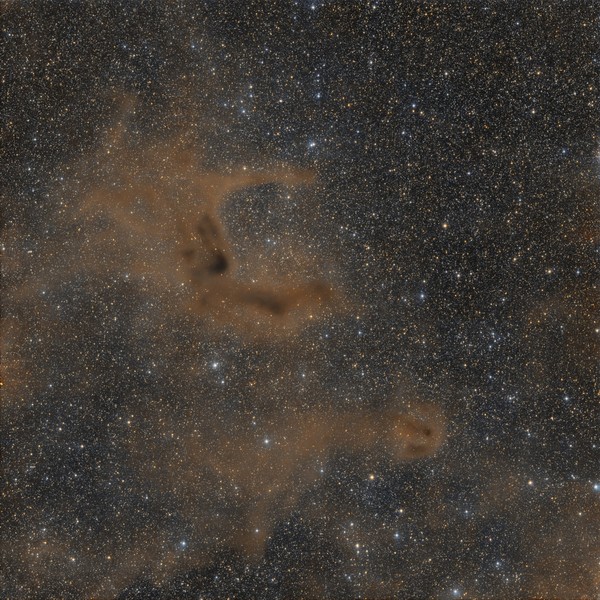
Image: Chuck Ayoub
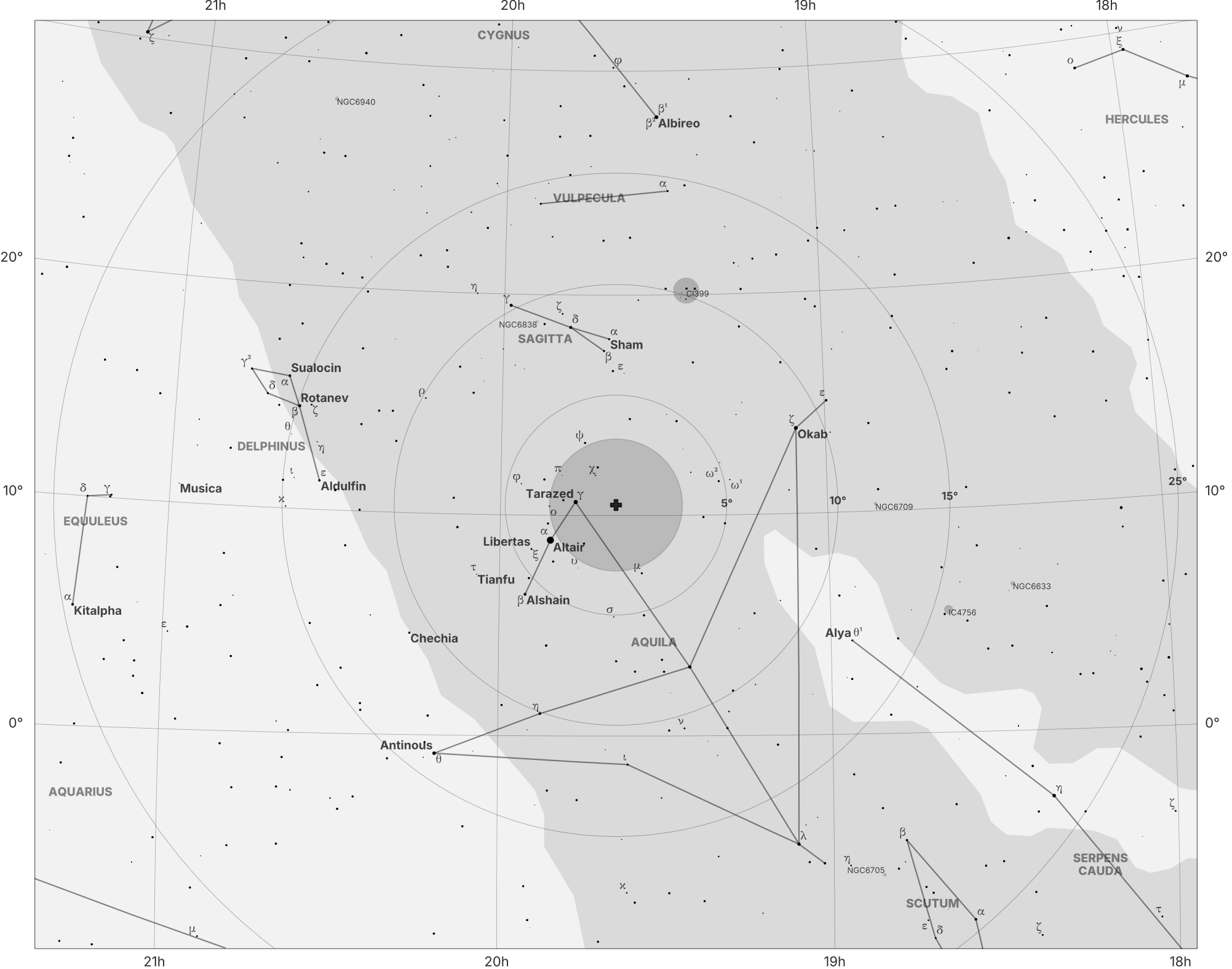
Finder map for Barnard 142 and 143
No known cultural or mythological significance. LDN 688 is primarily known within the astronomical community as a representative example of a dark nebula, of interest to experienced observers under suitable sky conditions. Best viewed when high in the sky to maximize contrast, ideally above 30 degrees. Discerning LDN 688 requires very dark, transparent skies and careful star-field comparison, as the nebula appears only as a subtle reduction in star density rather than a distinct object.
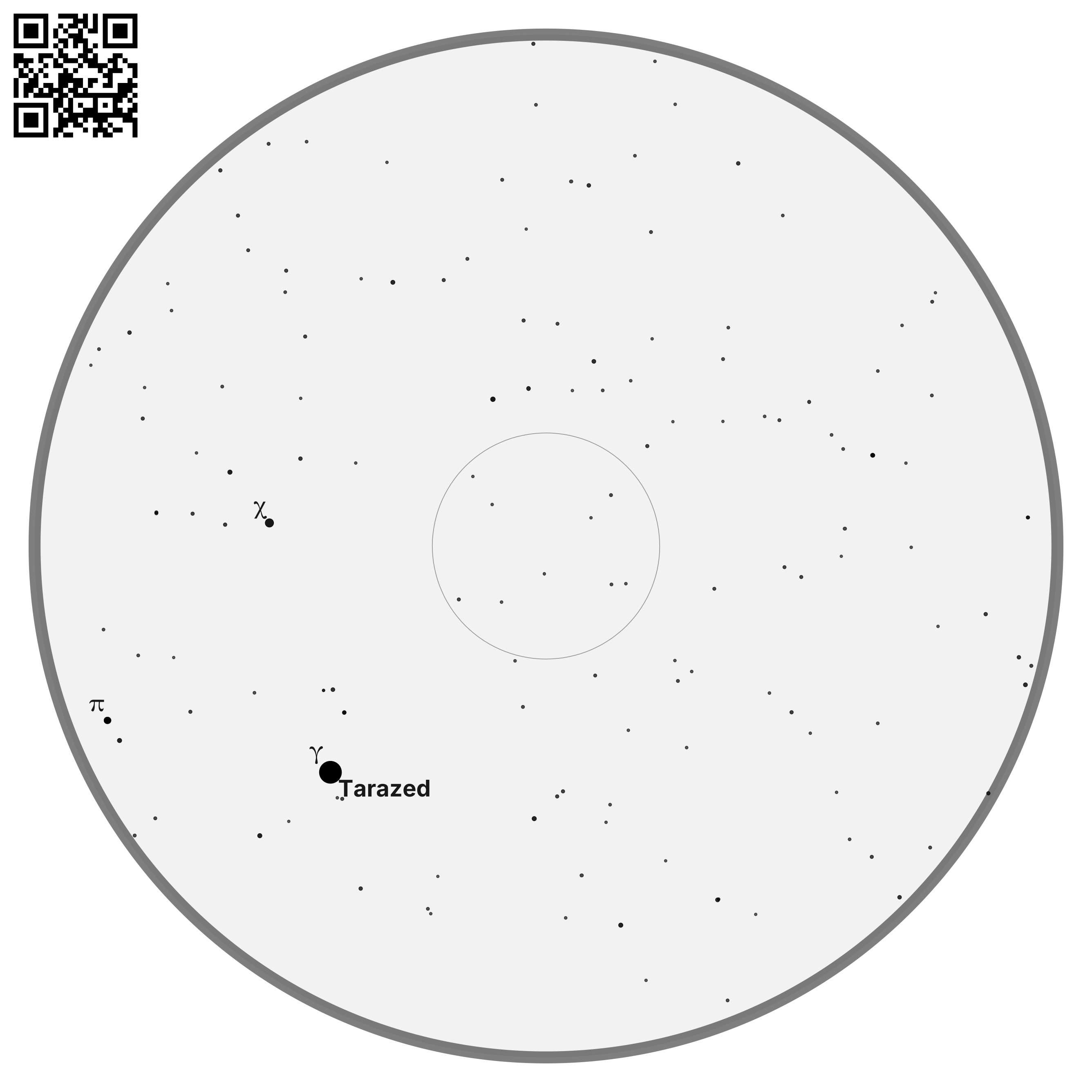
Finder scope & binocular view of Barnard 142 and 143
| Property | Value |
|---|---|
| Common names | E Nebula, Barnard’s E |
| Catalog names | B 142, B 143, LDN 688 |
| Type | Cloud |
| Subtype | Dark Nebula |
| Coordinates | 19h 38m 48.00s, +10° 28’ 60.00” |
| Season | June - August |
| Best month | Mid-July |
| Beginner friendly | No |
| Visual reward | Low |
| Filters required | None |
| LP tolerance | Low |
| Minimum equipment | Small telescope |
| Optimal equipment | Medium telescope |
| Magnitude | - |
| Size | 40.0 arcminutes x 40.0 arcminutes |
| Constellation | Aquila |
Observation Notes
Naked Eye
Not visible. From dark sites, the surrounding Milky Way star fields in Aquila are prominent and provide the necessary backdrop for detecting nearby dark nebulae.
Binoculars
Detectable under very dark, transparent skies. The famous “E”-shaped pattern is formed primarily by the adjacent Barnard 142/143 complex, with LDN 688 contributing to the broader dark region. The nebulae appear as a clear absence of stars rather than as a defined object, requiring good dark adaptation and slow, careful scanning.
Small Telescope
Best observed with a rich-field telescope at the lowest possible magnification to maintain wide context. The goal is to frame the dark lanes against a dense star background, where the shape is suggested by contrast rather than sharp edges.
Medium Telescope
Higher magnification generally works against detection by reducing field of view and contrast. A wide-field eyepiece at low power is essential; even then, the appearance remains subtle and dependent on sky quality.
Large Telescope
Usually offers no advantage for appreciating the overall shape, as narrow fields and resolution of faint background stars can reduce the perceived contrast of the dark nebula. Large apertures are better reserved for other targets in this region.