B86
4-8 inch Telescope • Dark Nebulae
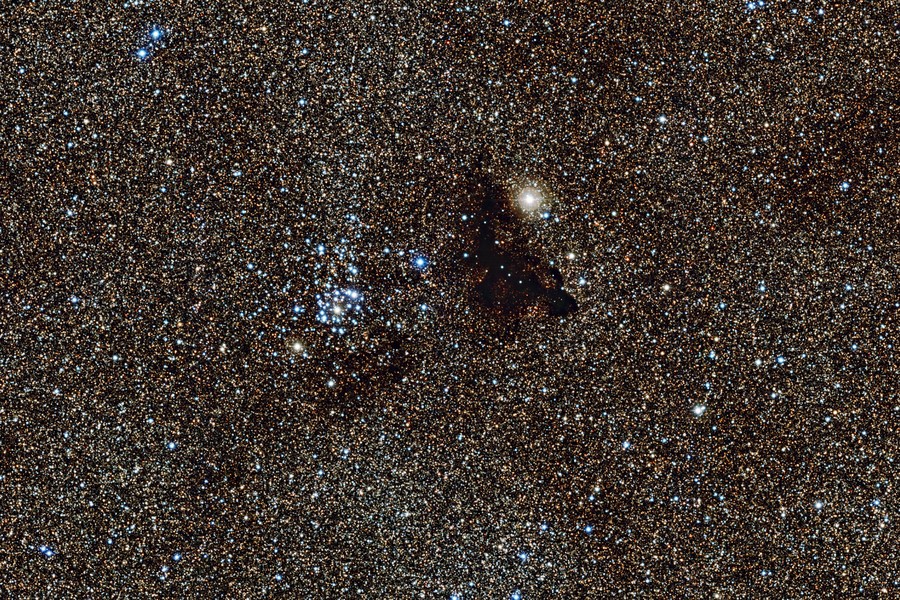
Image: ESO
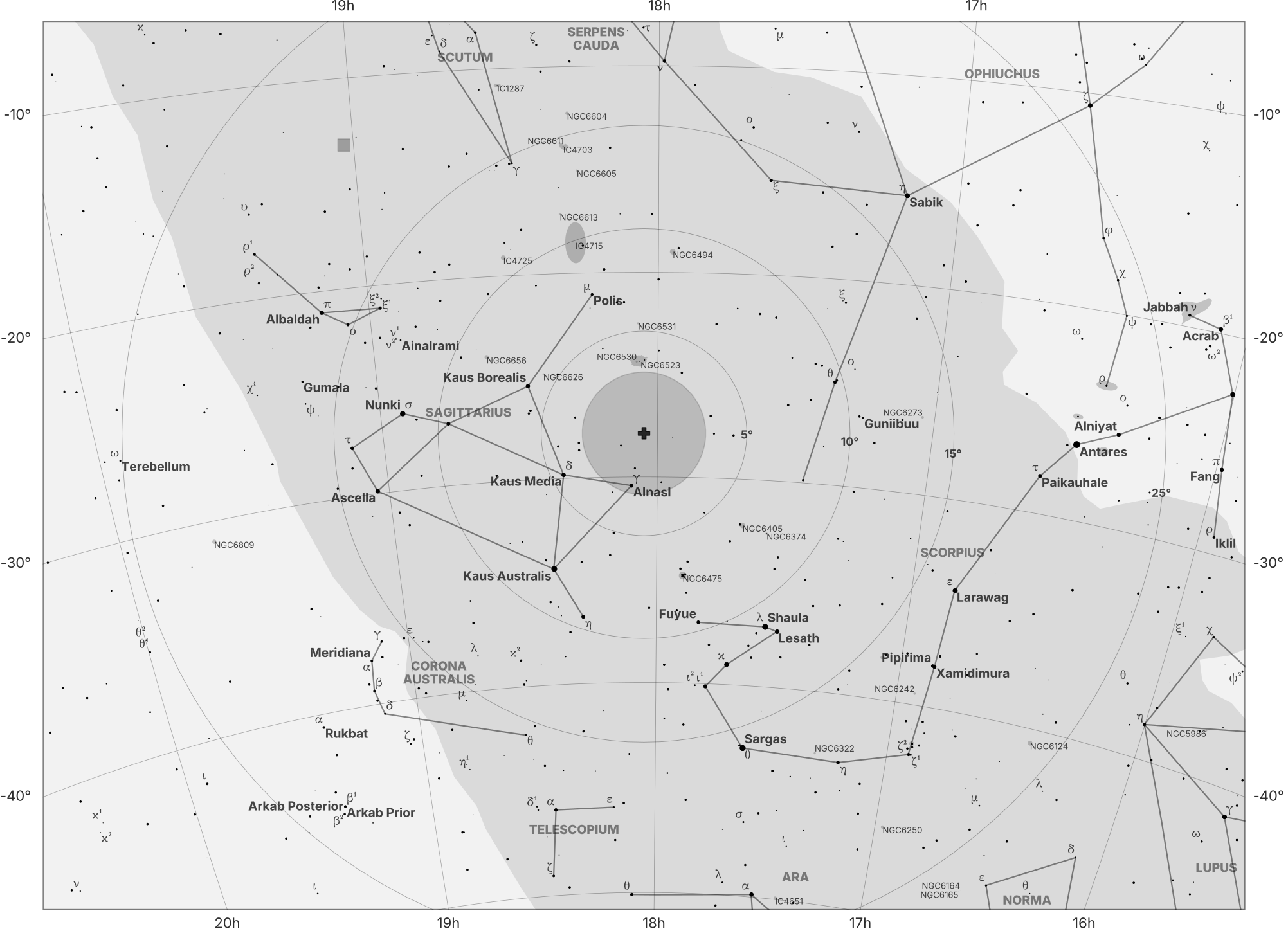
Finder map for B86
No known cultural or mythological significance. LDN 93 is known primarily among experienced observers as a representative dark nebula embedded in the Sagittarius Milky Way. Requires a clear southern horizon for mid-latitude Northern Hemisphere observers due to its location in Sagittarius. It is better placed and reaches higher altitude for Southern Hemisphere observers. Achieving sufficient contrast to distinguish its dark form against the dense star clouds of the Sagittarius Milky Way. Dark skies are essential.
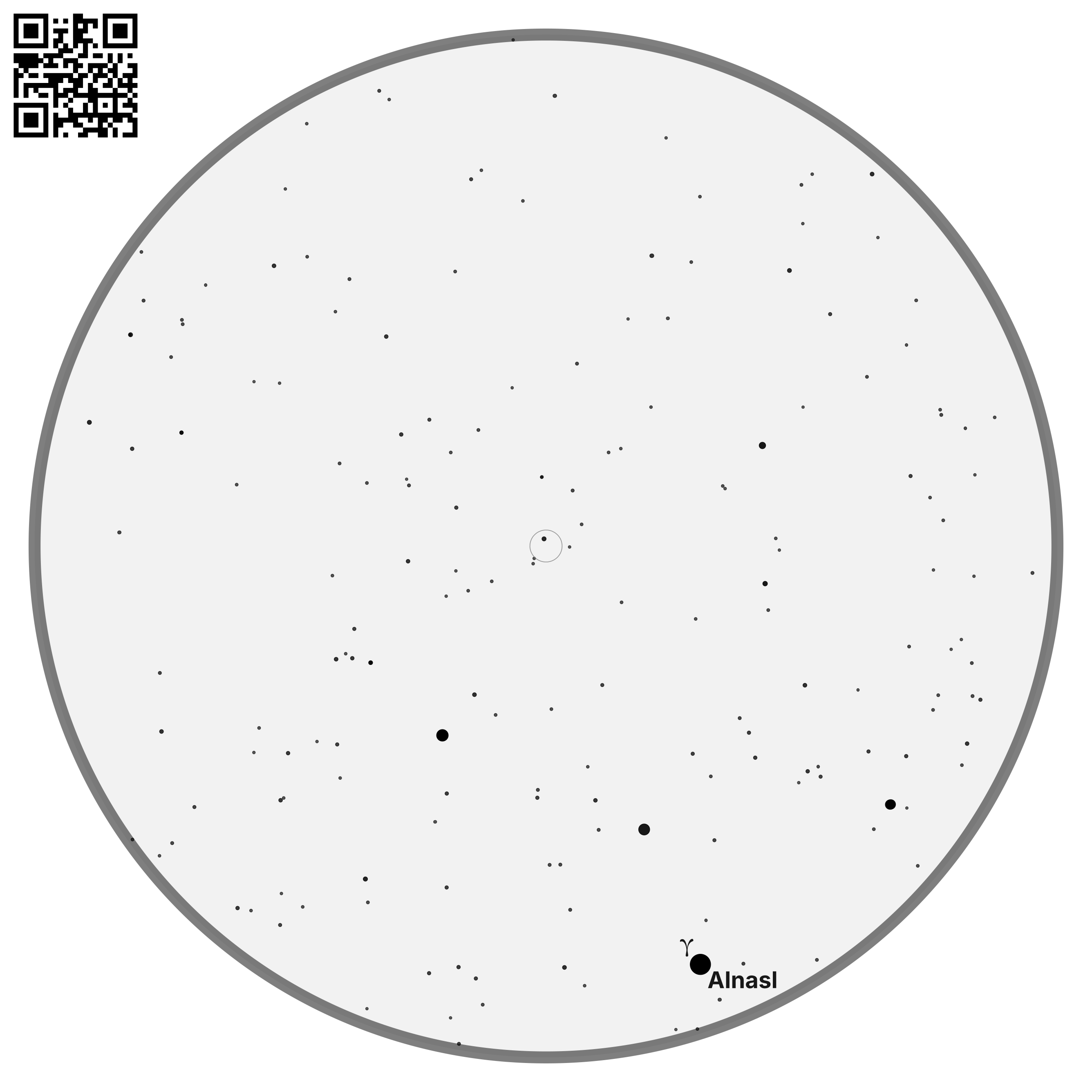
Finder scope & binocular view of B86
| Property | Value |
|---|---|
| Common names | Ink Spot Nebula, The Ink Spot |
| Catalog names | B 86, LDN 93 |
| Type | Cloud |
| Subtype | Dark Nebula |
| Coordinates | 18h 02m 58.00s, -27° 52’ 06.00” |
| Season | May - July |
| Best month | Mid-June |
| Beginner friendly | No |
| Visual reward | Low |
| Filters required | None |
| LP tolerance | Low |
| Minimum equipment | Small telescope |
| Optimal equipment | Medium telescope |
| Magnitude | - |
| Size | 5.66 arcminutes x 5.66 arcminutes |
| Constellation | Sagittarius |
Observation Notes
Naked Eye
Not visible. From dark sites, the surrounding Sagittarius Milky Way is rich and bright, but the dark nebula itself requires optical aid.
Binoculars
Very challenging but possible under excellent dark-sky conditions. In 10×50 binoculars, the nebula may appear as a tiny, unusually dark notch adjacent to the compact open cluster NGC 6520, best detected by careful, averted viewing.
Small Telescope
Under dark skies, clearly visible as a small, starless patch of sky immediately next to NGC 6520. A low-power, wide-field eyepiece is recommended to frame the striking contrast between the dark nebula and the sparkling cluster.
Medium Telescope
Enhances the contrast, making the nebula stand out strongly as a conspicuous absence of stars. The boundary appears distinct by comparison with the dense surrounding star field, though still soft rather than sharply edged.
Large Telescope
Does not greatly improve the overall visual impression and may limit context due to a narrower field of view. Very faint background stars may be resolved near the margins, but the primary appeal remains the dramatic contrast with NGC 6520.