Barnard 72
4-8 inch Telescope • Dark Nebulae
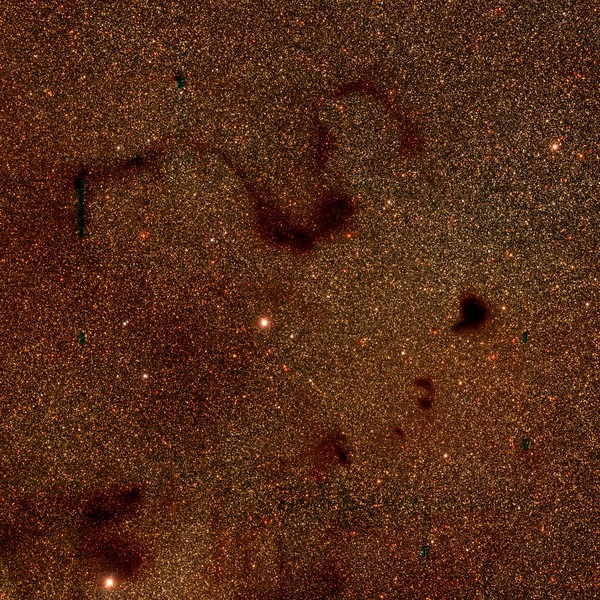
Image: Legacy Surveys / D.Lang (Perimeter Institute) & Meli thev
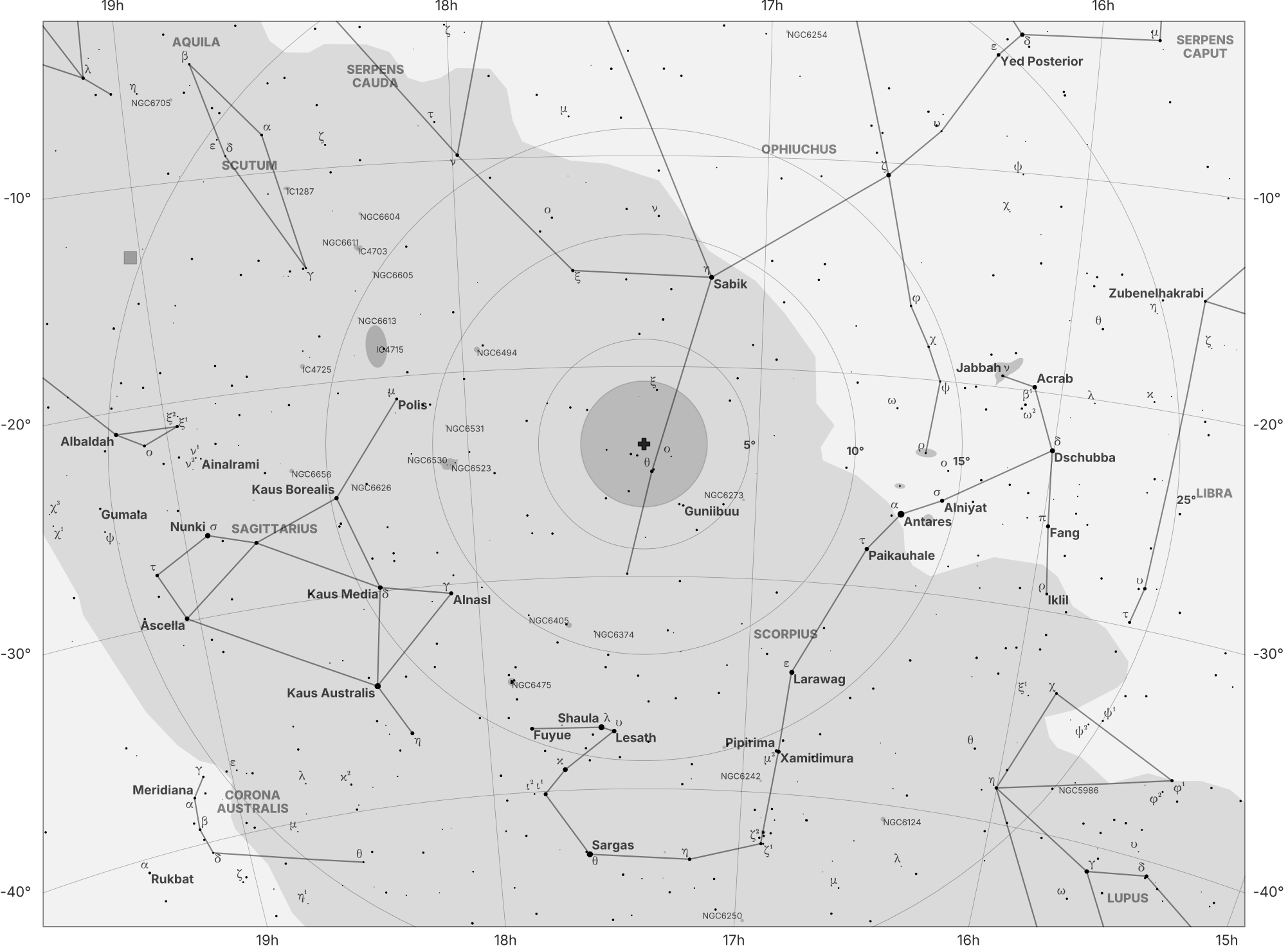
Finder map for Barnard 72
Best observed when high in the sky from a dark location to maximize contrast against the Milky Way. Its extremely low surface brightness and reliance on contrast with the background starfield make it highly susceptible to light pollution and poor sky transparency.
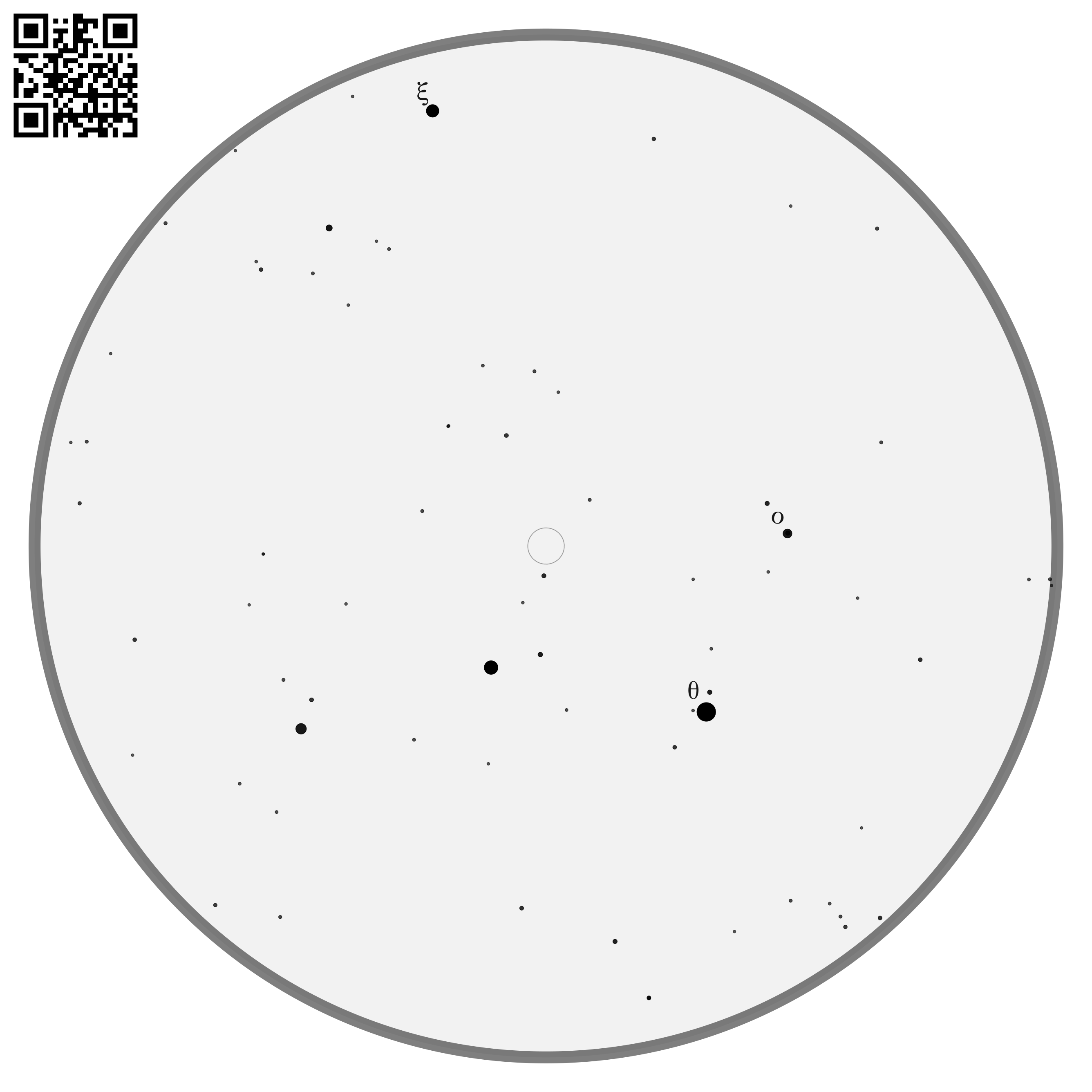
Finder scope & binocular view of Barnard 72
| Property | Value |
|---|---|
| Common names | Snake Nebula |
| Catalog names | B 72, LDN 66 |
| Type | Cloud |
| Subtype | Dark Nebula |
| Coordinates | 17h 23m 39.00s, -23° 41’ 42.00” |
| Season | May - July |
| Best month | Mid-June |
| Beginner friendly | No |
| Visual reward | Low |
| Filters required | None |
| LP tolerance | Low |
| Minimum equipment | Binoculars |
| Optimal equipment | Binoculars |
| Magnitude | - |
| Size | 6.42 arcminutes x 6.42 arcminutes |
| Constellation | Ophiuchus |
Observation Notes
Naked Eye
Not visible. The region appears as part of a bright, richly populated Milky Way star field with no obvious naked-eye darkening.
Binoculars
Detection is difficult and uncertain. Under exceptionally dark, transparent skies and against a rich background, experienced observers may only suspect an irregular region of slightly reduced star density rather than a clearly defined shape.
Small Telescope
Best attempted with a rich-field telescope at the lowest possible magnification and widest field of view. Even then, the nebula is subtle and may only be suspected as a vague thinning of stars; increasing magnification quickly causes the effect to disappear.
Medium Telescope
Generally unsuitable for viewing the nebula as a whole, as the field of view is too narrow and the contrast too low to preserve the large-scale dark structure.
Large Telescope
Not recommended for visual observation of the object. Increased aperture does not reveal internal structure, and the wide-field context needed to perceive the dark cloud is lost.