Coalsack Nebula
Binoculars • Dark Nebulae
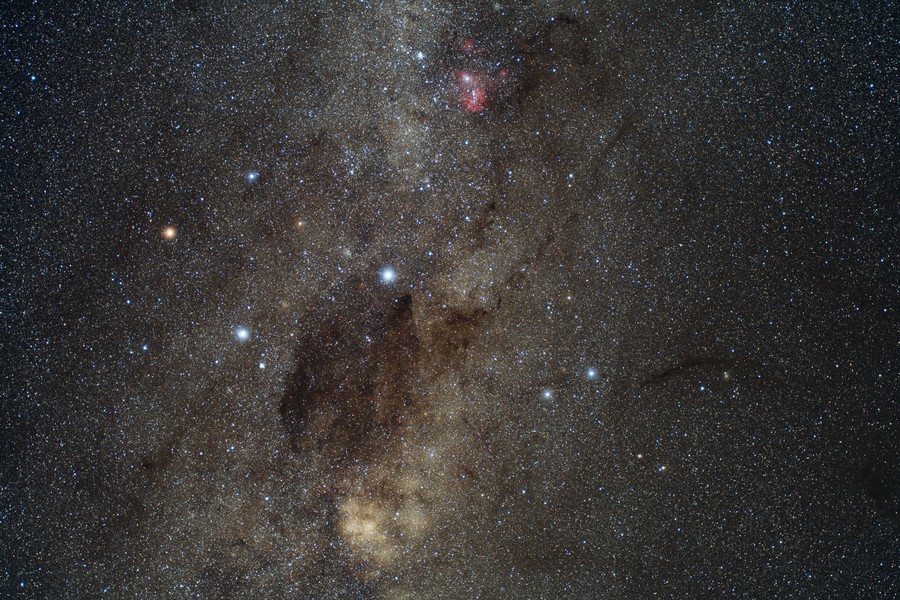
Image: ESO/Y. Beletsky
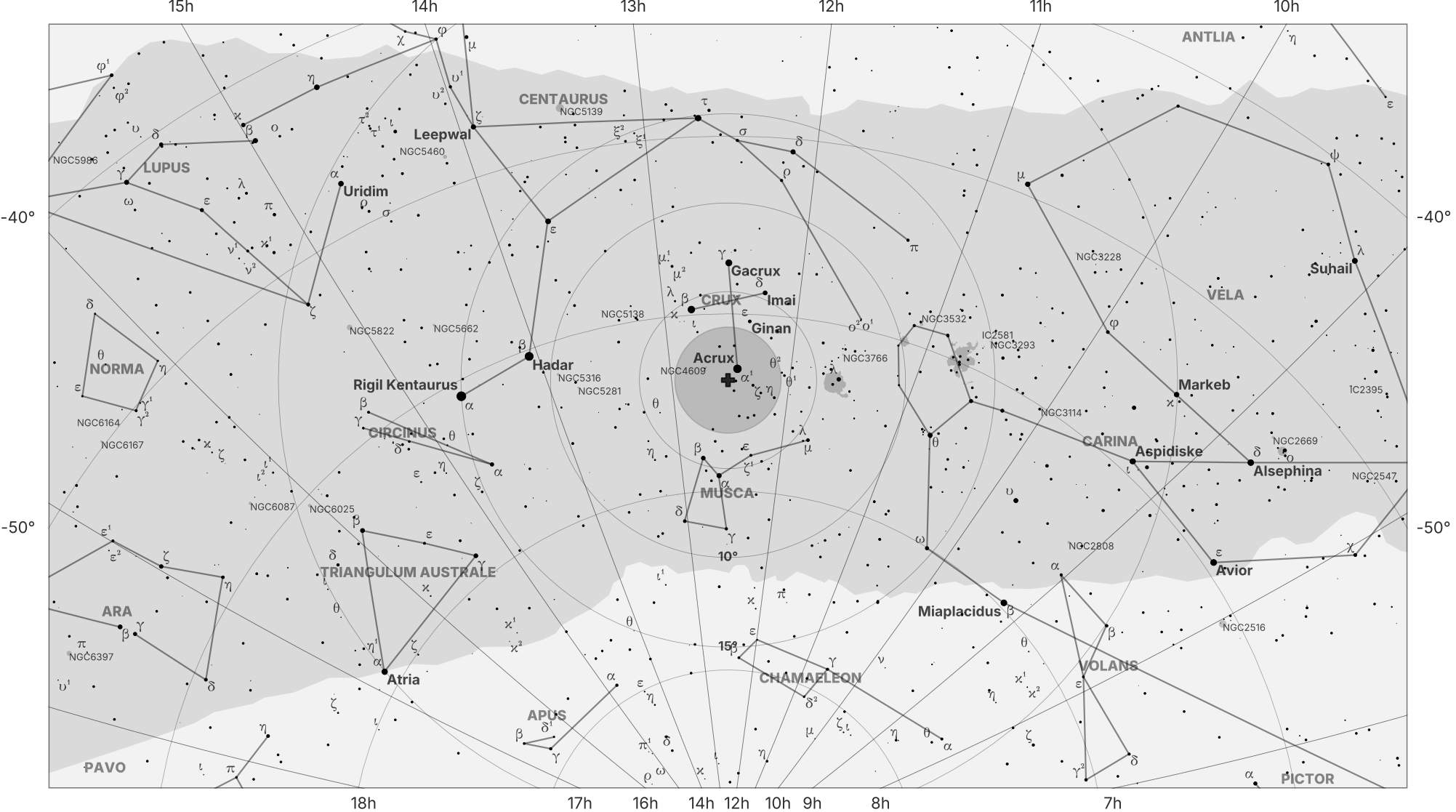
Finder map for Coalsack Nebula
A major feature in many Southern Hemisphere cultures’ cosmologies. Its most famous representation is as the head of the ‘Emu in the Sky’, a constellation made of dark nebulae stretching along the Milky Way in Australian Aboriginal traditions. Visible only from the Southern Hemisphere and tropical latitudes of the Northern Hemisphere. Best seen when high above the horizon. Its enormous size makes it impossible to view in its entirety with most telescopes. The key challenge is finding a dark enough sky to appreciate the subtle contrast and intricate details against the bright Milky Way.
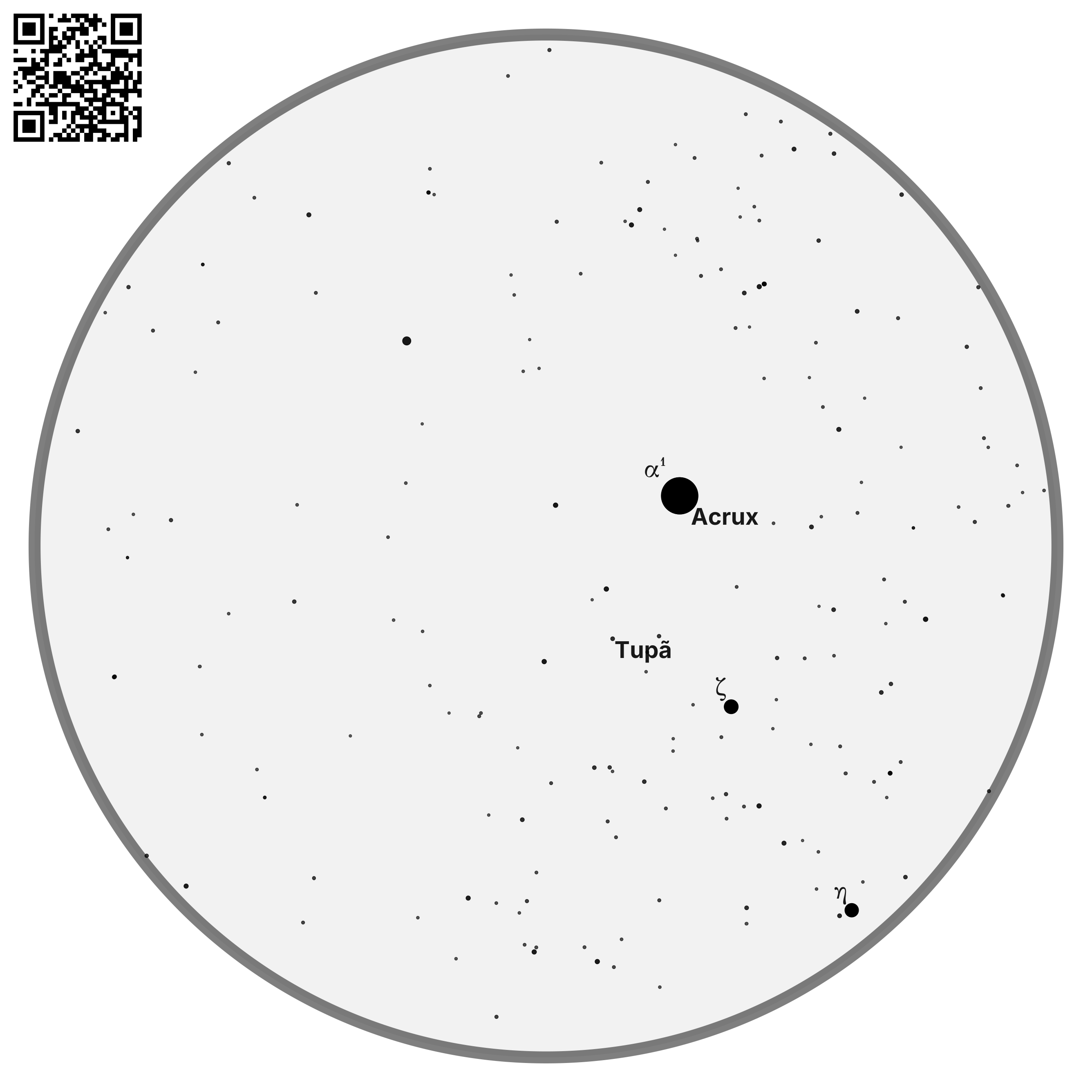
Finder scope & binocular view of Coalsack Nebula
| Property | Value |
|---|---|
| Common names | Coalsack Dark Nebula, Southern Coalsack |
| Catalog names | C 99 |
| Type | Cloud |
| Subtype | Dark Nebula |
| Coordinates | 12h 31m 19.00s, -63° 44’ 36.00” |
| Season | March - May |
| Best month | April |
| Beginner friendly | Yes |
| Visual reward | High |
| Filters required | None |
| LP tolerance | Low |
| Minimum equipment | Naked eye |
| Optimal equipment | Binoculars |
| Magnitude | - |
| Size | 420.0 arcminutes x 300.0 arcminutes |
| Constellation | Crux |
Observation Notes
Naked Eye
Appears as a large, conspicuous black patch resembling a hole in the Milky Way, located adjacent to the stars of the Southern Cross. Its irregular outline is striking and unmistakable under dark southern skies.
Binoculars
The ideal instrument for observing the Coalsack. Binoculars reveal its true scale and the strong contrast between the dark cloud and the surrounding rich star fields, with numerous foreground stars projected across the nebula.
Small Telescope
Far too large to fit in a single field of view. Very low-power, wide-field eyepieces can be used to sweep along its boundaries, where variations in darkness and more sharply defined edges are sometimes noticeable.
Medium Telescope
Not suitable for viewing the nebula as a whole. Can be used to examine localized variations in opacity near the edges, but does not reveal internal structure.
Large Telescope
Unsuitable for visual observation of the object. The Coalsack’s enormous angular size and low-contrast nature make wide-field naked-eye or binocular views far more effective.