Betelgeuse
Naked Eye • Variable Stars
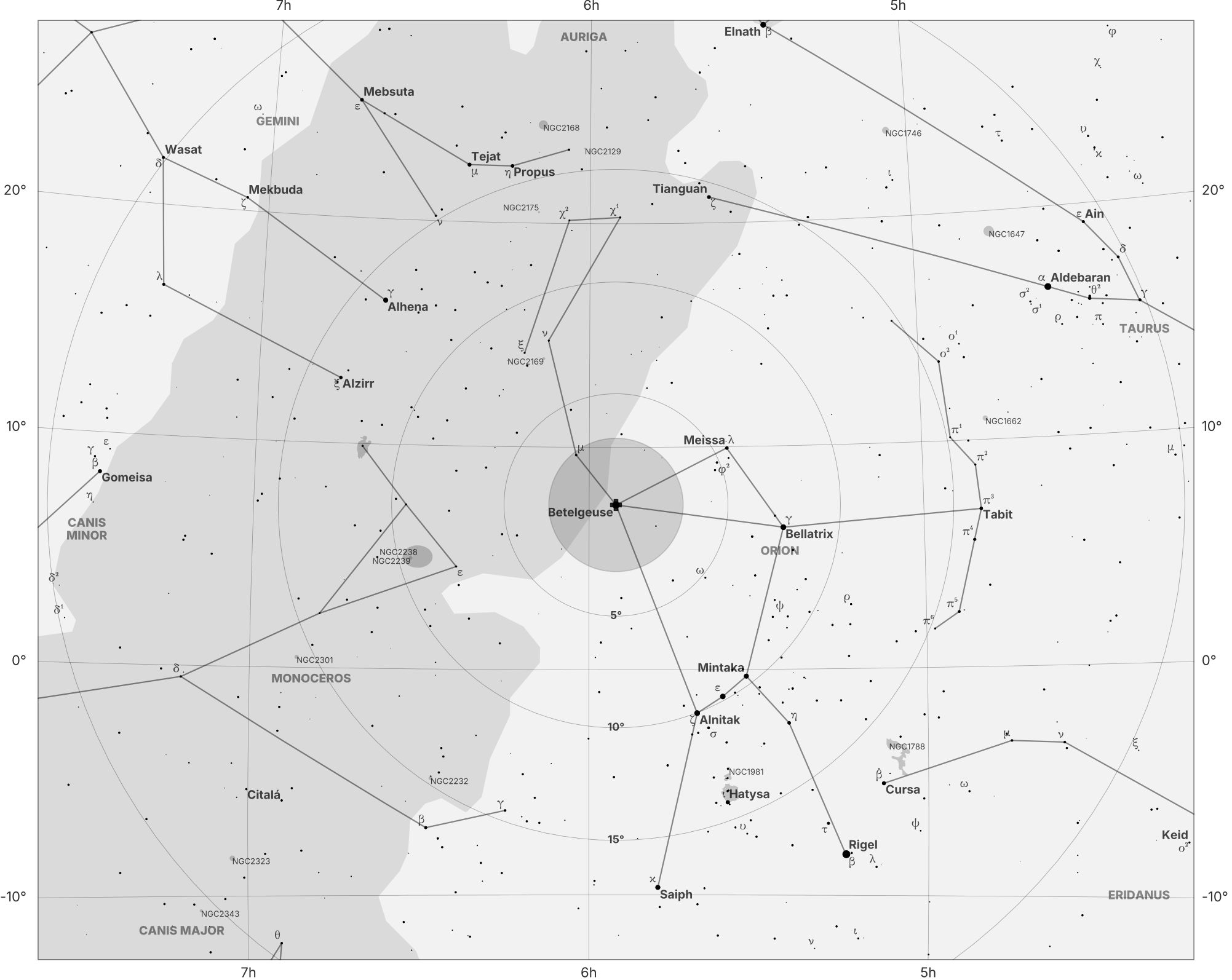
Finder map for Betelgeuse
A prominent star in the mythologies of many cultures. In Greco-Roman tradition it marks the shoulder of Orion the Hunter. In various Aboriginal Australian traditions it has been associated with fire, hunters, or other symbolic figures. Its distinctive reddish color has frequently linked it with themes of fire, blood, conflict, or endings. Best viewed when high above the horizon to minimize atmospheric scintillation and dimming. Although its physical disk cannot be resolved visually, Betelgeuse’s main observational interest lies in tracking its slow and sometimes irregular brightness variations over long periods.
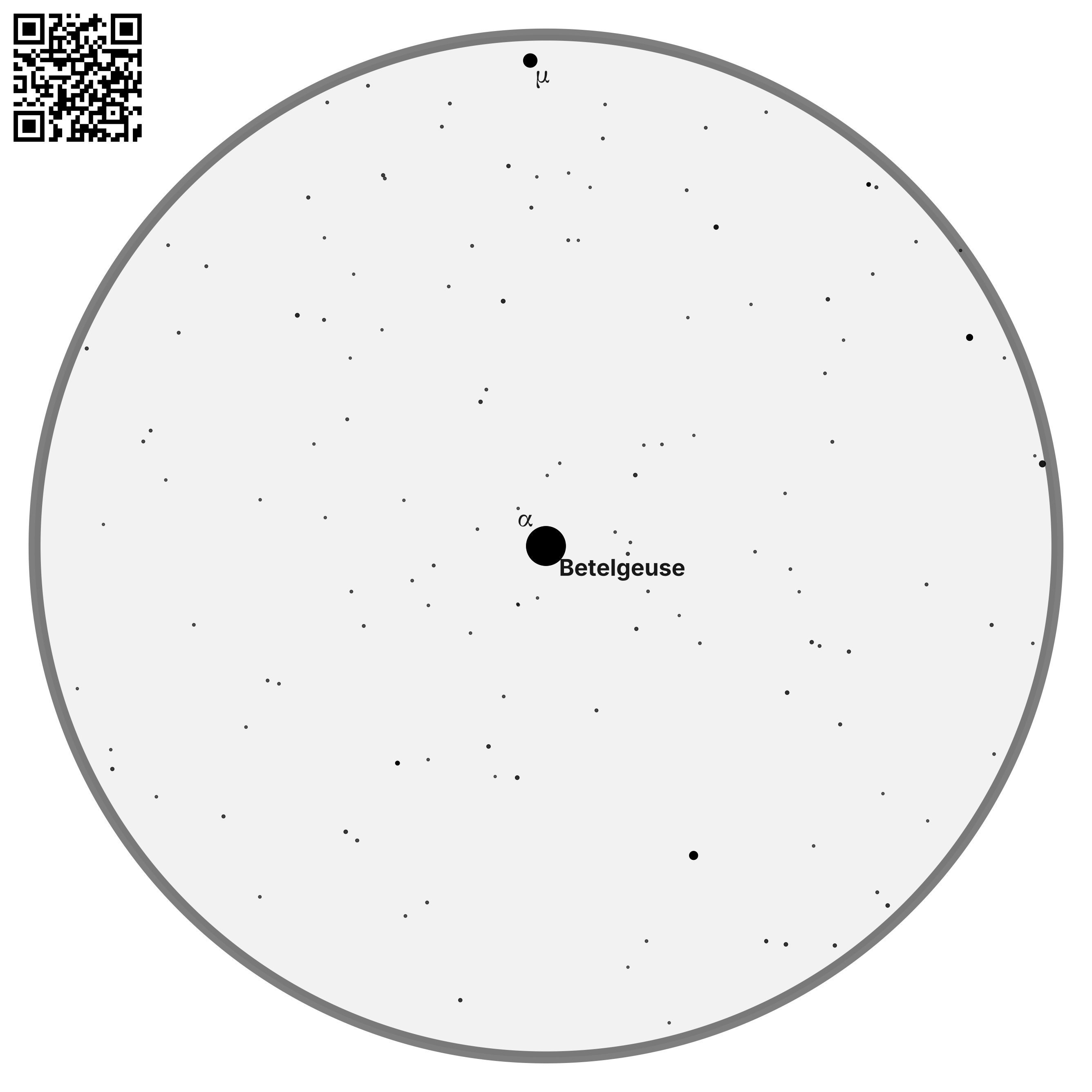
Finder scope & binocular view of Betelgeuse
| Property | Value |
|---|---|
| Common names | Alpha Orionis |
| Catalog names | - |
| Type | Supergiant Star |
| Subtype | Red Supergiant |
| Coordinates | 5h 55m 10.31s, +7° 24’ 25.43” |
| Season | November - January |
| Best month | Mid-December |
| Beginner friendly | Yes |
| Visual reward | High |
| Filters required | None |
| LP tolerance | High |
| Minimum equipment | Naked eye |
| Optimal equipment | Naked eye |
| Magnitude | 0.4 |
| Size | - |
| Constellation | Orion |
Observation Notes
Naked Eye
A bright orange-red star marking the shoulder of Orion (upper left for Northern Hemisphere observers). Its color is readily apparent, and its irregular brightness variations can be followed over months by comparing it with nearby stars such as Rigel and Bellatrix.
Binoculars
Accentuates the star’s warm orange hue and makes brightness comparisons easier by placing Betelgeuse and nearby reference stars in the same field.
Small Telescope
Appears as an extremely bright stellar point with a strong orange-red tint. The color is its dominant visual feature; no disk or surface detail is visible.
Medium Telescope
Does not reveal additional structural detail, but can aid in making more consistent brightness estimates by allowing controlled defocusing and comparison with fainter reference stars. The perceived color may appear slightly more pronounced, though this is subjective.
Large Telescope
Offers no meaningful visual advantage for observing Betelgeuse itself, which remains an unresolved stellar point. Its primary interest to visual observers lies in its color and long-term variability rather than in telescopic detail.