Eta Carinae
Binoculars • Variable Stars
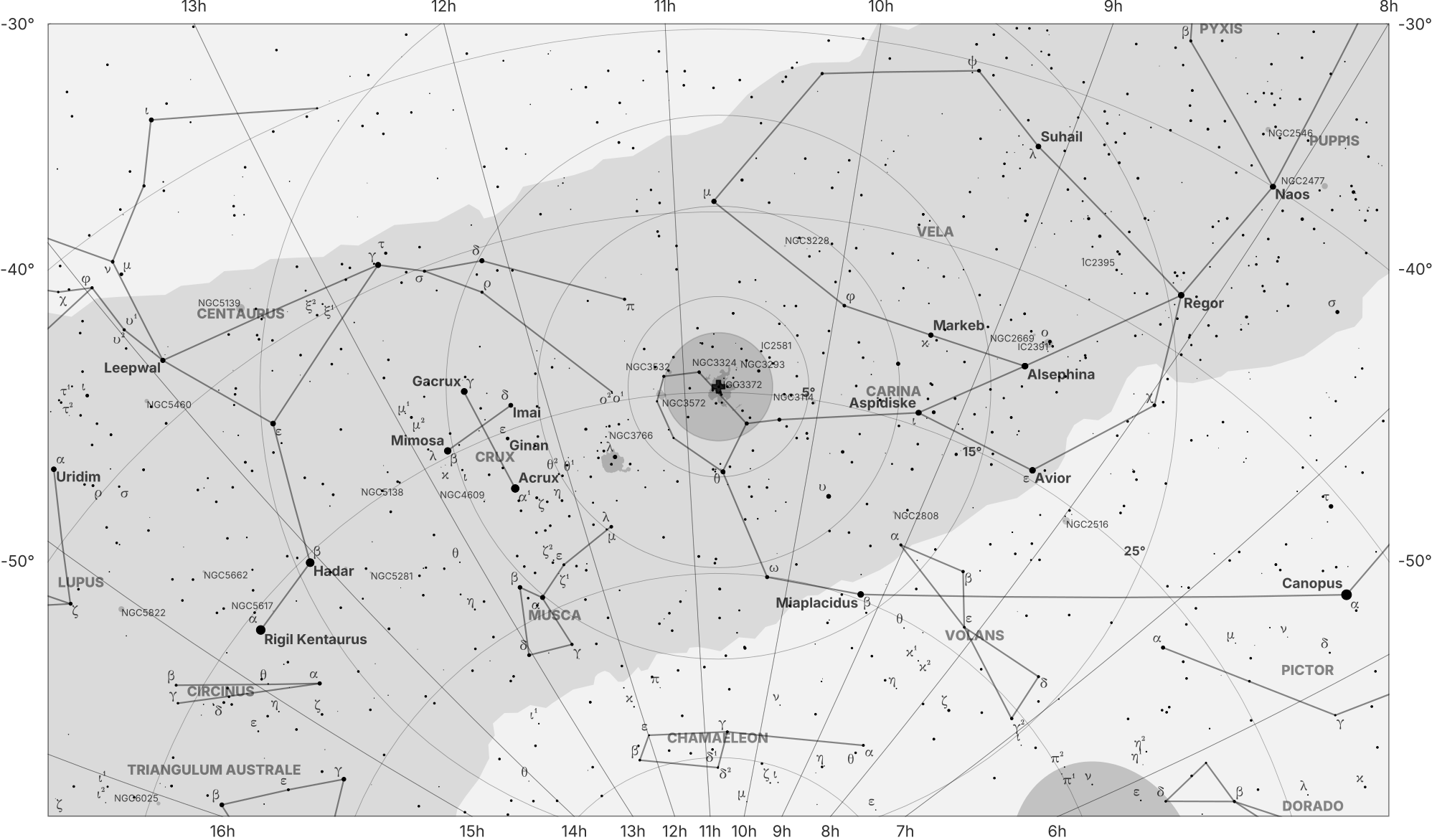
Finder map for Eta Carinae
A major source of fascination in 19th-century astronomy due to its Great Eruption (c. 1837–1858), which briefly made it one of the brightest stars in the sky. Requires a very low southern horizon for observers in tropical northern latitudes. Best observed from the Southern Hemisphere where it is circumpolar for many locations. Appreciating the star’s dramatic variability over time and its intense brilliance against the surrounding Carina Nebula. The famous Homunculus Nebula surrounding Eta Carinae is far too small to resolve visually with binoculars and requires large telescopes or imaging to be seen in detail.
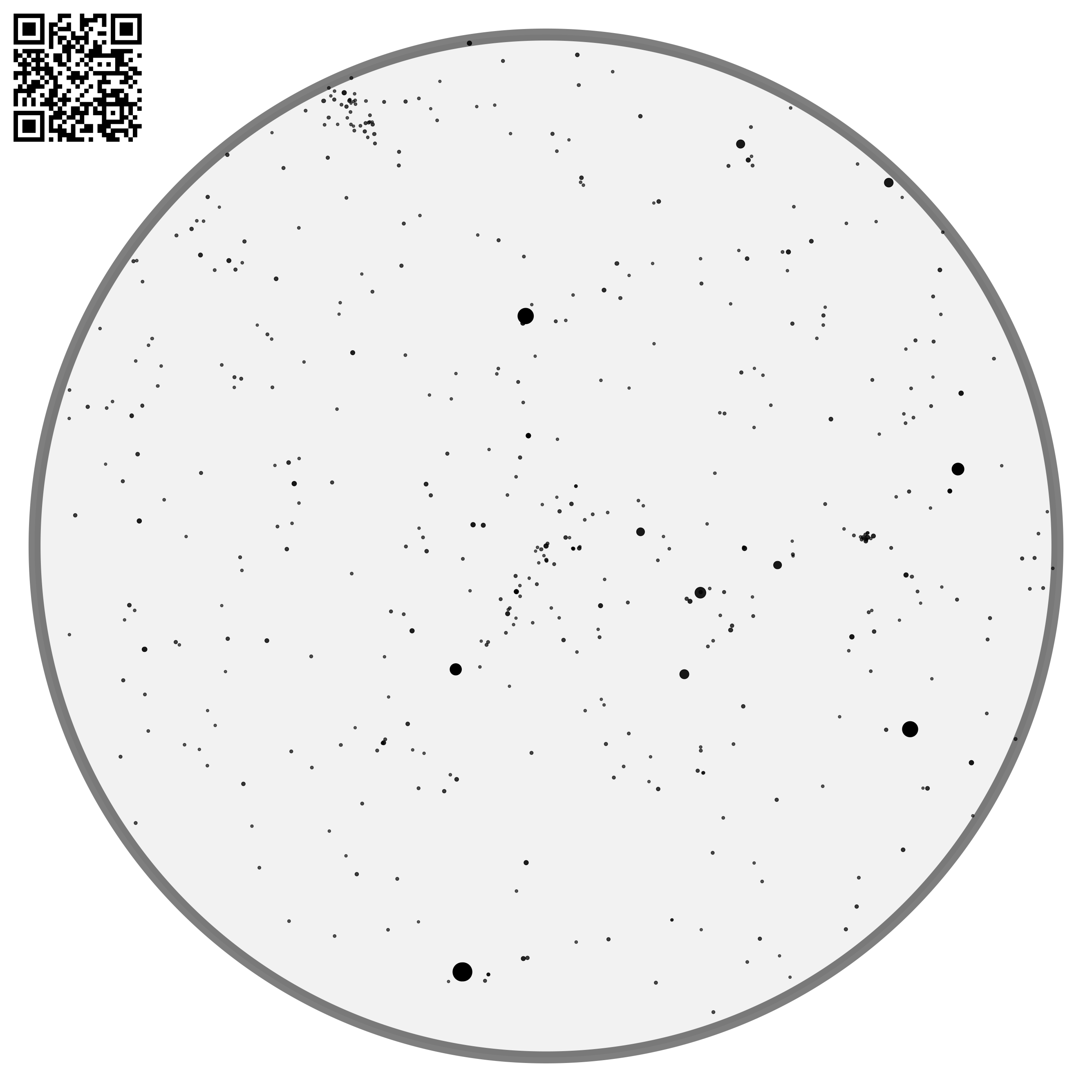
Finder scope & binocular view of Eta Carinae
| Property | Value |
|---|---|
| Common names | Foramen, Tseen She |
| Catalog names | - |
| Type | Supergiant Star |
| Subtype | Blue Supergiant |
| Coordinates | 10h 45m 03.55s, -59° 41’ 03.95” |
| Season | February - April |
| Best month | March |
| Beginner friendly | Yes |
| Visual reward | High |
| Filters required | None |
| LP tolerance | High |
| Minimum equipment | Naked eye |
| Optimal equipment | Naked eye |
| Magnitude | 6.5 |
| Size | - |
| Constellation | Carina |
Observation Notes
Naked Eye
Visible as a bright, unusual star embedded within the diffuse glow of the Carina Nebula. Its brightness varies on long, irregular timescales over years to decades rather than from month to month.
Binoculars
Easily seen within the bright background of NGC 3372, with the surrounding nebulosity apparent as a broad, luminous patch. Nearby open clusters Trumpler 14 and 16 are also well framed in the same field.
Small Telescope
Eta Carinae appears intensely bright against the nebula. The Carina Nebula shows extensive nebulosity with uneven brightness and hints of dark structure, but without sharply defined filaments or photographic detail.
Medium Telescope
Under excellent seeing and with high magnification, the immediate surroundings of the star appear distinctly non-stellar. A slight elongation or fuzziness from the Homunculus Nebula may be suspected, but this is subtle and not guaranteed.
Large Telescope
Under steady seeing, the Homunculus Nebula can be detected as a clearly non-stellar object with a small, elongated or bipolar appearance. Even in large apertures, this remains a delicate visual observation rather than a sharply resolved structure.