Mu Cephei
Naked Eye • Variable Stars
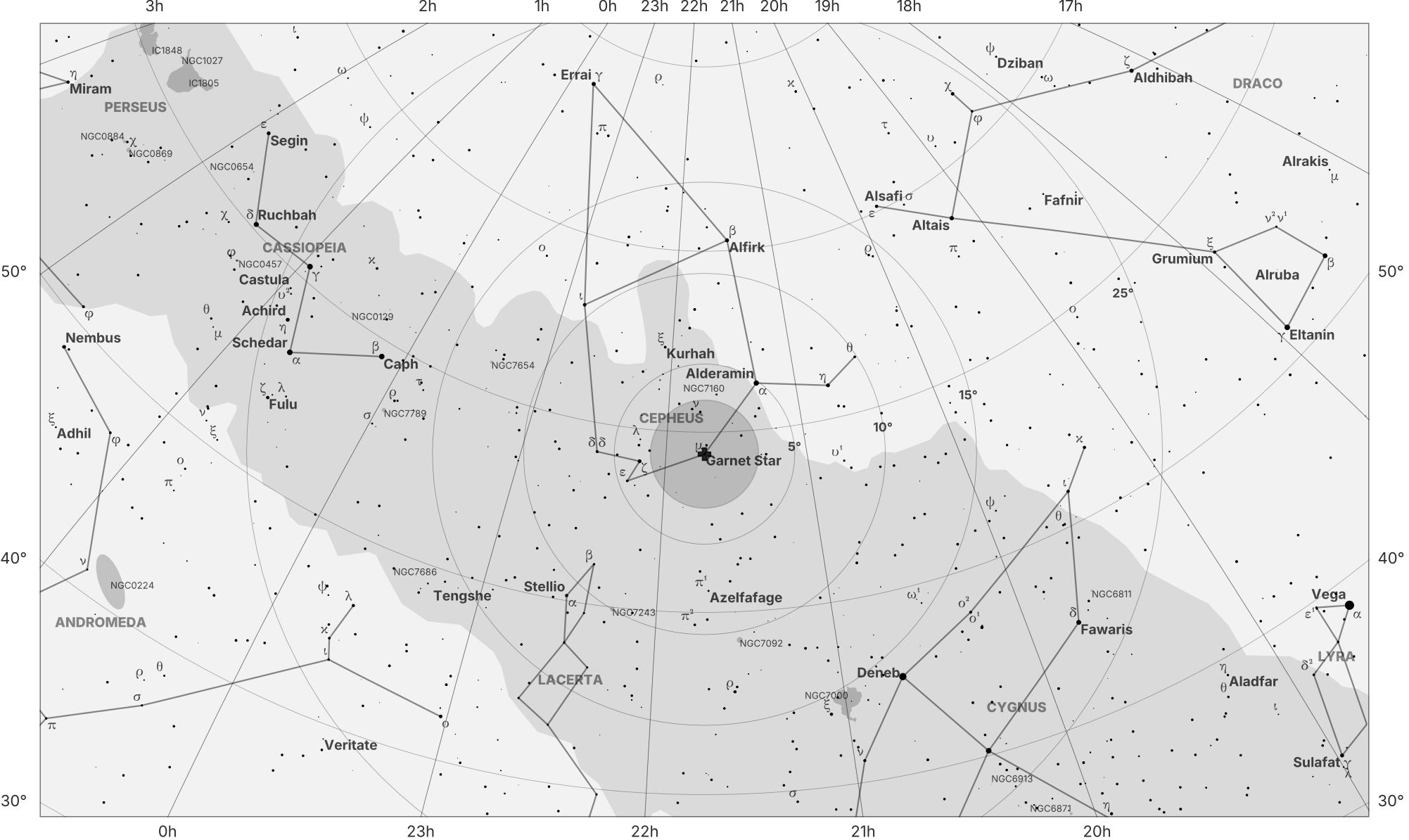
Finder map for Mu Cephei
Its ‘Garnet Star’ moniker is one of the most famous and evocative stellar nicknames in amateur astronomy, frequently used to introduce newcomers to the concept of stellar colors. Best viewed from the Northern Hemisphere, where it is circumpolar for many observers. It is inaccessible from most of the Southern Hemisphere. Perceiving its deep red color fully without proper dark adaptation; tracking its slow, subtle brightness variations over many months.
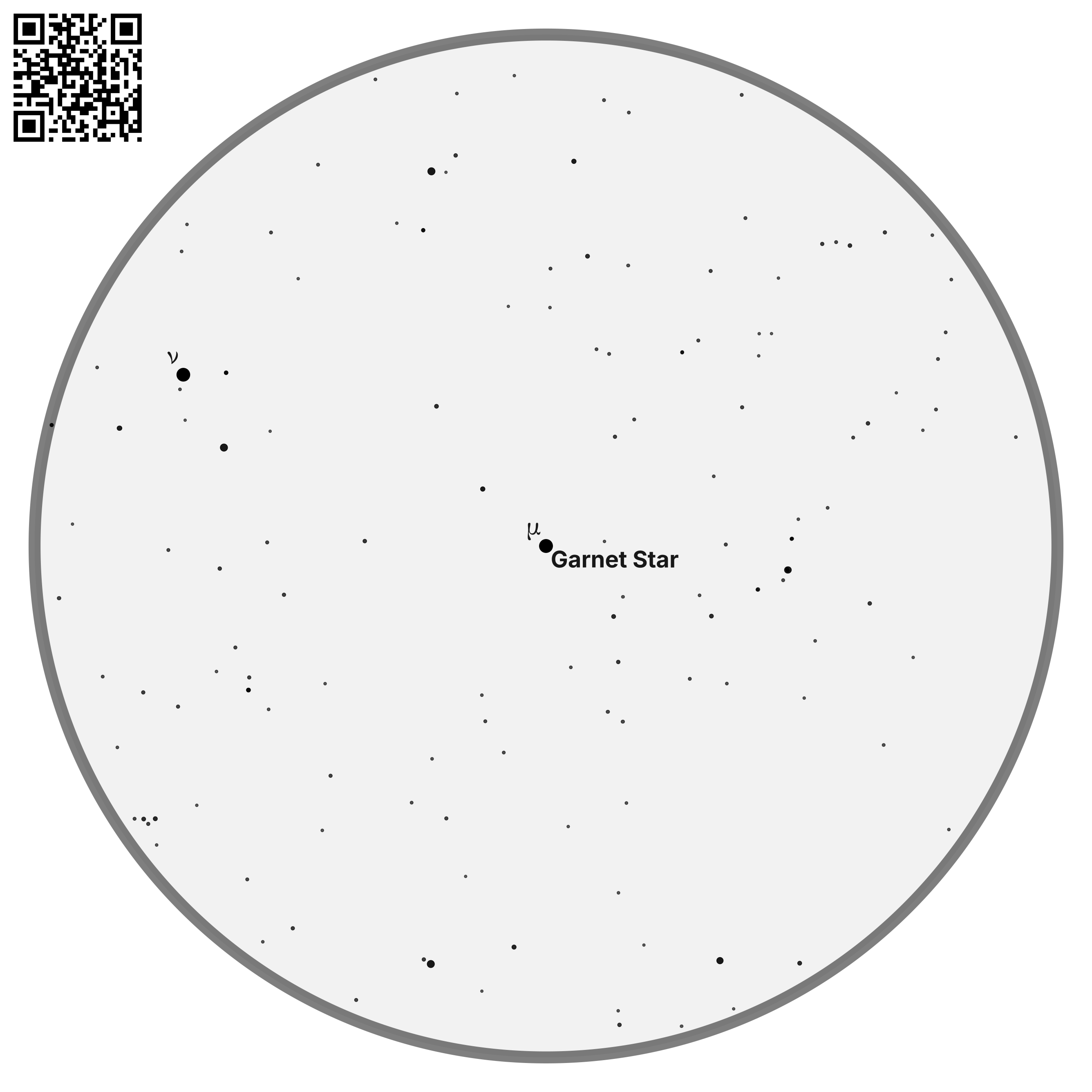
Finder scope & binocular view of Mu Cephei
| Property | Value |
|---|---|
| Common names | Herschel’s Garnet Star, Erakis |
| Catalog names | - |
| Type | Classical Cepheid |
| Subtype | Classical Cepheid |
| Coordinates | 21h 43m 30.46s, +58° 46’ 48.17” |
| Season | July - September |
| Best month | Mid-August |
| Beginner friendly | Marginal |
| Visual reward | High |
| Filters required | None |
| LP tolerance | High |
| Minimum equipment | Naked eye |
| Optimal equipment | Naked eye |
| Magnitude | 4.1 |
| Size | - |
| Constellation | Cepheus |
Observation Notes
Naked Eye
Visible from moderately dark skies as a noticeably orange-red star in Cepheus. Its brightness varies slowly and by a modest amount, with changes best appreciated over many months rather than from night to night.
Binoculars
The star’s warm orange-red coloration is more apparent, though the intensity of the color varies with sky conditions and contrast. The surrounding field provides useful comparison stars for long-term brightness estimates.
Small Telescope
Shows the star as a bright, unresolved point with a strong orange-red to reddish hue. The color is its principal visual feature; no disk or surface detail is visible.
Medium Telescope
Offers little additional visual information beyond enhancing the stability of the view for careful magnitude estimates. The perceived color may appear slightly deeper, but this effect is subjective.
Large Telescope
Provides no meaningful visual advantage for observing the star itself, which remains unresolved. Herschel’s Garnet Star is best appreciated for its color and slow variability rather than for telescopic detail.