Delta Cephei
Naked Eye • Variable Stars
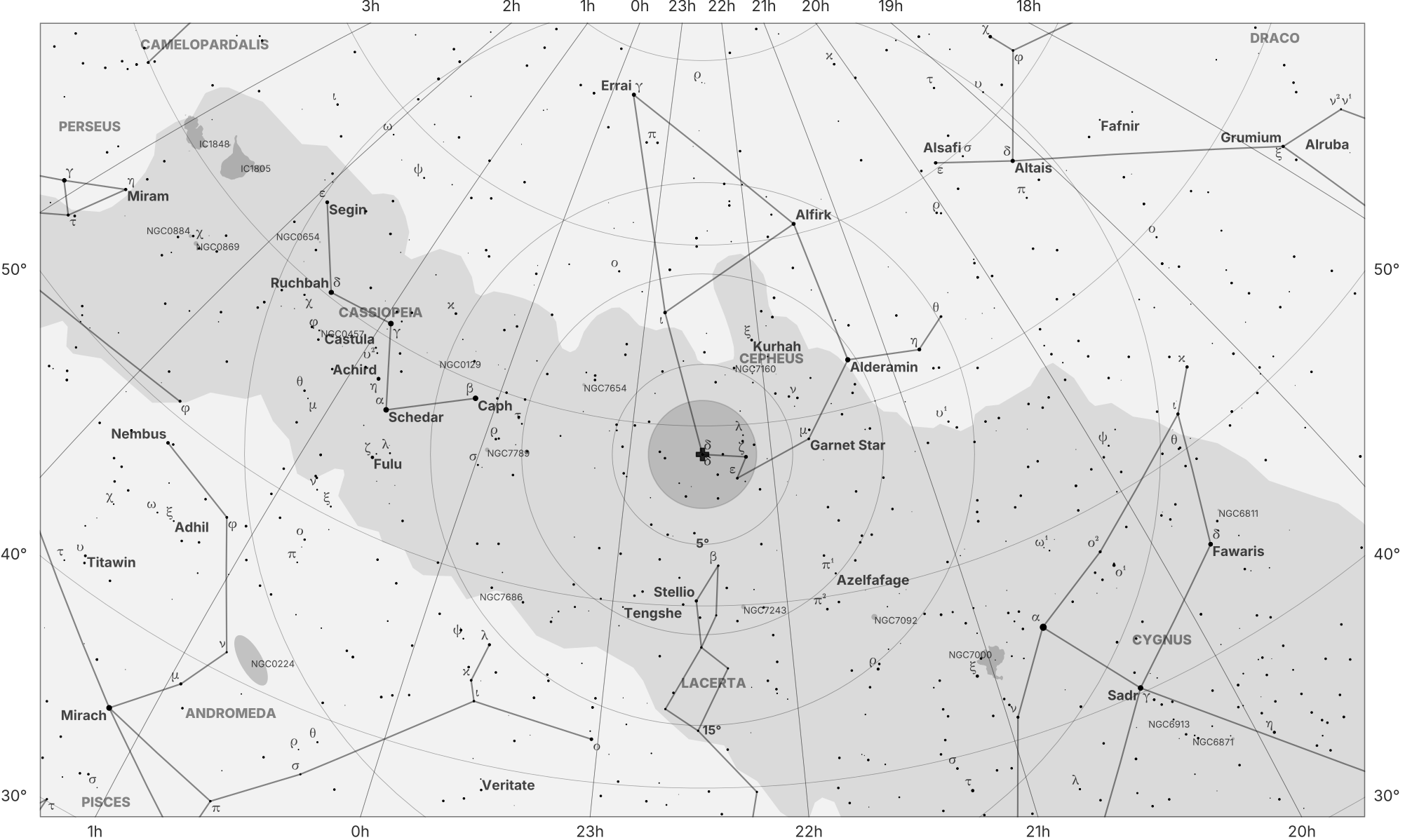
Finder map for Delta Cephei
Represents a cornerstone of modern cosmology. The understanding of Cepheid variables, prototyped by Delta Cephei, fundamentally changed humanity’s perception of the universe’s scale. Circumpolar for observers at higher northern latitudes, remaining above the horizon year-round. Well placed for Northern Hemisphere observers and best viewed when high in the northern sky. Detecting the brightness variation over its short period requires regular, systematic observation over several nights.
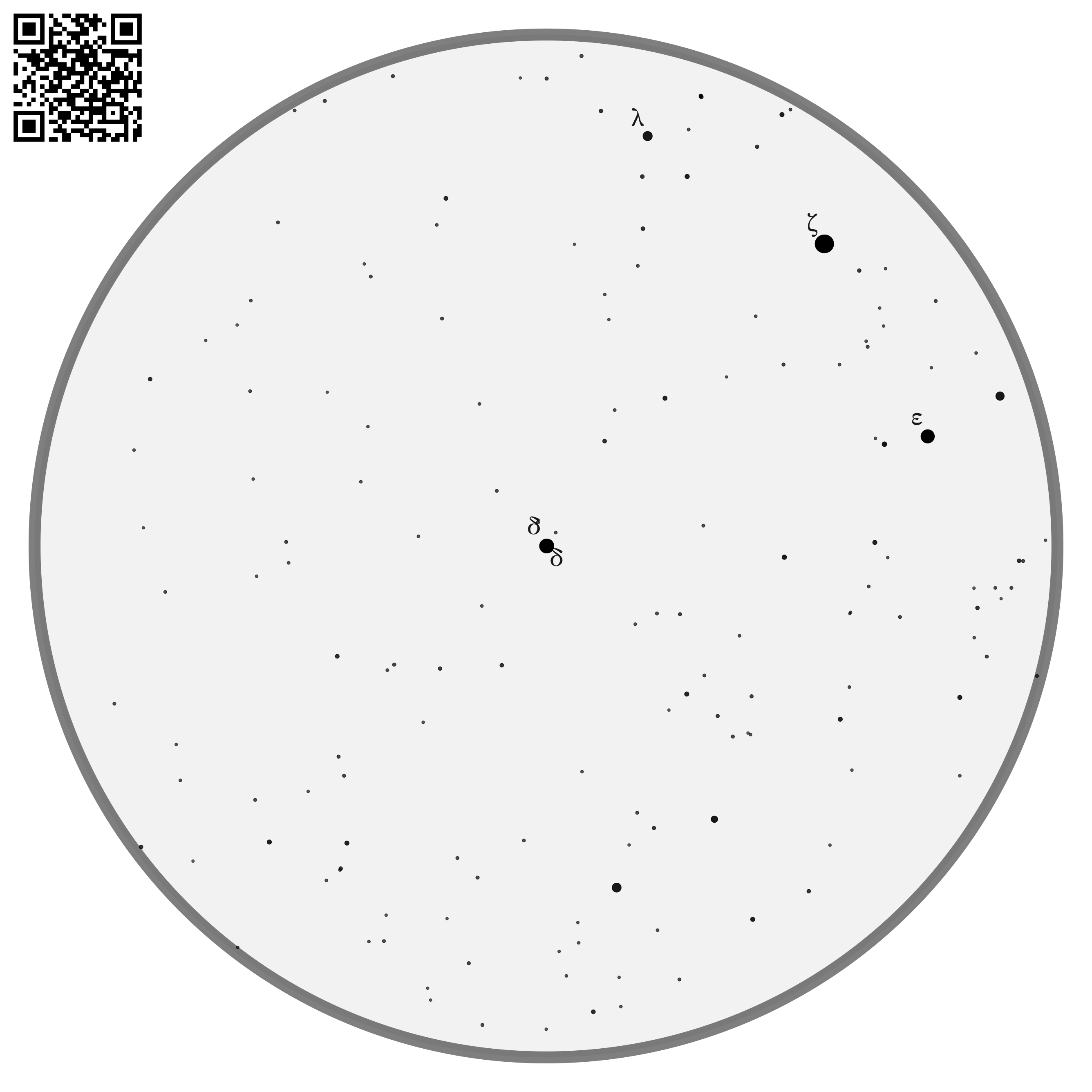
Finder scope & binocular view of Delta Cephei
| Property | Value |
|---|---|
| Common names | δ Cephei |
| Catalog names | - |
| Type | Classical Cepheid |
| Subtype | Classical Cepheid |
| Coordinates | 22h 29m 10.26s, +58° 24’ 54.70” |
| Season | August - October |
| Best month | September |
| Beginner friendly | Marginal |
| Visual reward | Moderate |
| Filters required | None |
| LP tolerance | High |
| Minimum equipment | Naked eye |
| Optimal equipment | Naked eye |
| Magnitude | 3.8 |
| Size | - |
| Constellation | Cepheus |
Observation Notes
Naked Eye
Easily visible as a moderately bright star with a smooth and highly regular brightness cycle of about 5.4 days. The roughly 0.7–0.8 magnitude variation can be followed by comparing it with nearby reference stars over several consecutive nights, making it one of the best naked-eye variables for demonstrating periodic change.
Binoculars
Provides a steady view that makes magnitude comparisons more reliable, especially when the star is near minimum. A subtle yellowish tint may be noticed, though color changes with phase are slight.
Small Telescope
Shows the star as a bright, unresolved point. The wide visual companion (component B), about 40 arcseconds away at roughly 7th magnitude, is easily resolved with modest magnification and helps confirm identification.
Medium Telescope
Reveals no additional visual detail on the primary star itself. Its main advantage is improving confidence in systematic visual brightness estimates rather than providing any structural information.