Mira
Naked Eye • Variable Stars
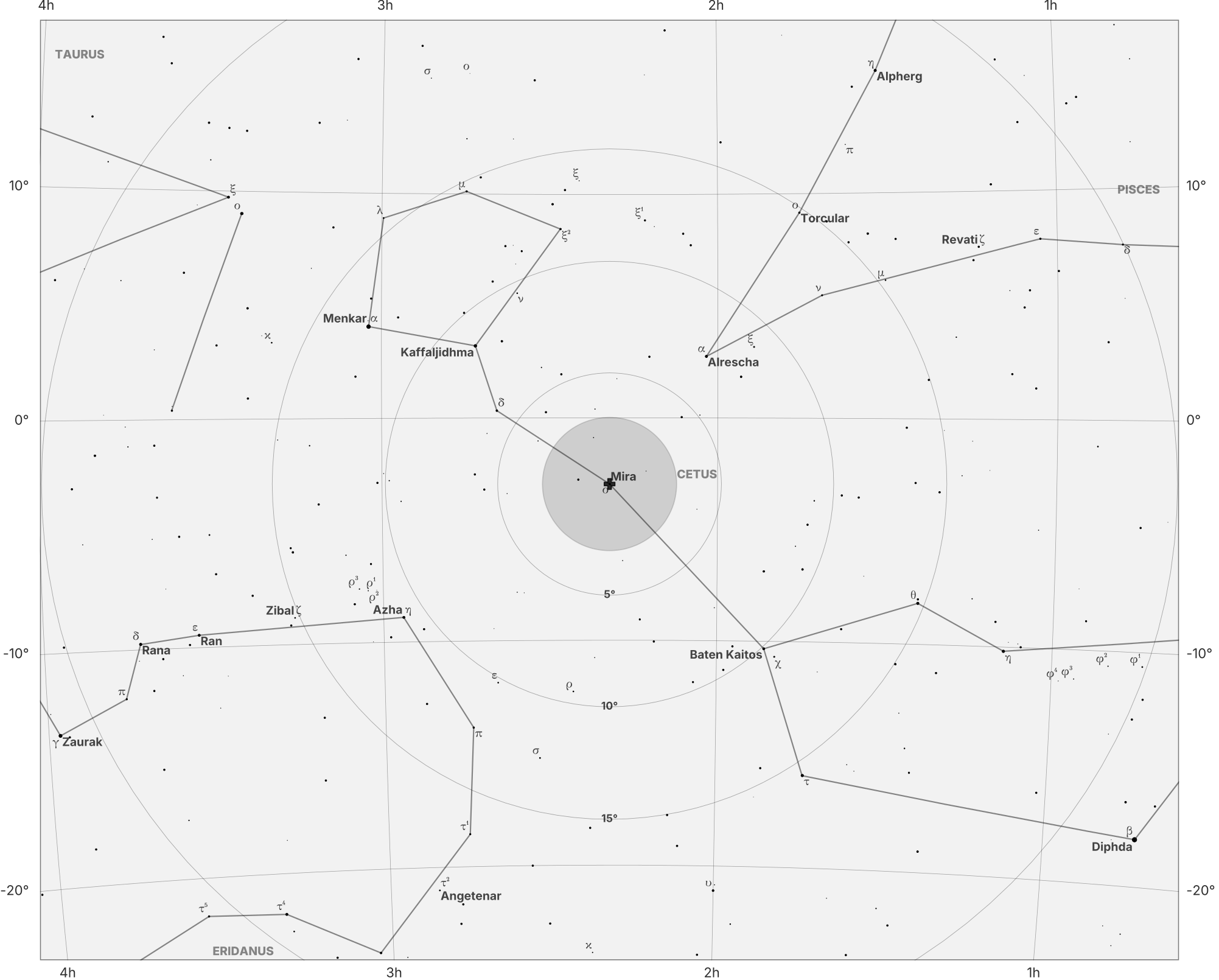
Finder map for Mira
Mira’s discovery was a pivotal moment in astronomy, helping to shatter the classical ideal of a perfect and unchanging heavens. Its name reflects the sense of wonder and mystery it inspired in early astronomers. Best observed when Cetus is high in the sky during autumn evenings (Northern Hemisphere) or spring evenings (Southern Hemisphere). Its extreme variability is the primary challenge. While Mira can be prominent at maximum, identifying it near minimum requires up-to-date star charts and magnitude predictions, as it can fade beyond naked-eye visibility.
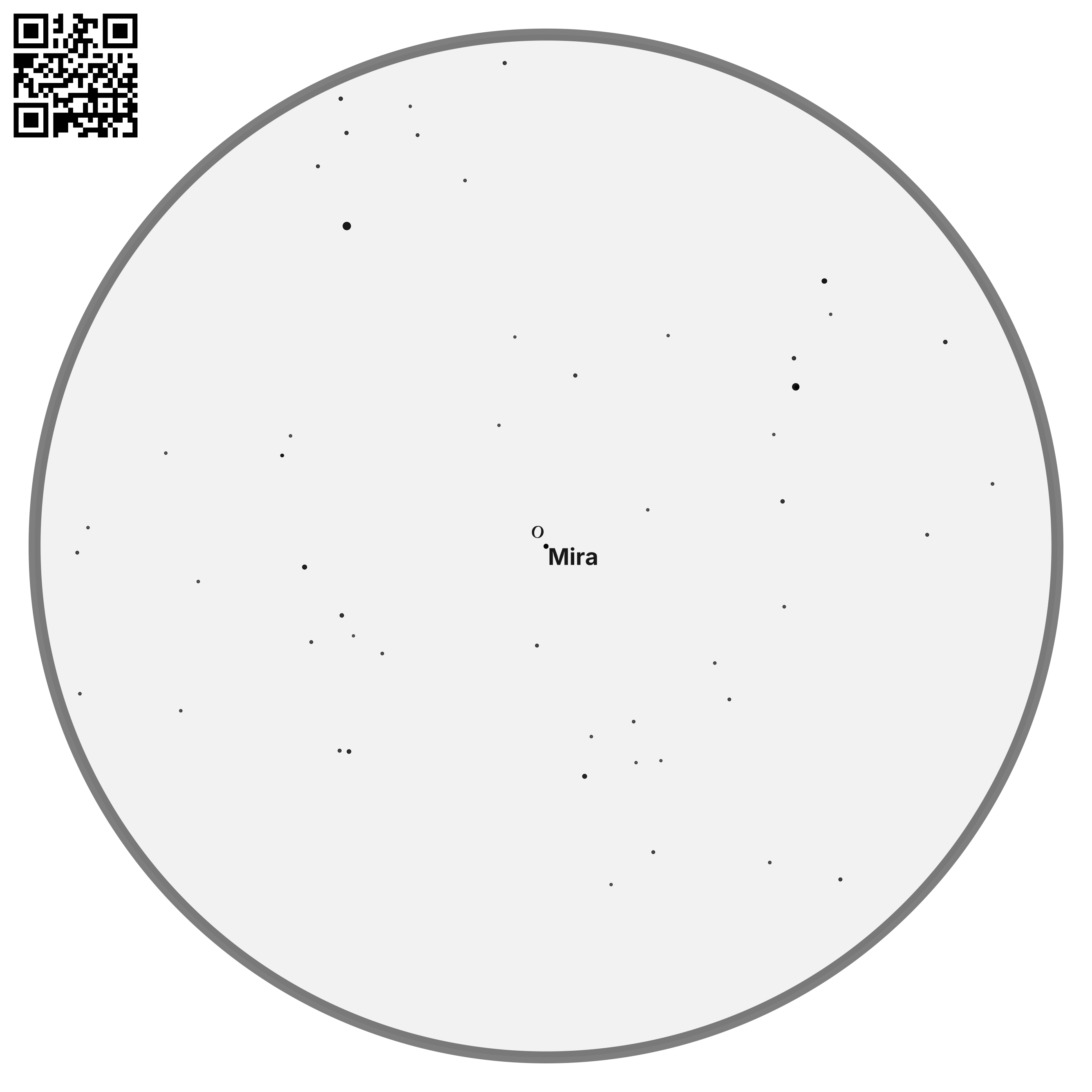
Finder scope & binocular view of Mira
| Property | Value |
|---|---|
| Common names | The Wonderful Star |
| Catalog names | - |
| Type | Asymptotic Giant Branch Star |
| Subtype | Mira Variable |
| Coordinates | 2h 19m 20.79s, -2° 58’ 39.50” |
| Season | October - December |
| Best month | November |
| Beginner friendly | Marginal |
| Visual reward | Moderate |
| Filters required | None |
| LP tolerance | High |
| Minimum equipment | Binoculars |
| Optimal equipment | Small telescope |
| Magnitude | 6.5 |
| Size | - |
| Constellation | Cetus |
Observation Notes
Naked Eye
At favorable maxima, Mira brightens to roughly magnitude 2–3 and becomes an obvious orange-red naked-eye star. The exact peak brightness varies from cycle to cycle, and its sudden reappearance can be striking if unexpected.
Binoculars
Very useful for following Mira as it fades below naked-eye visibility. Binoculars allow continued monitoring of its brightness changes and make magnitude comparisons with nearby stars easier. Its warm red coloration is noticeable, though not extreme.
Small Telescope
Extends coverage well beyond naked-eye and binocular limits, allowing Mira to be followed through much of its long variability cycle. The star shows a pronounced orange-red to red hue, which may appear stronger as it fades, but it will usually be lost before reaching its faintest minima.
Medium Telescope
Improves confidence in tracking Mira at fainter magnitudes, but the star remains unresolved. The color remains prominent but subjective. The close companion, Mira B, is an extremely difficult target due to its small separation (about 0.5–0.7 arcseconds) and the overwhelming glare of the primary.
Large Telescope
Provides no additional visual detail on Mira A itself. Visual detection of Mira B is an exceptional and rarely achieved feat, requiring very large apertures, superb seeing, and specialized technique; it should not be considered a routine visual target.