Gamma Cassiopeiae
Binoculars • Variable Stars
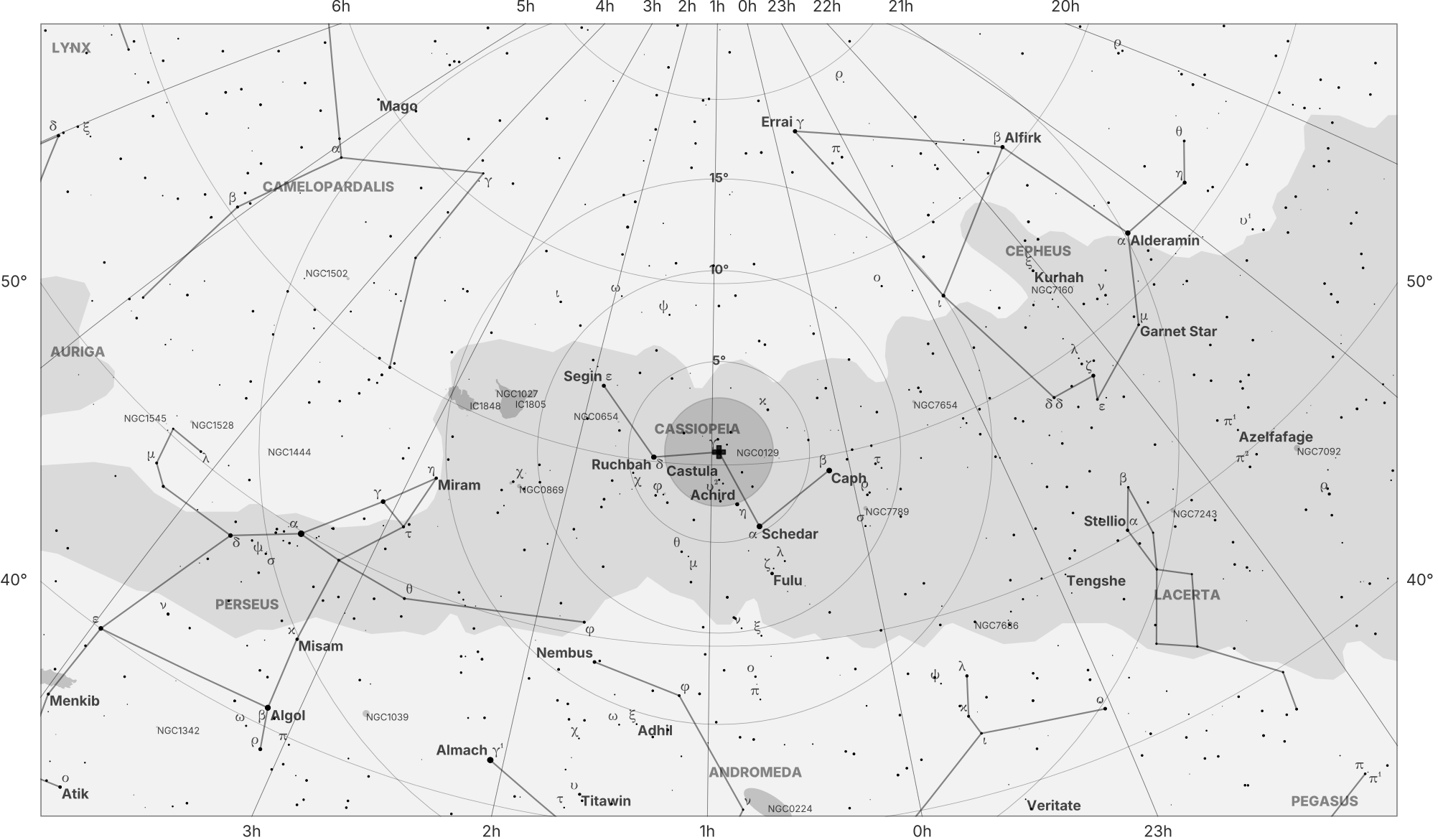
Finder map for Gamma Cassiopeiae
Informally named ‘Navi’ by astronaut Gus Grissom for use in celestial navigation; it is his middle name (Ivan) spelled backwards. In Chinese astronomy, it was part of an asterism representing a whip. Circumpolar for most Northern Hemisphere observers; best viewed when high in the sky to minimize atmospheric interference. Monitoring the star’s subtle and irregular brightness changes over time and making consistent magnitude estimates. The extremely faint nebulae IC 59 and IC 63 associated with Gamma Cassiopeiae are overwhelmed by the star’s glare and require large telescopes or imaging under exceptional conditions, lying beyond typical binocular views.
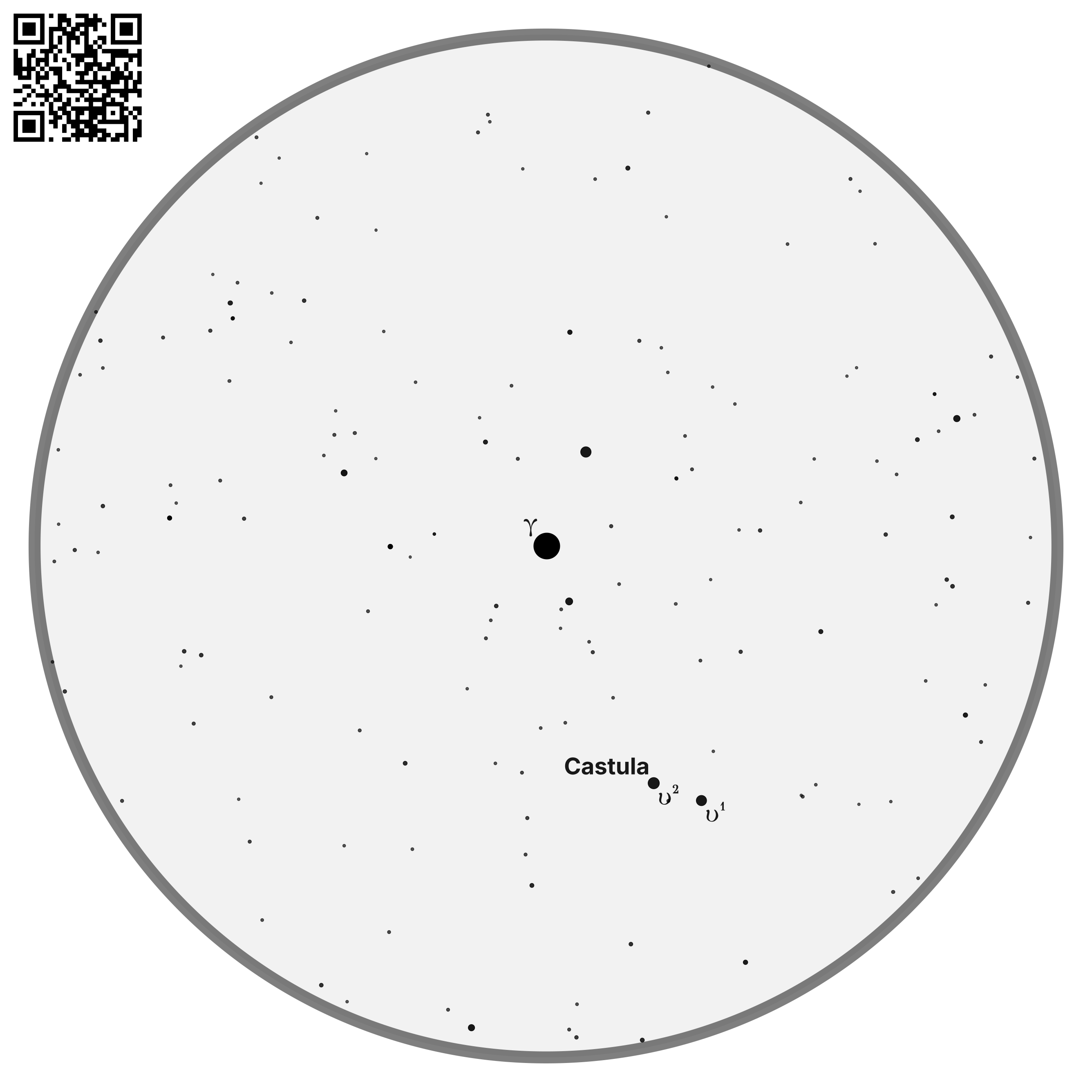
Finder scope & binocular view of Gamma Cassiopeiae
| Property | Value |
|---|---|
| Common names | Tsih, Navi |
| Catalog names | - |
| Type | X-ray Binary |
| Subtype | High Mass X-ray Binary |
| Coordinates | 0h 56m 42.53s, +60° 43’ 00.26” |
| Season | September - November |
| Best month | October |
| Beginner friendly | Marginal |
| Visual reward | Moderate |
| Filters required | None |
| LP tolerance | High |
| Minimum equipment | Naked eye |
| Optimal equipment | Naked eye |
| Magnitude | 2.4 |
| Size | - |
| Constellation | Cassiopeia |
Observation Notes
Naked Eye
A bright blue-white star marking the central peak of Cassiopeia’s familiar “W” asterism. Its brightness variations are slow and subtle, becoming apparent only through long-term, systematic observation rather than casual viewing.
Binoculars
The star’s blue-white color stands out clearly. Binoculars are useful for placing Gamma Cassiopeiae in context with the surrounding Milky Way and for star-hopping toward nearby objects such as the open cluster M103.
Small Telescope
Remains a brilliant, unresolved stellar point. Primarily useful as a navigational anchor for exploring the surrounding star fields rather than as a visual target in its own right.
Medium Telescope
The intense glare of the star dominates the field. Visual detection of the associated nebulosity (IC 59/IC 63) is extremely unlikely and should not be expected, even under dark skies.
Large Telescope
Under exceptional sky conditions, with careful glare control and the use of appropriate wide-band nebular filters, the faint reflection/emission nebulae IC 59 and IC 63 may be suspected by very experienced observers. Even in large apertures, these remain among the most challenging visual nebulae and are far more commonly detected photographically than visually.