Eta Aquilae
Naked Eye • Variable Stars
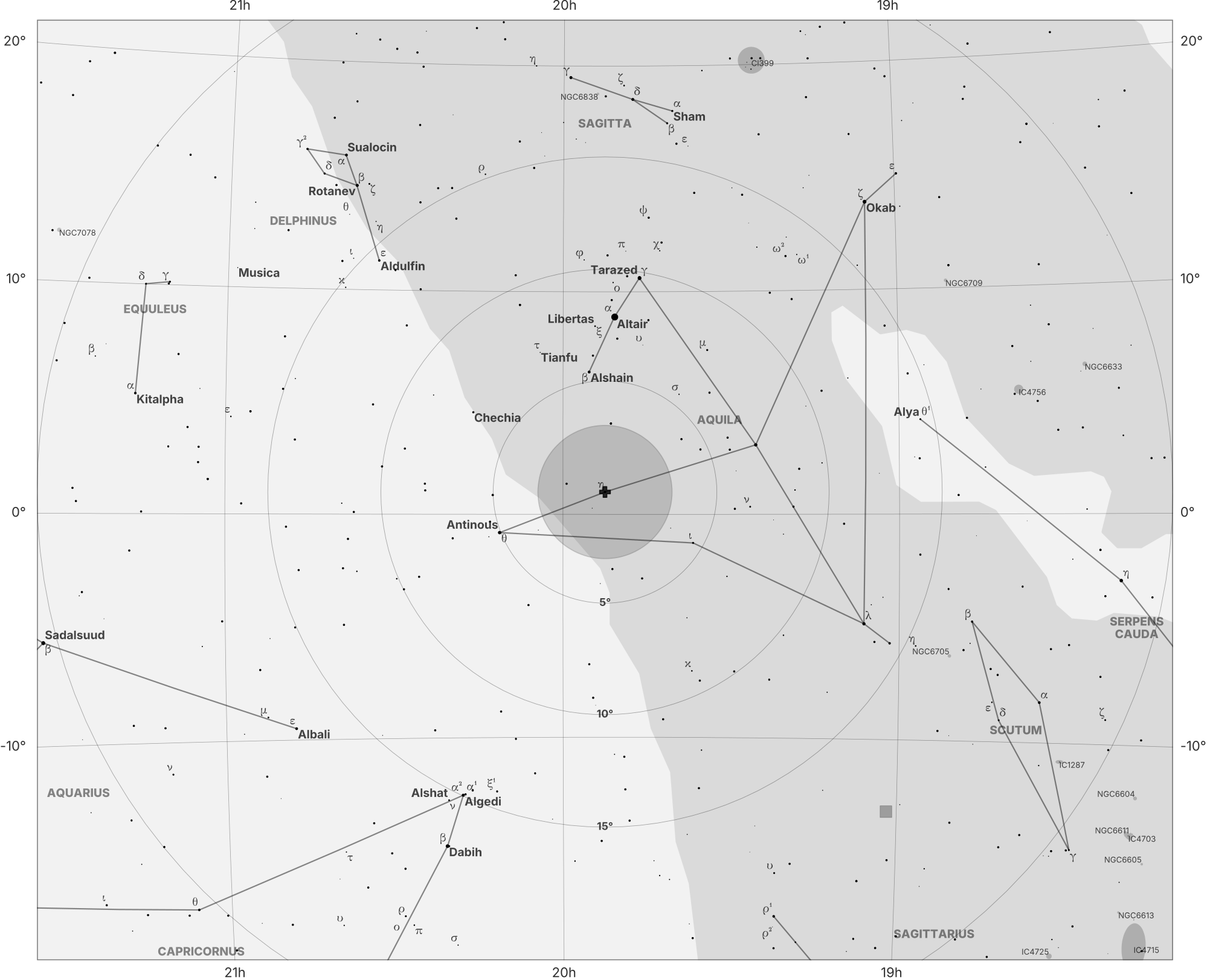
Finder map for Eta Aquilae
Eta Aquilae lies in the Greek constellation Aquila, the eagle associated with Zeus in classical mythology. The star’s modern Bayer designation reflects this tradition. Best viewed when high in the sky to minimize atmospheric distortion, though visible from most latitudes due to its proximity to the celestial equator. Tracking its brightness variation over its 7.18-day period requires consistent observations over multiple nights.
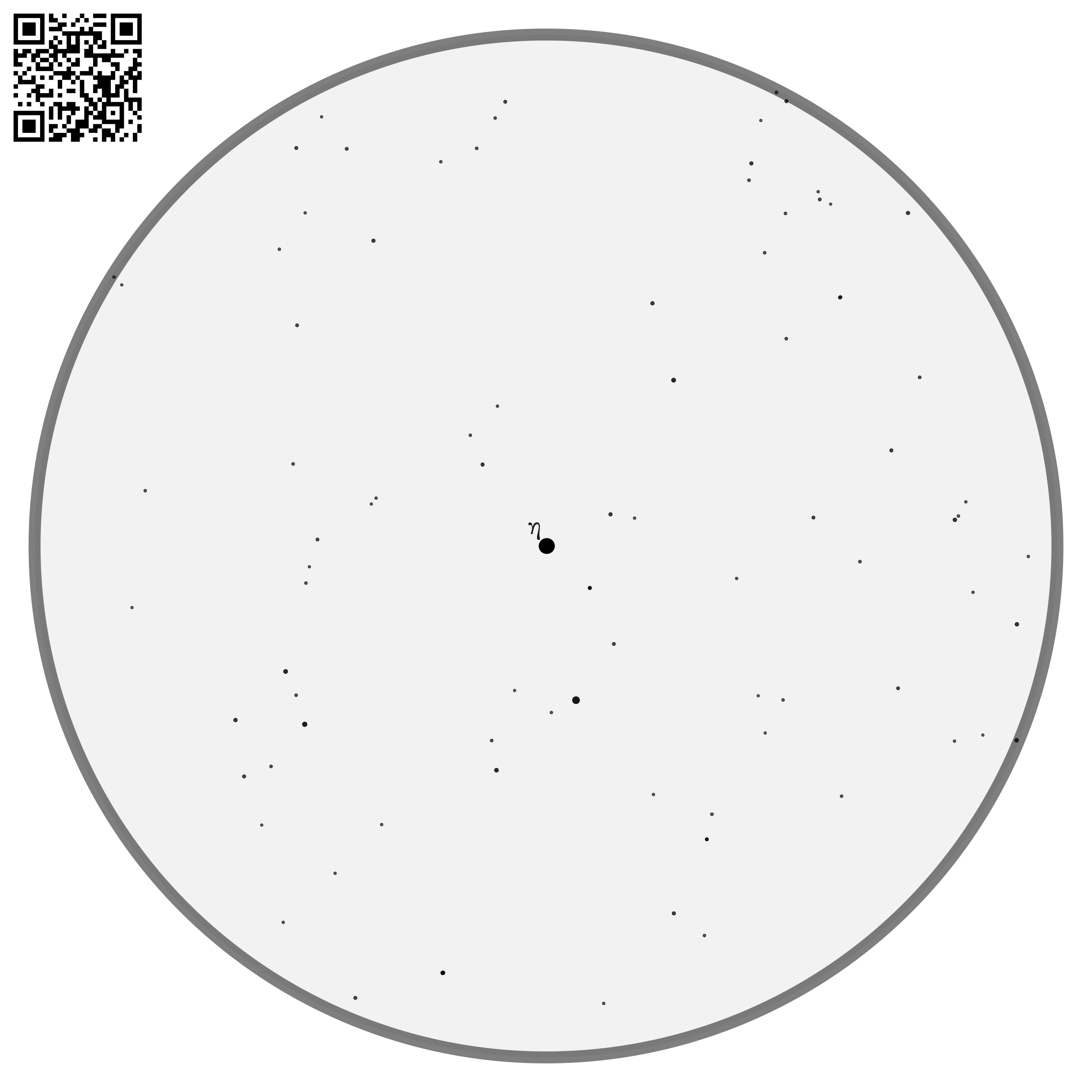
Finder scope & binocular view of Eta Aquilae
| Property | Value |
|---|---|
| Common names | η Aquilae, Bezek |
| Catalog names | - |
| Type | Classical Cepheid |
| Subtype | Classical Cepheid |
| Coordinates | 19h 52m 28.37s, +1° 00’ 20.37” |
| Season | June - August |
| Best month | Mid-July |
| Beginner friendly | Marginal |
| Visual reward | Moderate |
| Filters required | None |
| LP tolerance | High |
| Minimum equipment | Naked eye |
| Optimal equipment | Naked eye |
| Magnitude | 3.8 |
| Size | - |
| Constellation | Aquila |
Observation Notes
Naked Eye
Easily visible as a moderately bright star in Aquila. Its smooth, regular brightness variation (period about 7.2 days) can be followed over several nights by careful comparison with nearby stable stars, making it a good example of a classical Cepheid variable.
Binoculars
Provides a steady view that makes brightness estimates more reliable, especially near minimum light. A faint yellowish tint may be noticed, though color changes with phase are subtle.
Small Telescope
Shows the star as a bright, unresolved point. The warm yellow tone may appear slightly more pronounced, but no additional detail is visible. The telescope’s main value is in providing a stable reference for consistent brightness estimates.
Medium Telescope
Reveals no structural detail on the star itself. Useful primarily for improving confidence in systematic visual magnitude estimates rather than for direct visual features.
Large Telescope
Offers no additional visual benefit for observing η Aquilae as a star, which remains unresolved. Its importance to visual observers lies in its regular, easily followed variability rather than in telescopic detail.