R Scuti
Binoculars • Variable Stars
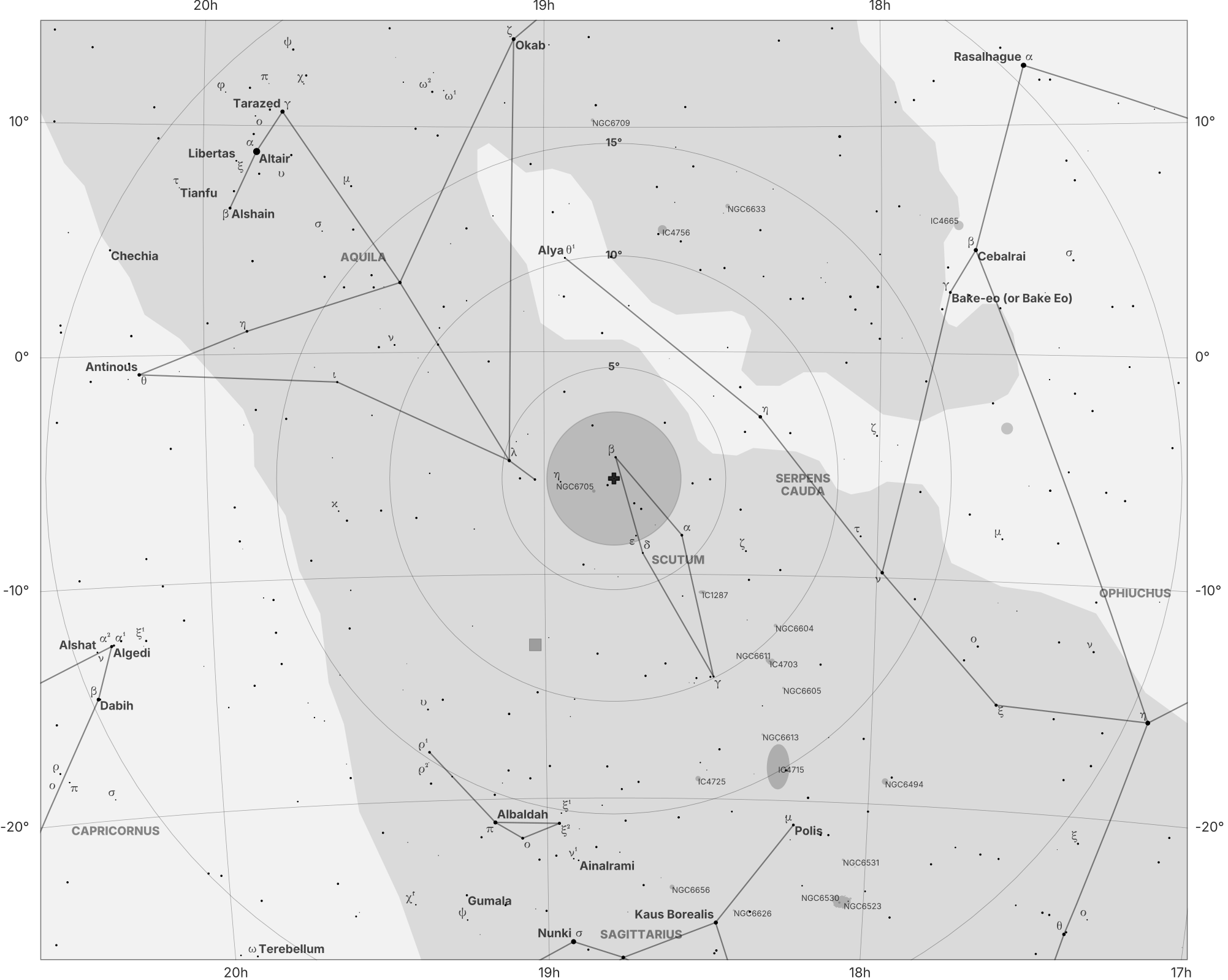
Finder map for R Scuti
Holds a significant place in the history of stellar astronomy, particularly in the study of variable stars. It serves as a benchmark for understanding a key, rapid phase of stellar evolution. Best observed when high in the sky. Its location near the celestial equator makes it accessible from most latitudes. Monitoring its irregular brightness changes and accurately estimating its magnitude against comparison stars. The timing of deep minima is unpredictable.
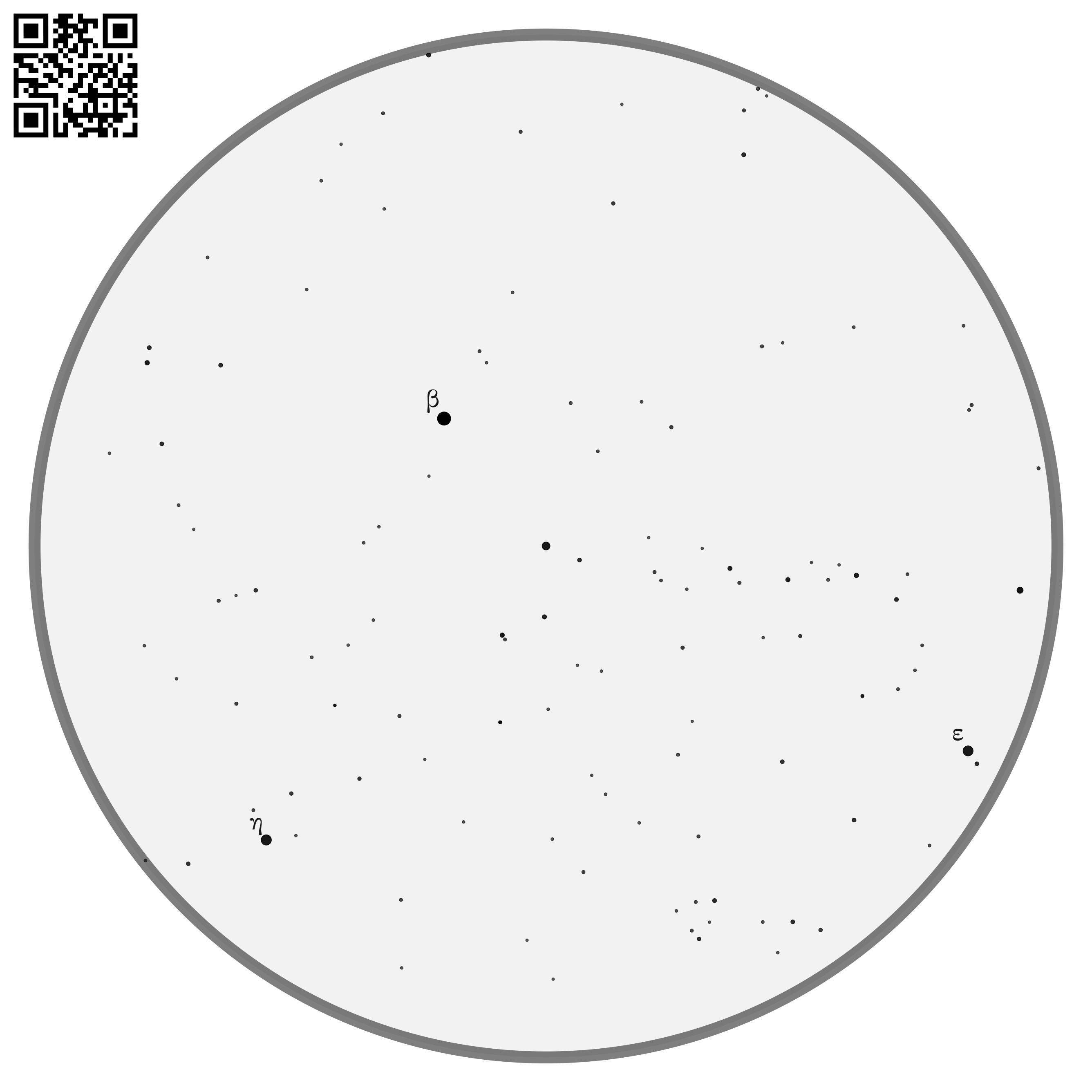
Finder scope & binocular view of R Scuti
| Property | Value |
|---|---|
| Common names | R Sct |
| Catalog names | - |
| Type | Evolved Star |
| Subtype | RV Tauri Star |
| Coordinates | 18h 47m 28.95s, -5° 42’ 18.54” |
| Season | June - August |
| Best month | July |
| Beginner friendly | Marginal |
| Visual reward | Moderate |
| Filters required | None |
| LP tolerance | High |
| Minimum equipment | Binoculars |
| Optimal equipment | Binoculars |
| Magnitude | 5.2 |
| Size | - |
| Constellation | Scutum |
Observation Notes
Naked Eye
Visible from dark sites near maximum brightness (around magnitude 4.5), appearing as a modestly bright yellow-orange star in Scutum. It fades completely from naked-eye view during much of its irregular cycle.
Binoculars
Easily visible around maximum and during intermediate phases, but may become difficult or disappear in deep minima when it fades to roughly magnitude 8–9. Binoculars are well suited for following its changing brightness over time using nearby comparison stars.
Small Telescope
Enhances the star’s warm yellow-orange hue and allows it to be followed through most, though not all, of its variability cycle. Well suited for making consistent visual magnitude estimates with standard comparison charts.
Medium Telescope
Extends coverage through deeper minima, but the star remains a point source with no visible surface detail. Color remains subtle rather than intensely red.
Large Telescope
Provides little additional visual benefit for casual observing of this star, though it can assist in following the star through its faintest phases. Instrumental techniques possible with large apertures fall outside the scope of visual observing.