Chi Cygni
Binoculars • Variable Stars
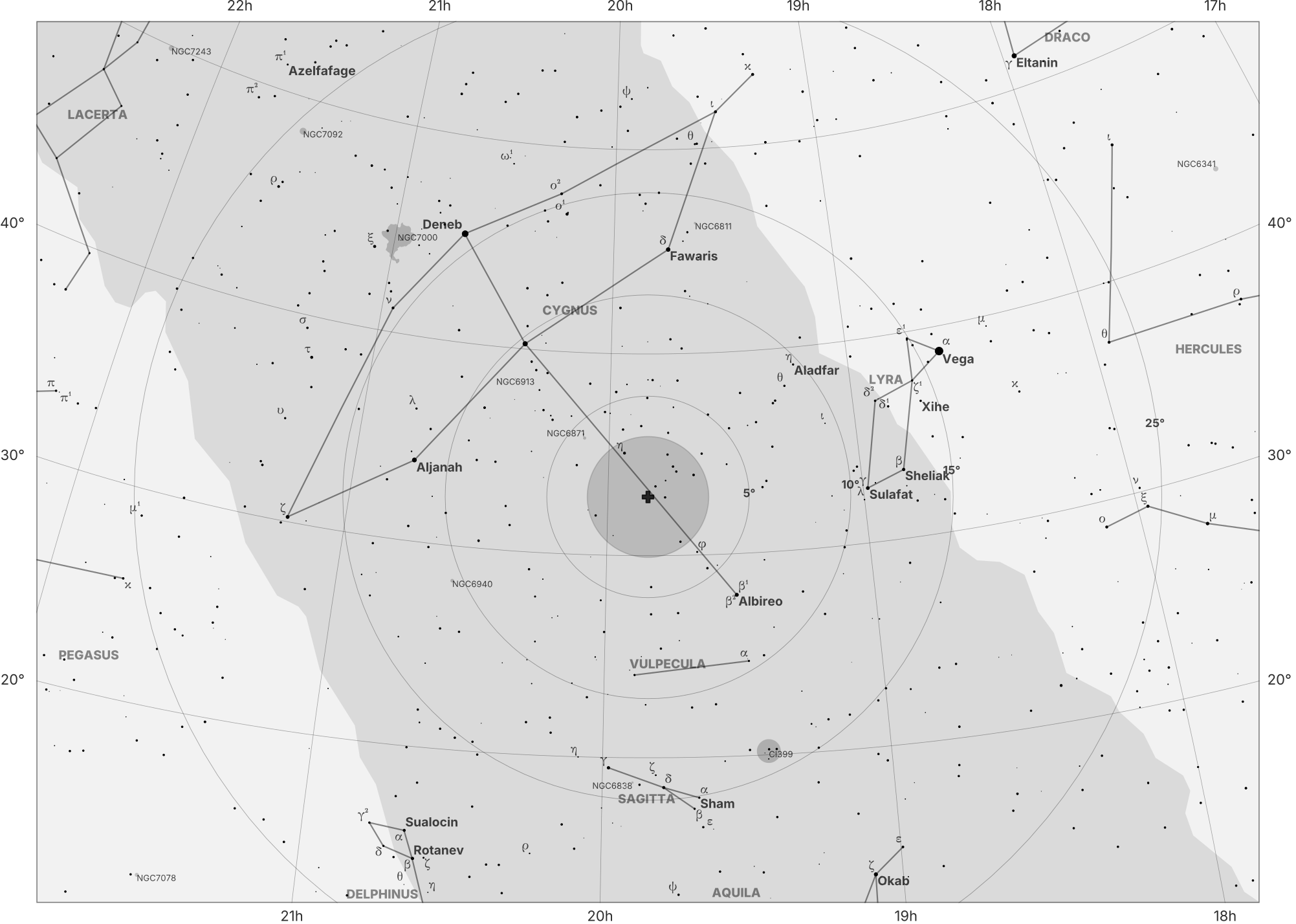
Finder map for Chi Cygni
Although it has no known mythological associations, χ Cygni holds an important place in the history of astronomy as one of the classic Mira-type variables that helped establish the reality of stellar variability. Best viewed from the Northern Hemisphere where it rides high. Following its full magnitude range from +3.3 down to +14.2 requires dedication, patience, and equipment appropriate for faint objects. Accurately estimating its magnitude near minimum is challenging due to its faintness and deep red color.
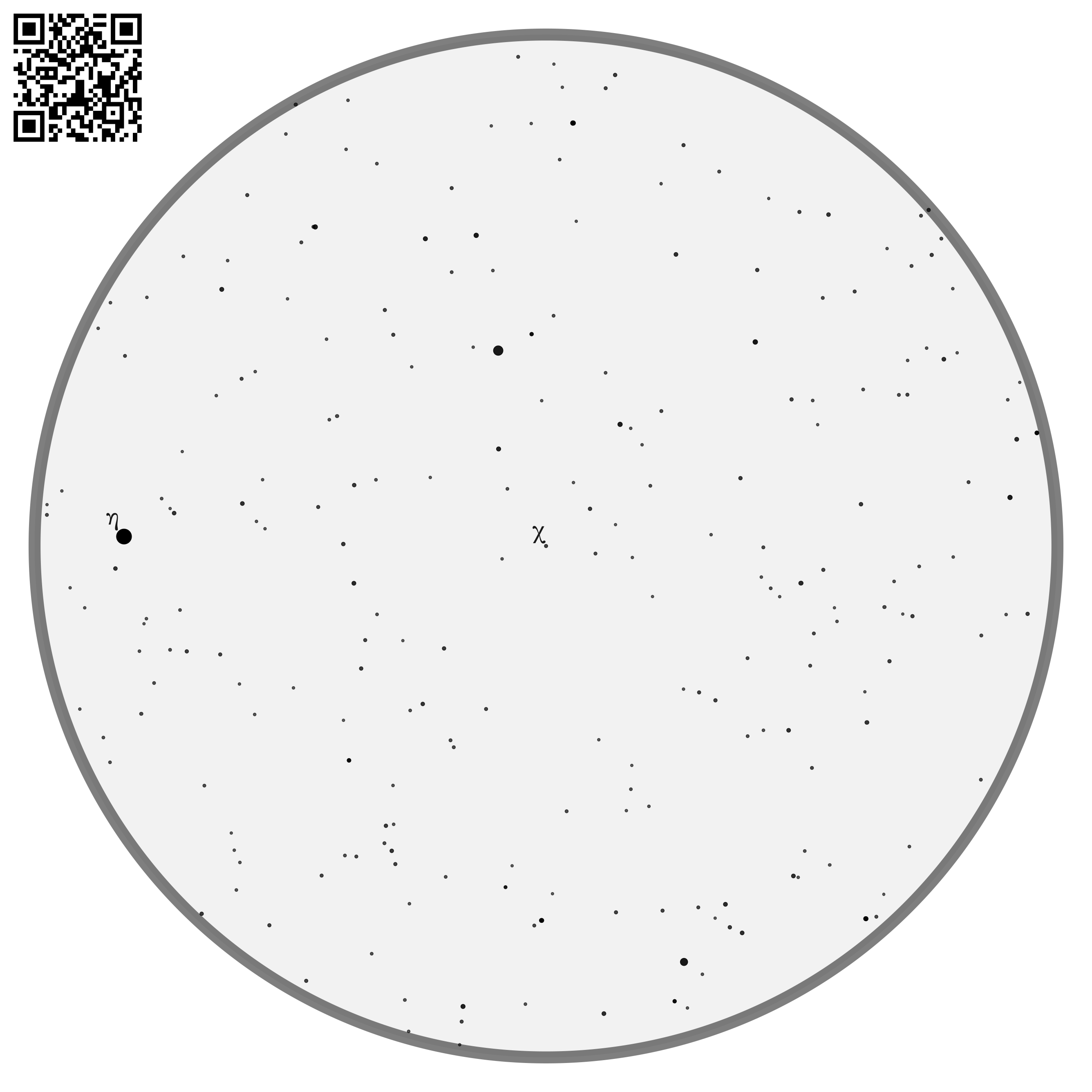
Finder scope & binocular view of Chi Cygni
| Property | Value |
|---|---|
| Common names | χ Cygni, The Firework Star |
| Catalog names | - |
| Type | Evolved Star |
| Subtype | S Star |
| Coordinates | 19h 50m 33.92s, +32° 54’ 50.58” |
| Season | June - August |
| Best month | Mid-July |
| Beginner friendly | Marginal |
| Visual reward | Moderate |
| Filters required | None |
| LP tolerance | High |
| Minimum equipment | Binoculars |
| Optimal equipment | Small telescope |
| Magnitude | 4.2 |
| Size | - |
| Constellation | Cygnus |
Observation Notes
Naked Eye
Visible near maximum as a moderately bright orange-red to reddish star a few degrees from Eta Cygni. At peak brightness it is easy to identify, but fades completely from naked-eye view for much of its long cycle. Variability is best appreciated by checking its brightness periodically over several months.
Binoculars
Easily followed through much of its brightening and fading phases around maximum. The warm reddish hue is noticeable, and binoculars are well suited for making basic magnitude estimates using nearby comparison stars.
Small Telescope
Enhances the star’s color and allows it to be followed well beyond naked-eye and binocular limits. A small telescope will still lose the star as it fades toward minimum.
Medium Telescope
Extends coverage significantly, but following χ Cygni all the way to true minimum is challenging. A 6-inch telescope will generally lose it well before minimum, which can fall to roughly magnitude 13–14.
Large Telescope
Required for consistent visual detection near minimum brightness under good conditions. Suitable for advanced observing projects such as systematic brightness estimates or instrumental photometry, though these go beyond casual visual observing.