NGC 7635
4-8 inch Telescope • Emission Nebulae Detailed
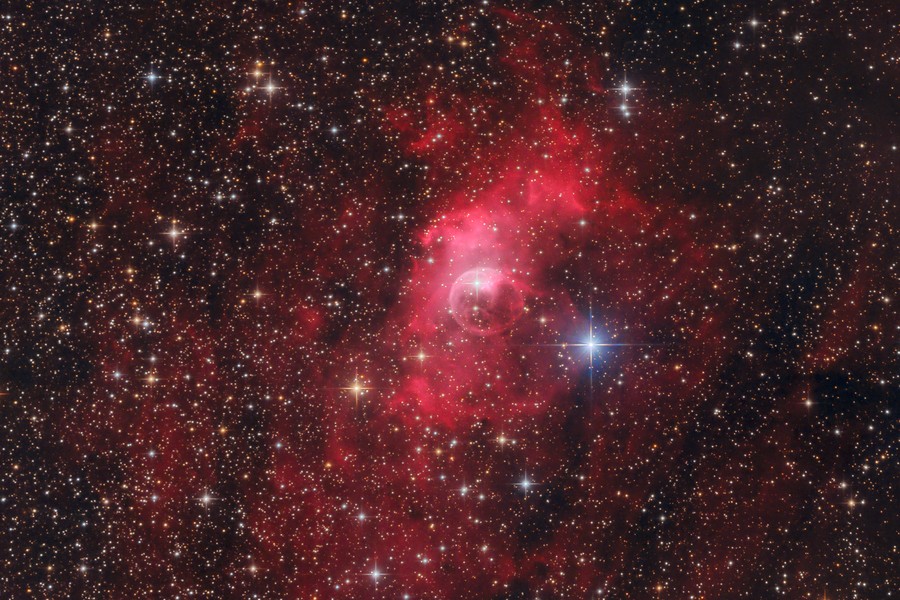
Image: Carsten Frenzl
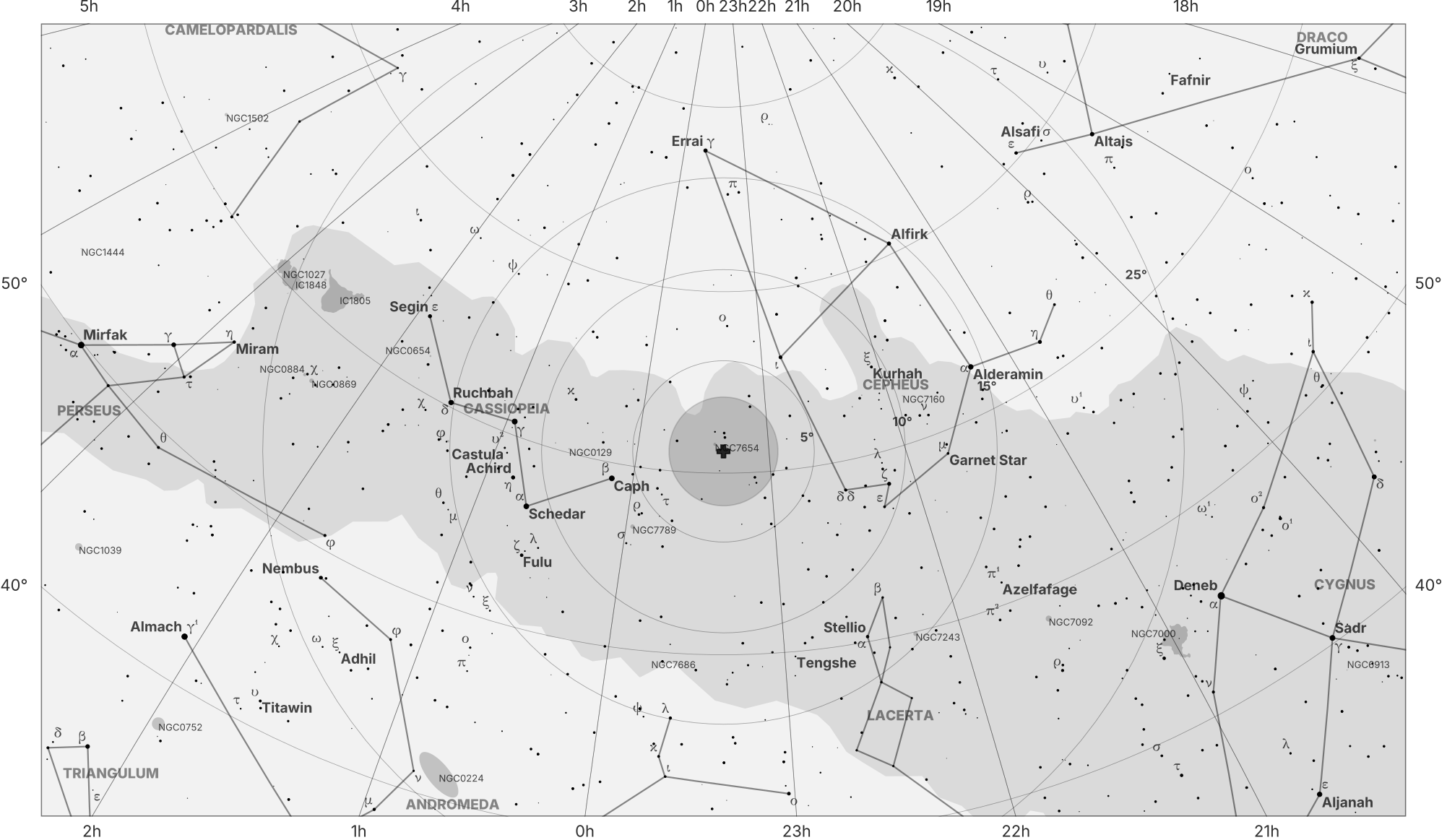
Finder map for NGC 7635
The name “Bubble Nebula” and striking space-based images have made NGC 7635 a well-known object in astronomy media and outreach, primarily through astrophotography rather than visual observation. Best viewed from the Northern Hemisphere due to high declination. Remains low on the northern horizon for most Southern Hemisphere observers. The primary challenge is the extremely low surface brightness of the bubble structure. Detecting any part of it visually requires very dark, transparent skies, careful use of averted vision, and a narrowband nebula filter, with UHC-type filters generally more effective than O-III at this aperture.
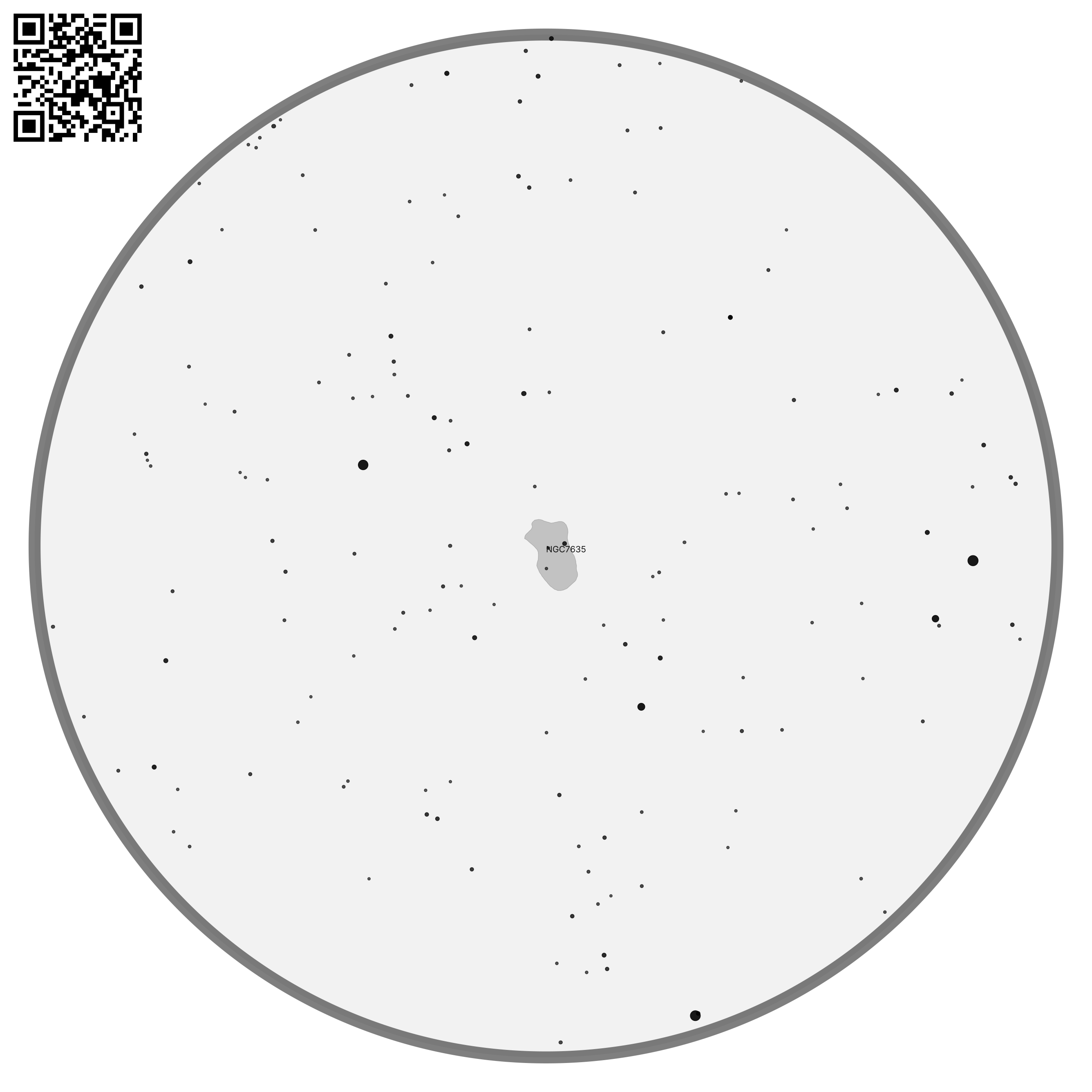
Finder scope & binocular view of NGC 7635
| Property | Value |
|---|---|
| Common names | Bubble Nebula, Caldwell 11 |
| Catalog names | C 11, NGC 7635, SH 2-162, LBN 548, Ced 210 |
| Type | Interstellar Medium |
| Subtype | HII Region |
| Coordinates | 23h 20m 48.30s, +61° 12’ 06.00” |
| Season | August - October |
| Best month | Mid-September |
| Beginner friendly | No |
| Visual reward | Low |
| Filters required | UHC, H-beta |
| LP tolerance | Low |
| Minimum equipment | Small telescope |
| Optimal equipment | Medium telescope |
| Magnitude | 10.0 |
| Size | 15.0 arcminutes x 8.0 arcminutes |
| Constellation | Cassiopeia |
Observation Notes
Naked Eye
Not visible.
Binoculars
Not visible.
Small Telescope
In apertures below about 8 inches, only the central star is reliably visible. Under exceptional dark-sky conditions, experienced observers may suspect a vague, unresolved haze, but positive visual detection of the nebula is unlikely.
Medium Telescope
An 8–12 inch telescope from a dark site with an O-III filter provides the first realistic chance of detection. With careful averted vision, a faint arc of nebulosity may be glimpsed near the 8.7-magnitude central star. The view is very low contrast and subtle.
Large Telescope
In apertures of roughly 14 inches and larger, the arc becomes more secure and slightly easier to trace with an O-III filter. The nebula still appears as a partial rim rather than a complete bubble. The full circular structure is extremely difficult to impossible to see visually and remains primarily a photographic feature.