NGC 6888
4-8 inch Telescope • Emission Nebulae Detailed
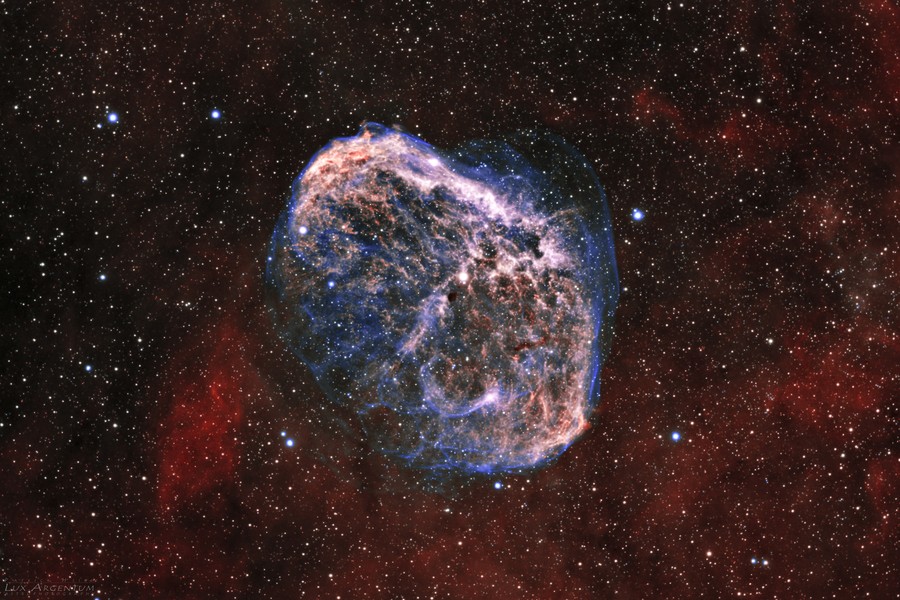
Image: Patrick Hsieh
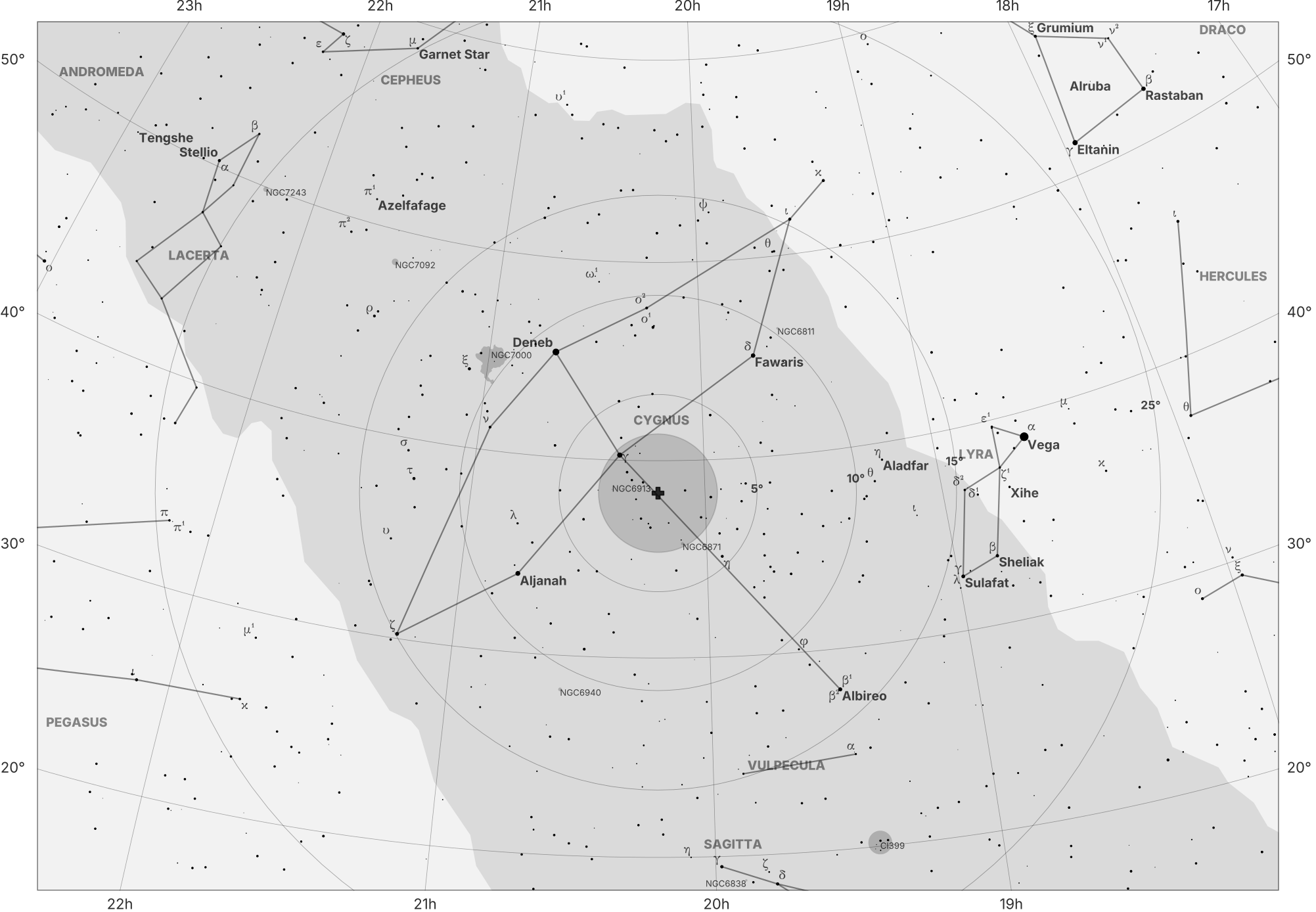
Finder map for NGC 6888
An iconic and highly prized target for amateur astrophotographers, often considered a benchmark for showcasing narrowband imaging and processing skills. Best observed at high altitude to minimize atmospheric extinction, as it is a low surface brightness object. Its very low surface brightness makes NGC 6888 difficult to detect visually without a nebula filter, despite an integrated magnitude near 10. The bright central Wolf–Rayet star can further reduce contrast. In 4–8 inch telescopes, observers typically detect only portions of the brighter arc, while the full extent of the faint shell remains beyond easy visual reach.
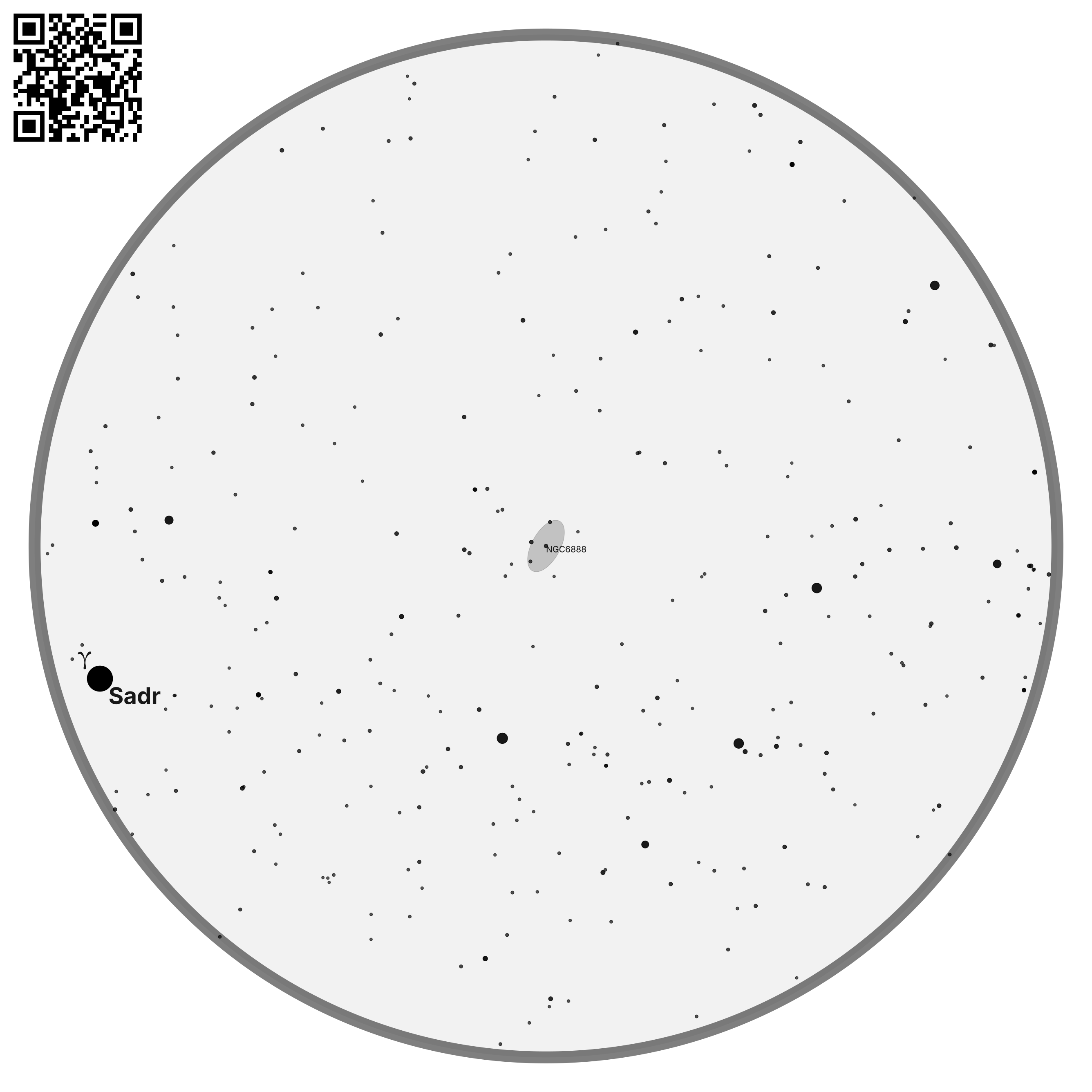
Finder scope & binocular view of NGC 6888
| Property | Value |
|---|---|
| Common names | Crescent Nebula, Caldwell 27, Sharpless 105 |
| Catalog names | C 27, NGC 6888, SH 2-105, LBN 203, Ced 179, … |
| Type | Interstellar Medium |
| Subtype | HII Region |
| Coordinates | 20h 12m 06.54s, +38° 21’ 17.78” |
| Season | July - September |
| Best month | August |
| Beginner friendly | Marginal |
| Visual reward | Moderate |
| Filters required | UHC, H-beta |
| LP tolerance | Medium |
| Minimum equipment | Small telescope |
| Optimal equipment | Medium telescope |
| Magnitude | 7.4 |
| Size | 18.0 arcminutes x 13.0 arcminutes |
| Constellation | Cygnus |
Observation Notes
Naked Eye
Not visible.
Binoculars
Generally not visible. Under exceptional dark-sky conditions, highly experienced observers using large binoculars with nebula filters may suspect a faint brightening, but reliable detection is uncommon.
Small Telescope
Very difficult. In apertures of about 4–6 inches from a dark site, an O-III filter is essential. At best, a faint hint of the brightest crescent-shaped arc may be glimpsed with careful use of averted vision.
Medium Telescope
With an O-III filter and dark, transparent skies, the main bright arc becomes detectable as a curved, low-contrast streak of light. The crescent shape is recognizable, but little internal detail is visible.
Large Telescope
In 12–16 inch and larger apertures, the crescent is obvious with an O-III or UHC filter. Uneven brightness and mild texture can be seen along the main arc rather than sharp filaments. Under excellent conditions, experienced observers may suspect portions of the fainter opposing shell, but this remains subtle and uncertain.