IC 405
4-8 inch Telescope • Emission Nebulae Detailed
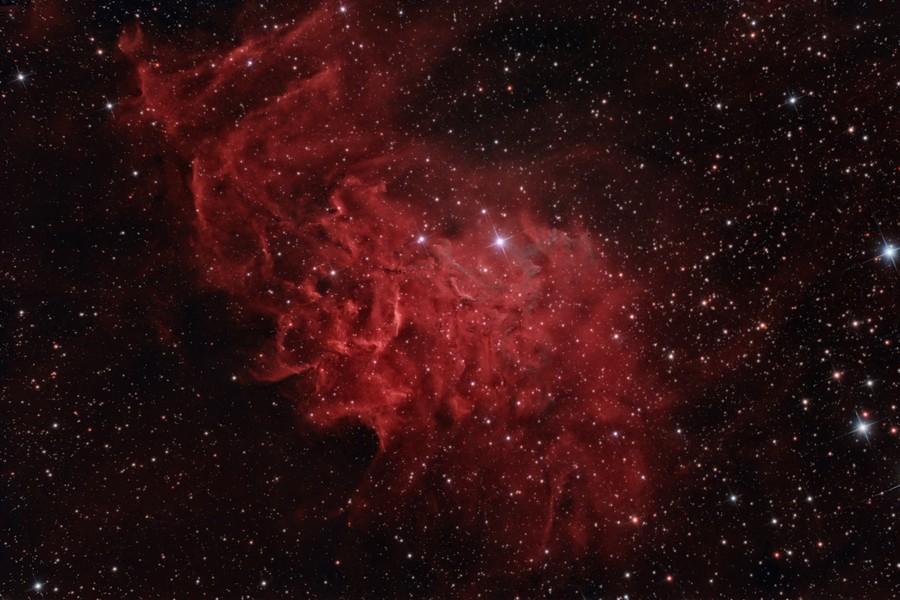
Image: Nielander
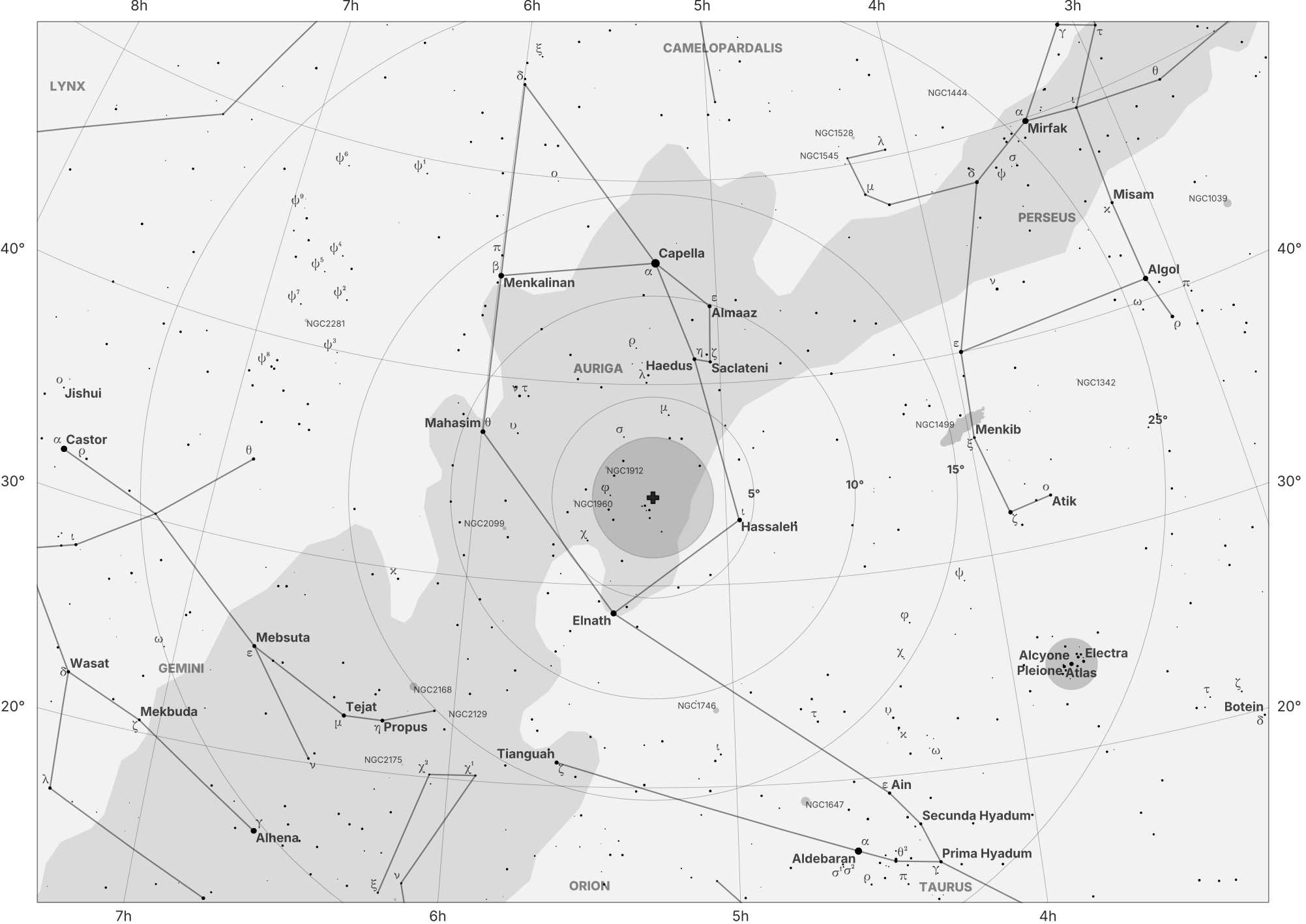
Finder map for IC 405
The popular name “Flaming Star Nebula” is derived from its appearance in long-exposure color astrophotography. It is a well-known and frequently imaged target among amateur astrophotographers. Best observed when high in the sky to reduce atmospheric extinction and improve contrast, particularly from mid-northern latitudes. Its very low surface brightness makes IC 405 highly susceptible to light pollution. In 4–8 inch telescopes, the nebula appears as a faint, uneven glow around the central star, while the dramatic contrast between red emission and blue reflection regions seen in images is not visually detectable.
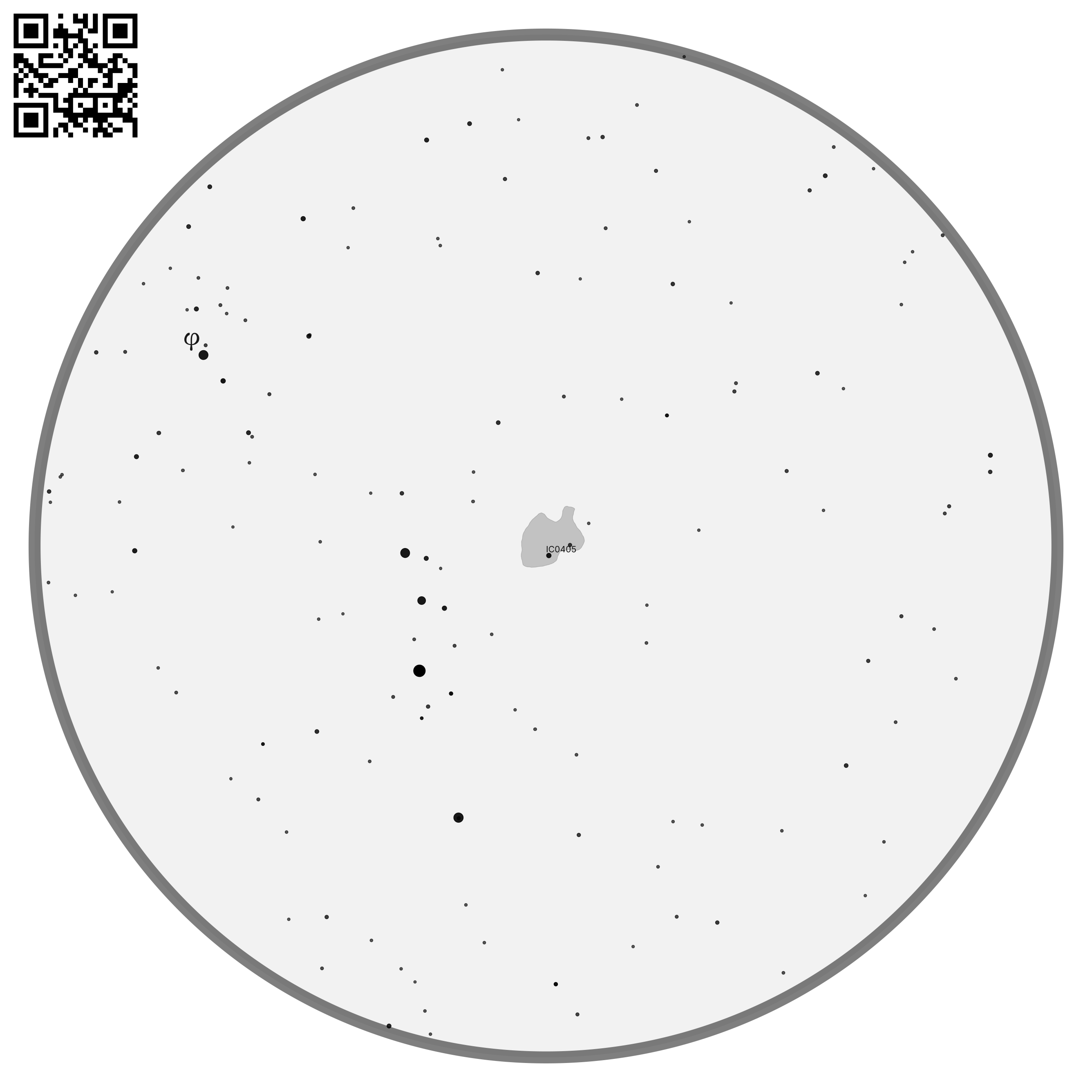
Finder scope & binocular view of IC 405
| Property | Value |
|---|---|
| Common names | Flaming Star Nebula, Caldwell 31 |
| Catalog names | C 31, IC 405, SH 2-229, vdB 34, LBN 795, … |
| Type | Interstellar Medium |
| Subtype | HII Region |
| Coordinates | 5h 17m 24.00s, +34° 22’ 60.00” |
| Season | November - January |
| Best month | Mid-December |
| Beginner friendly | No |
| Visual reward | Low |
| Filters required | UHC, H-beta |
| LP tolerance | Low |
| Minimum equipment | Small telescope |
| Optimal equipment | Medium telescope |
| Magnitude | 6.0 |
| Size | 30.0 arcminutes x 20.0 arcminutes |
| Constellation | Auriga |
Observation Notes
Naked Eye
Not visible to the naked eye, though the bright star AE Aurigae is obvious.
Binoculars
Generally not visible. Under exceptional dark-sky conditions, very experienced observers using large binoculars may suspect a vague brightening around AE Aurigae, but reliable detection is uncommon.
Small Telescope
Under very dark, transparent skies, a small telescope with an H-beta filter may reveal an extremely faint, uneven glow surrounding AE Aurigae. The nebula is subtle and easily missed; without a filter it is typically invisible.
Medium Telescope
In an 8–10 inch telescope from a dark site, an H-beta filter provides the best chance of detection. The nebula appears as a very faint, ghostly haze, with the main curved arc being the most likely feature to glimpse using averted vision. Even then, the view is low contrast and uncertain.
Large Telescope
A 12-inch or larger telescope improves detection but does not transform the object. The nebula remains diffuse and delicate, with only hints of uneven brightness and curvature visible. Any impression of structure is subtle, and the nebula’s large extent is appreciated more by context than by sharply defined features.