IC 5146
4-8 inch Telescope • Emission Nebulae Detailed
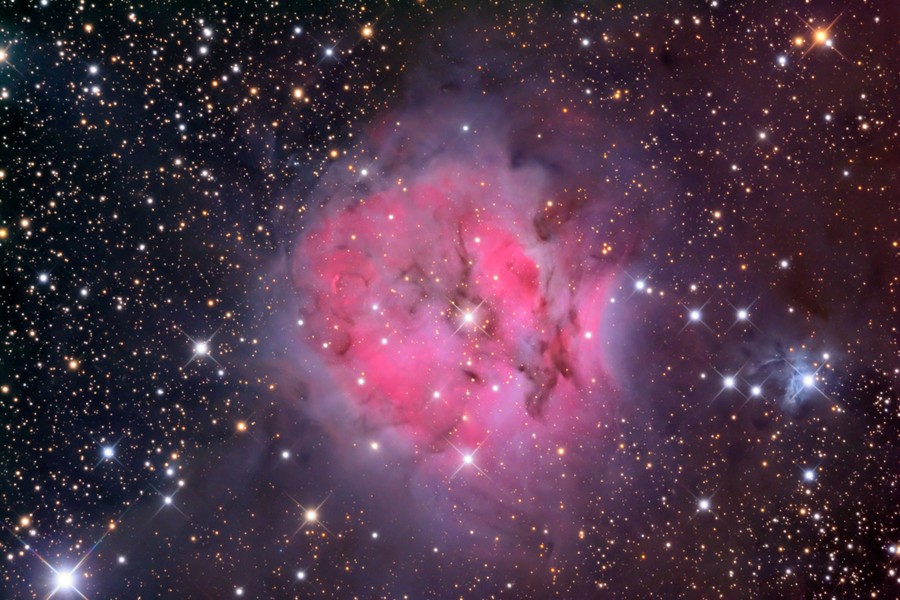
Image: Adam Block/Mount Lemmon SkyCenter/University of Arizona
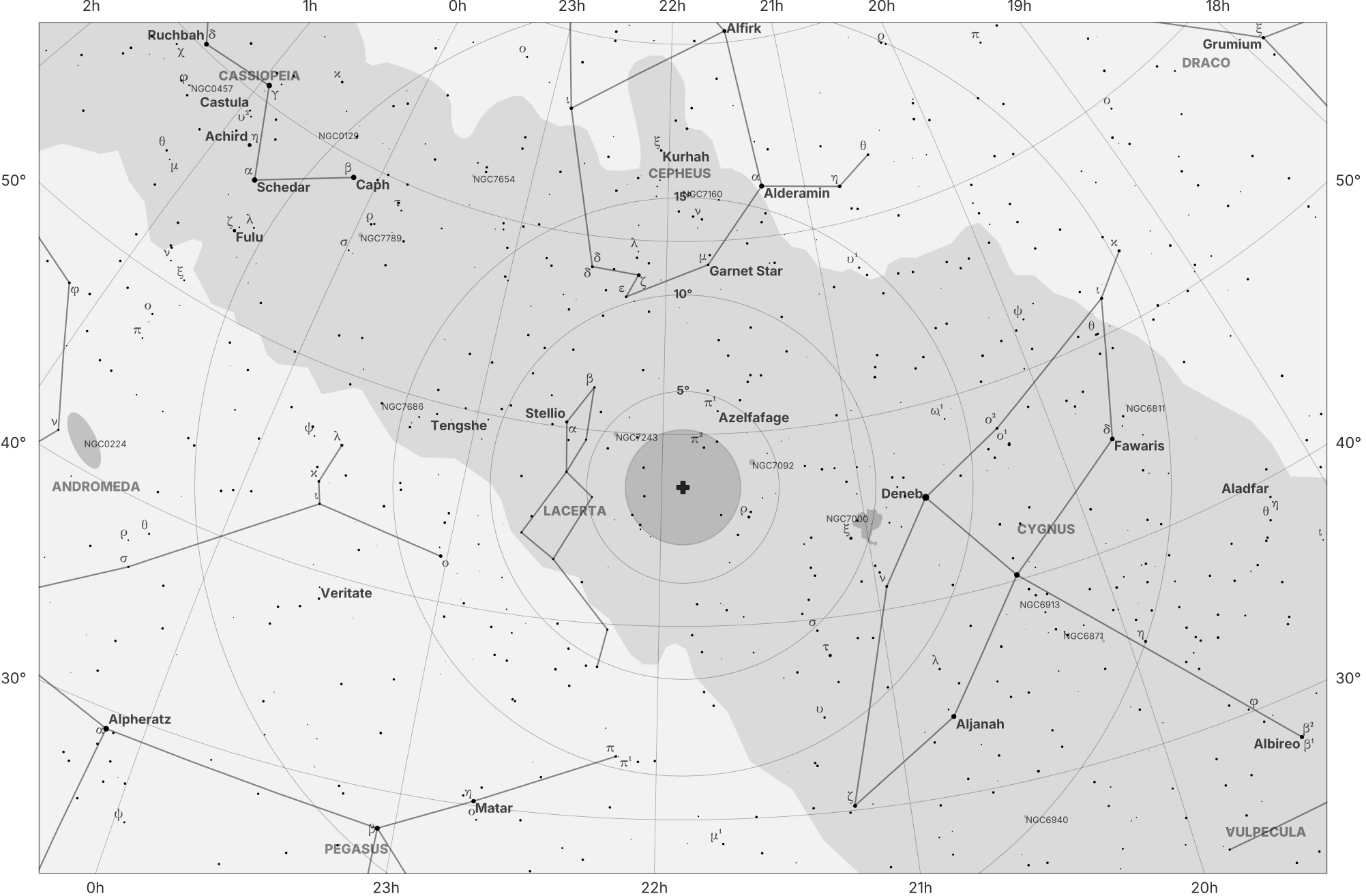
Finder map for IC 5146
Its common name, the Cocoon Nebula, evokes the imagery of a young star emerging from its natal dusty cocoon, making it an illustrative and popular object for public outreach. Best viewed from mid-to-high northern latitudes where it culminates high in the sky. Poorly placed for most southern hemisphere observers. The faint nebulosity is extremely difficult to observe visually without very dark skies (Bortle 4 or better), with filters greatly improving visibility. The associated dark nebula, Barnard 168, requires excellent transparency.
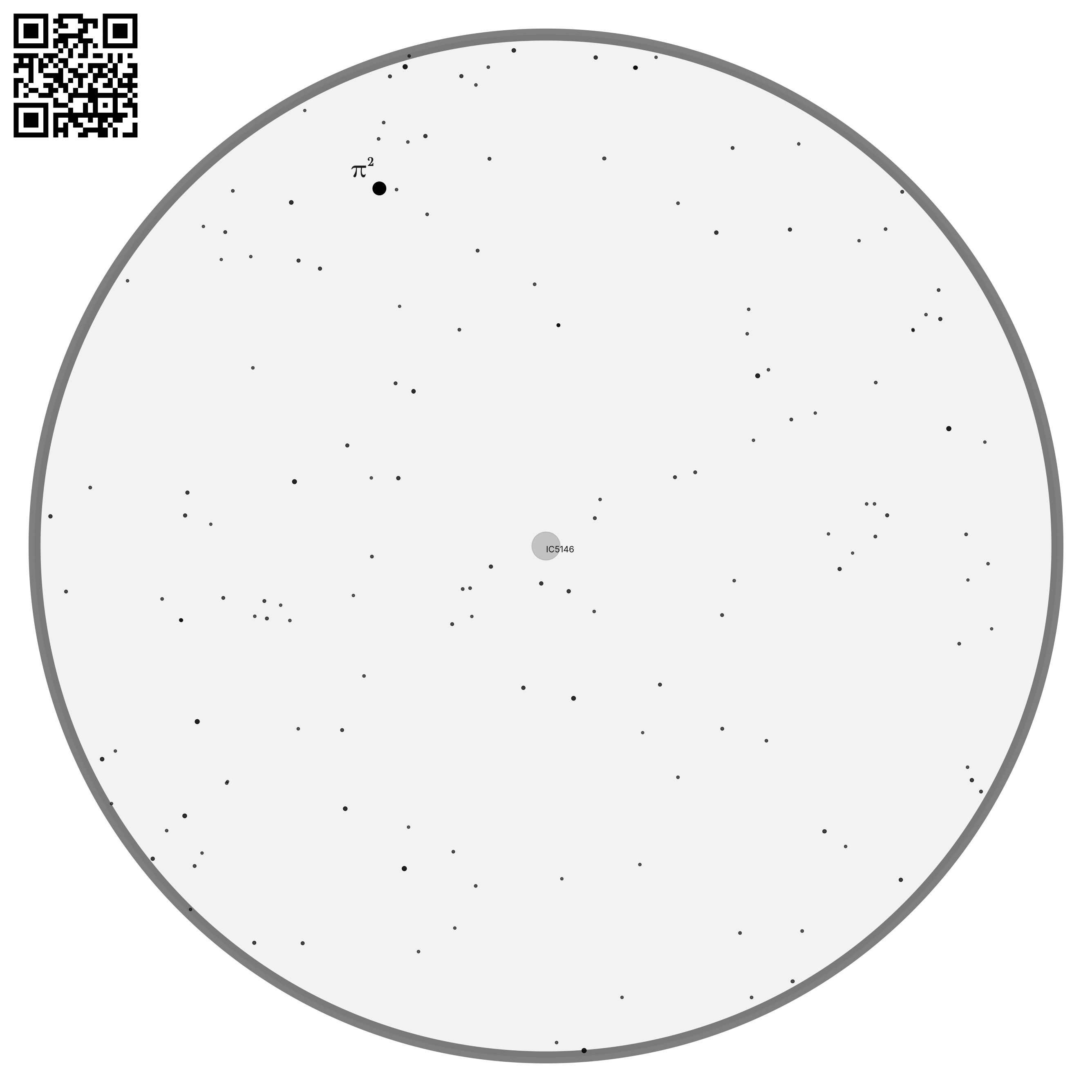
Finder scope & binocular view of IC 5146
| Property | Value |
|---|---|
| Common names | Cocoon Nebula, Caldwell 19 |
| Catalog names | C 19, IC 5146, SH 2-125, LBN 424, Cr 470, … |
| Type | Interstellar Medium |
| Subtype | HII Region |
| Coordinates | 21h 53m 29.28s, +47° 14’ 45.60” |
| Season | July - September |
| Best month | Mid-August |
| Beginner friendly | Marginal |
| Visual reward | Low |
| Filters required | UHC |
| LP tolerance | Low |
| Minimum equipment | Binoculars |
| Optimal equipment | Small telescope |
| Magnitude | 7.2 |
| Size | 10.0 arcminutes x 10.0 arcminutes |
| Constellation | Cygnus |
Observation Notes
Naked Eye
Not visible.
Binoculars
The nebula is not visible, and the embedded cluster is generally not detectable in standard binoculars. Under exceptional conditions, large binoculars may only hint at a very small stellar condensation.
Small Telescope
From very dark skies, the central star cluster Collinder 470 can be glimpsed as a faint, compact grouping of a few stars. The surrounding nebula itself remains extremely difficult and is usually invisible.
Medium Telescope
Under excellent transparency from a dark site, the nebula may be detected as a very faint, diffuse glow surrounding the cluster at low magnification. Narrowband filters such as UHC can offer modest contrast improvement, but the effect is subtle due to the nebula’s mixed emission and reflection nature.
Large Telescope
Improves the reliability of detecting the faint nebulosity, which may appear as a weakly defined, roughly circular haze. The associated dark cloud Barnard 168 is often more apparent, seen as a starless lane extending away from the nebula rather than as internal structure.