Lagoon Nebula
Binoculars • Emission Nebulae
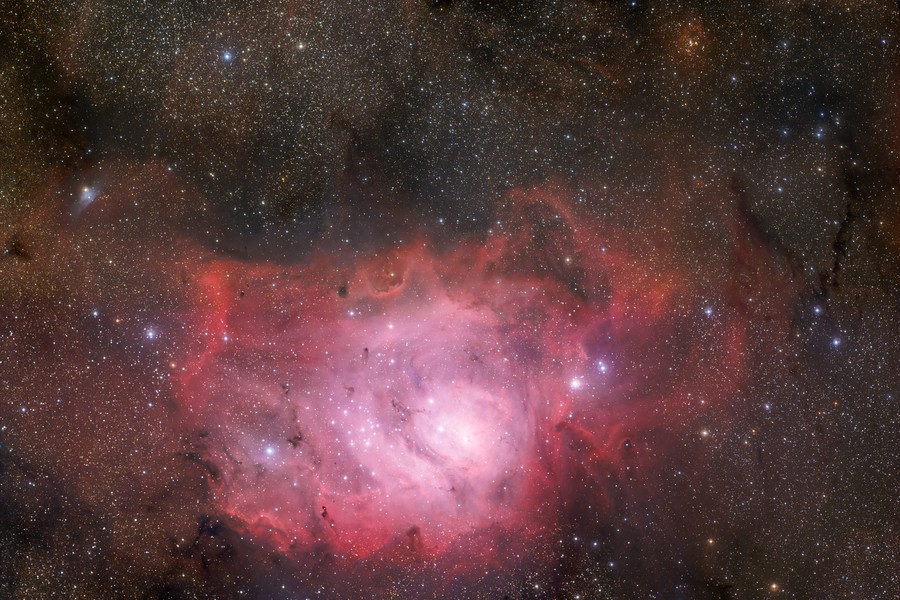
Image: ESO/S. Guisard
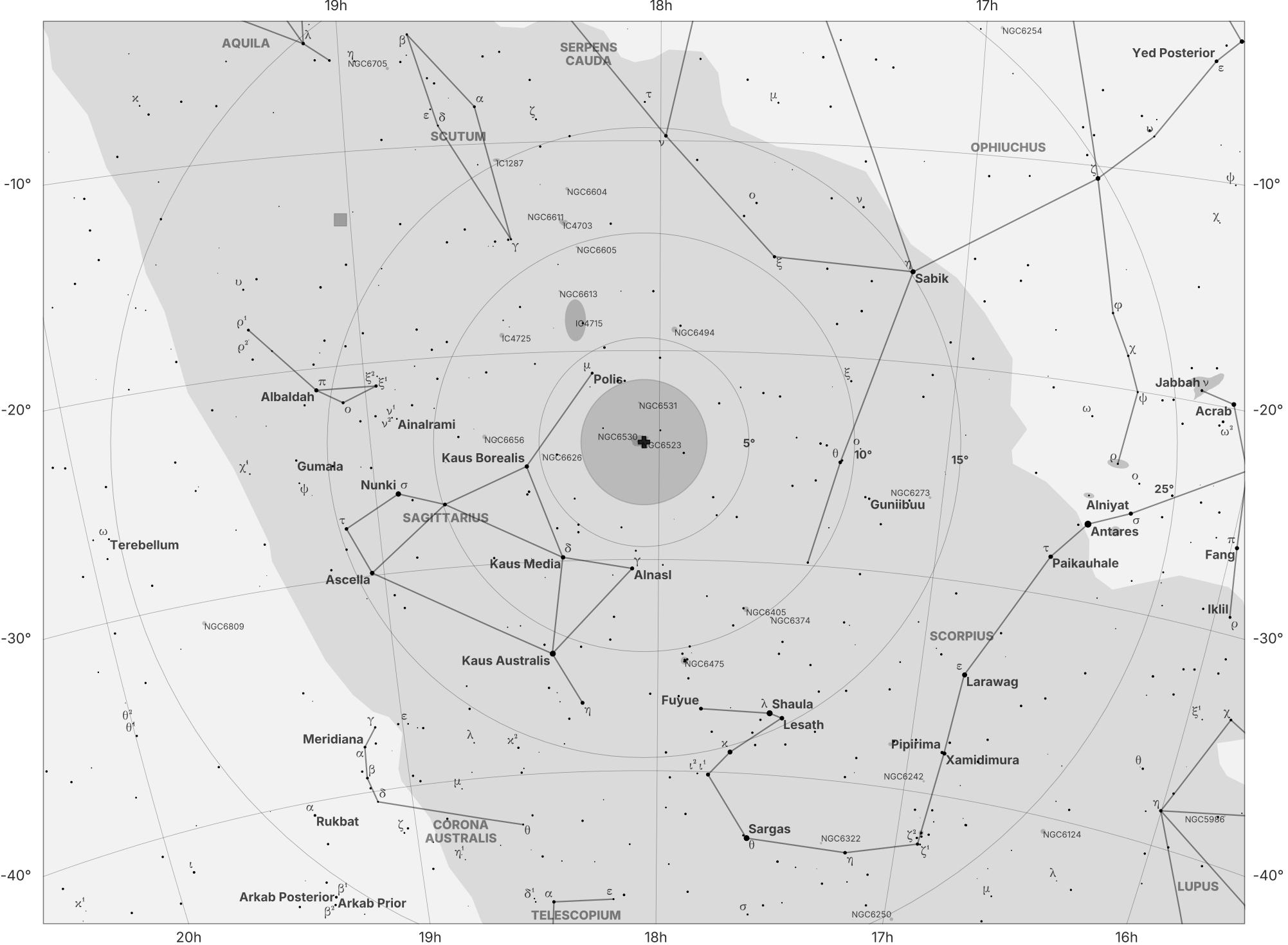
Finder map for Lagoon Nebula
A classic ‘showpiece’ object for amateur and professional astronomers, representing one of the most beautiful and accessible stellar nurseries in the night sky. Best viewed from southern latitudes or mid-northern latitudes where it clears the southern horizon during summer. Noticing variations in brightness within the nebula and tracing its outer extent under dark skies. Finer structure in the Hourglass Nebula region becomes increasingly apparent with larger apertures or imaging.
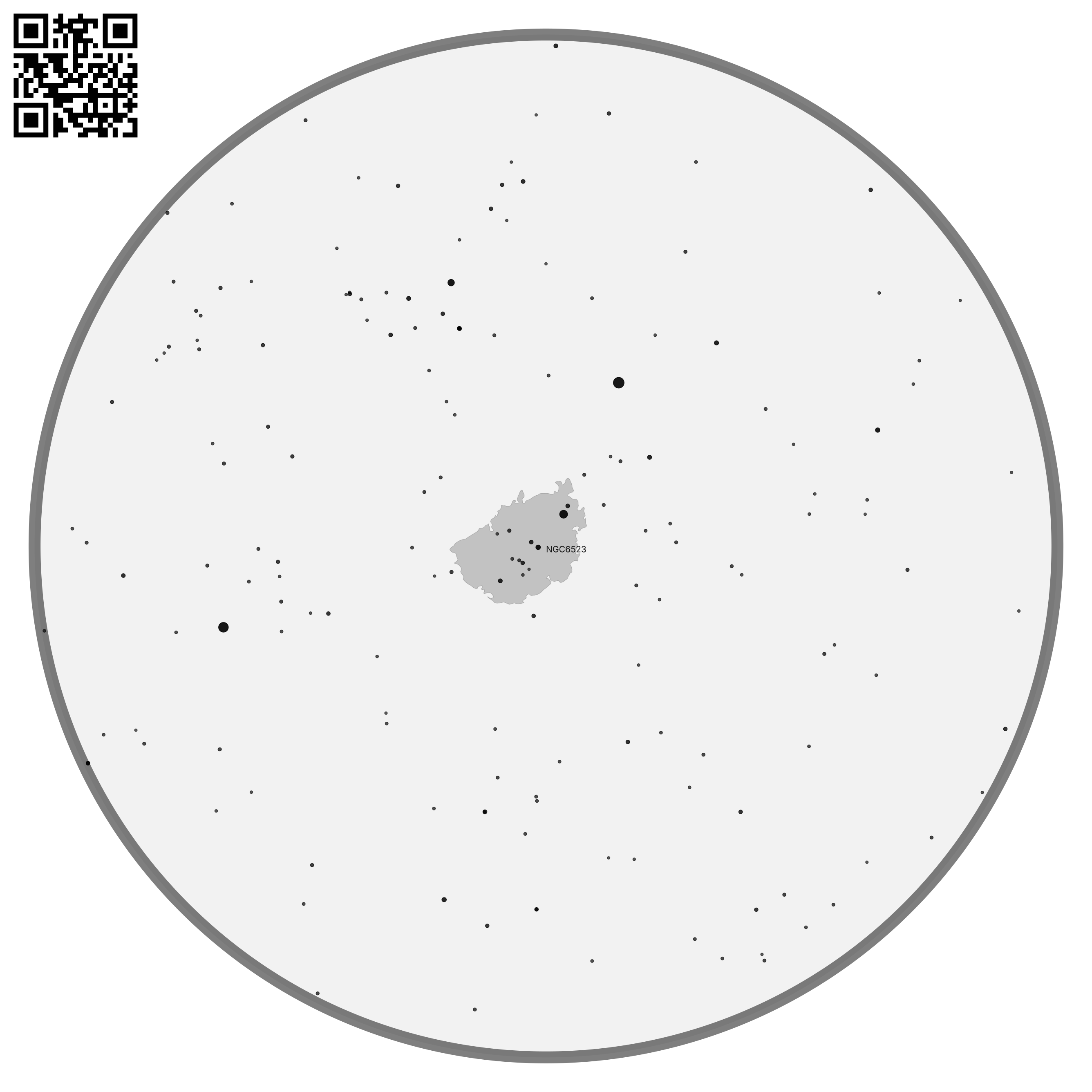
Finder scope & binocular view of Lagoon Nebula
| Property | Value |
|---|---|
| Common names | M8, Messier 8 |
| Catalog names | M 8, NGC 6523, SH 2-25, RCW 146, LBN 25 |
| Type | Interstellar Medium |
| Subtype | HII Region |
| Coordinates | 18h 03m 12.00s, -24° 22’ 60.00” |
| Season | May - July |
| Best month | Mid-June |
| Beginner friendly | Yes |
| Visual reward | High |
| Filters required | UHC, OIII |
| LP tolerance | Medium |
| Minimum equipment | Naked eye |
| Optimal equipment | Binoculars |
| Magnitude | 6.0 |
| Size | 45.0 arcminutes x 30.0 arcminutes |
| Constellation | Sagittarius |
Observation Notes
Naked Eye
Visible from dark-sky sites as a distinct, elongated bright patch embedded in the Sagittarius Milky Way.
Binoculars
Shows a broad, ghostly glow surrounding a rich knot of stars forming the open cluster NGC 6530. The dark lane that gives the nebula its name is subtle in binoculars and may only be suspected under excellent conditions.
Small Telescope
Reveals the overall shape of the nebula, a bright central region, and the embedded star cluster, which resolves well. The dark “lagoon” becomes noticeable, especially under dark skies. A UHC filter significantly improves contrast.
Medium Telescope
Displays increasing structural detail, including brighter knots and darker filaments. The compact Hourglass Nebula near the core becomes a distinct feature under good conditions, with UHC or H-beta filters generally being more effective than O-III for this region.
Large Telescope
Provides a rich and immersive view with complex variations in brightness and extensive faint outer nebulosity. The dust lanes and luminous regions show considerable visual depth, though all features remain diffuse and extended rather than sharply bounded.