Orion Nebula
Binoculars • Emission Nebulae
Finder map for Orion Nebula
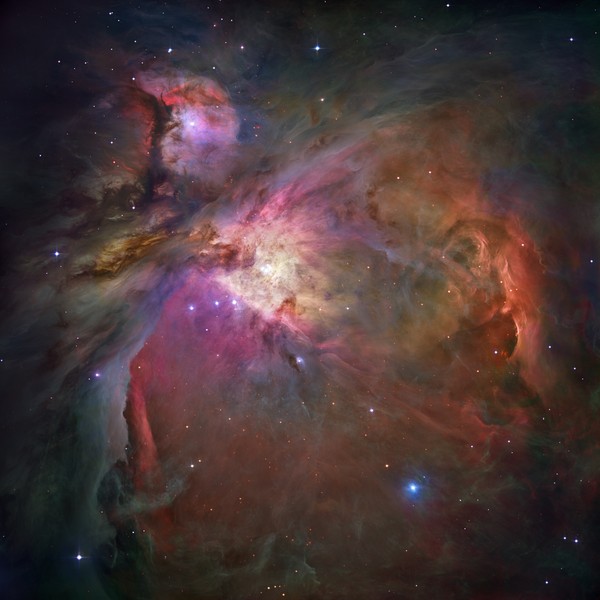
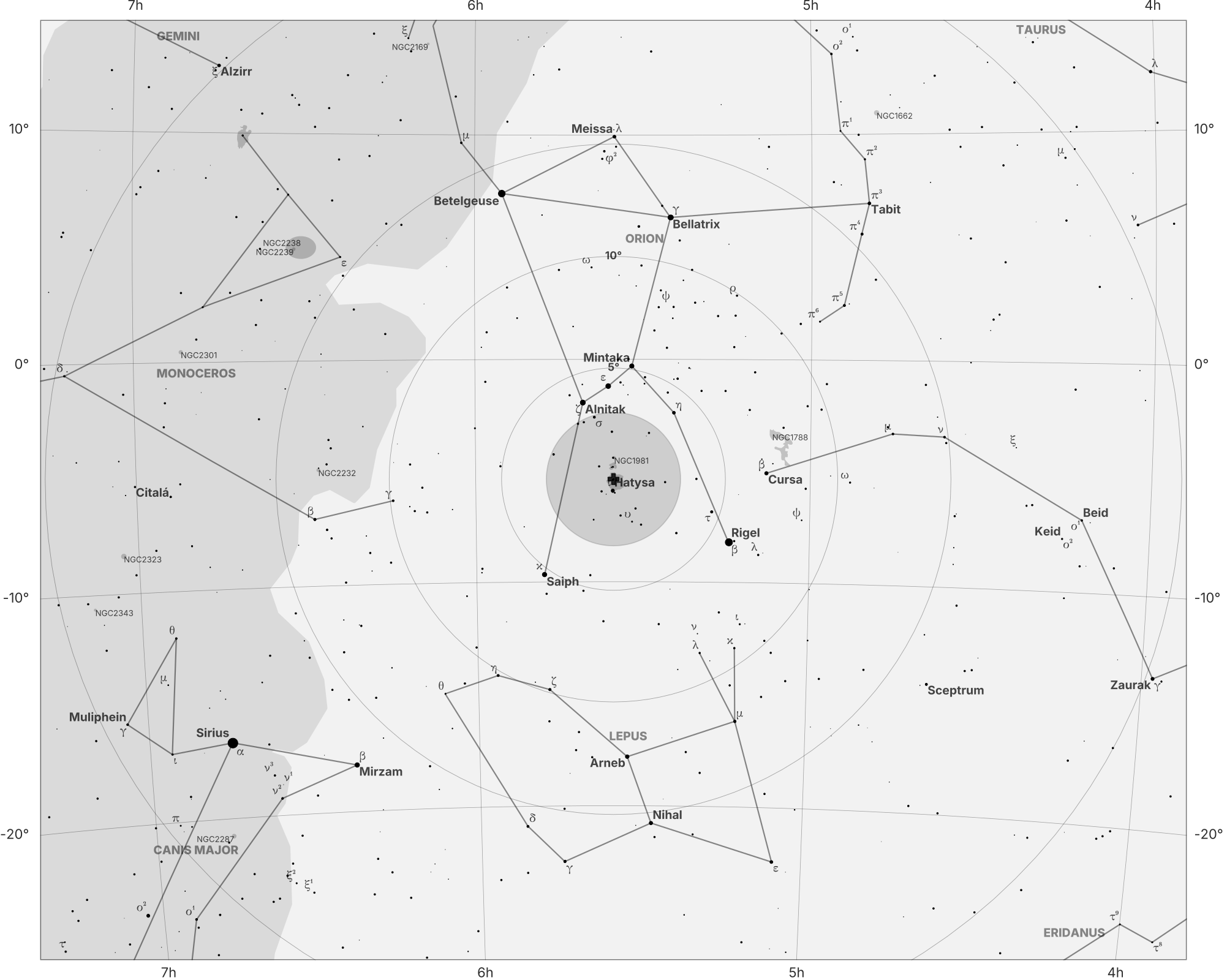
A cornerstone of both amateur and professional astronomy and one of the most recognized and iconic objects in the night sky. Its brilliance and proximity have made it central to humanity’s understanding of stellar birth. Best observed when high in the sky to minimize atmospheric distortion, ideally above 30 degrees altitude. Resolving the E and F stars in the Trapezium Cluster; discerning the faint outer ‘wings’ of the nebula.
Finder scope & binocular view of Orion Nebula
| Property | Value |
|---|---|
| Common names | The Great Orion Nebula |
| Catalog names | M 42, NGC 1976, SH 2-281, LBN 974, Ced 55d |
| Type | Interstellar Medium |
| Subtype | HII Region |
| Coordinates | 5h 35m 16.82s, -5° 23’ 15.36” |
| Season | November - January |
| Best month | Mid-December |
| Beginner friendly | Yes |
| Visual reward | High |
| Filters required | UHC, OIII |
| LP tolerance | Medium |
| Minimum equipment | Naked eye |
| Optimal equipment | Medium telescope |
| Magnitude | 4.0 |
| Size | 40.0 arcminutes x 35.0 arcminutes |
| Constellation | Orion |
Observation Notes
Naked Eye
Visible as a small, misty glow in the middle of Orion’s Sword, clearly non-stellar and distinct from the surrounding stars under even moderately dark skies.
Binoculars
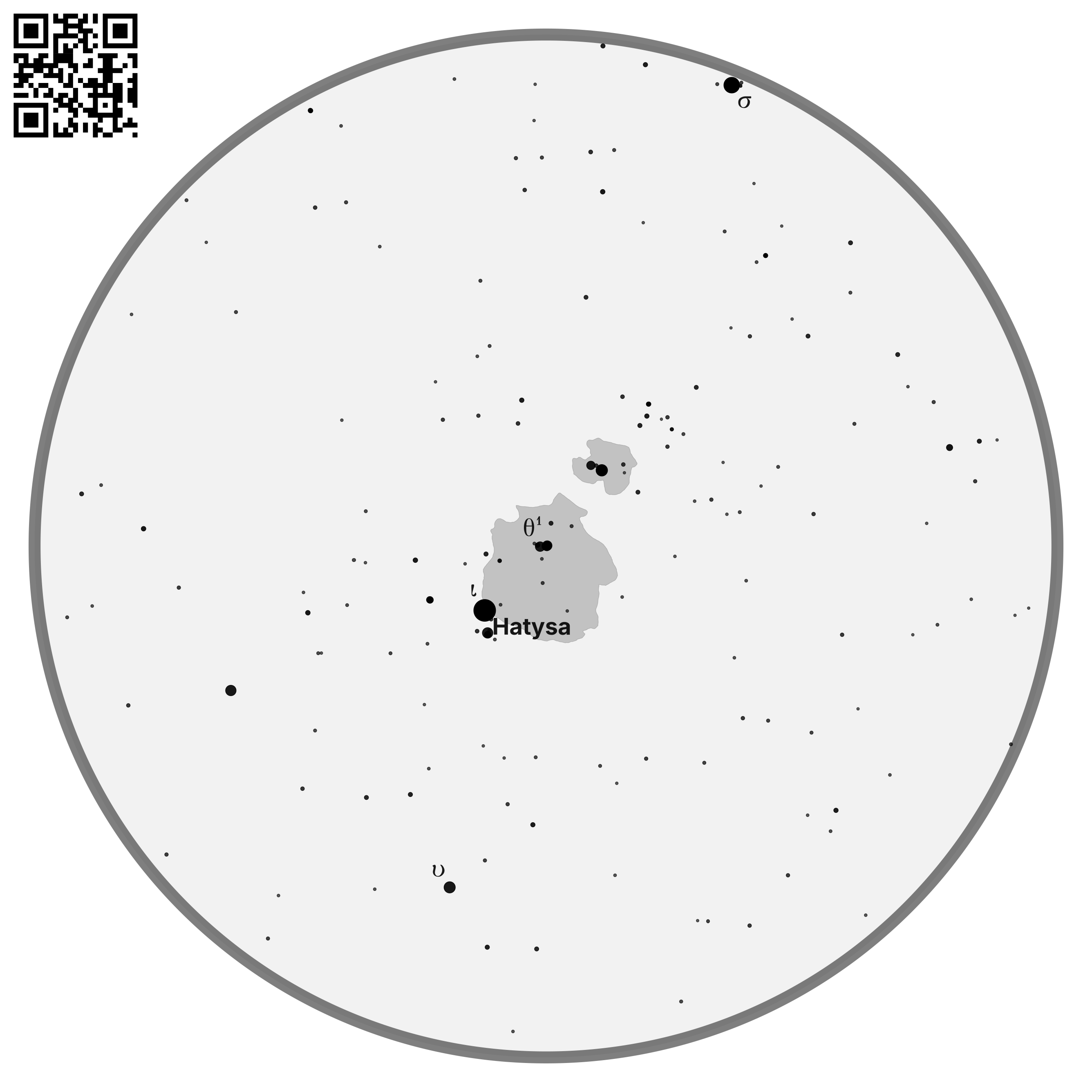
Shows a bright, irregular patch of nebulosity with several stars embedded. The Trapezium appears as a single bright point within the glow.
Small Telescope
Reveals the bright inner nebulosity, often with a noticeable greenish tint. The four main stars of the Trapezium (A, B, C, and D) are easily resolved.
Medium Telescope
Displays rich detail, including curved wisps and prominent dark features such as the “Fish’s Mouth.” Under steady seeing, the E and F stars of the Trapezium may be glimpsed. UHC filters are particularly effective at enhancing contrast, while O-III filters also improve contrast but can alter the balance of brightness in the inner regions.
Large Telescope
Provides a highly detailed and immersive view, with extensive filamentary structure and faint outer extensions becoming visible. Increased aperture reveals greater complexity in brightness and texture, though all features remain diffuse and visual in nature.