Carina Nebula
Binoculars • Emission Nebulae
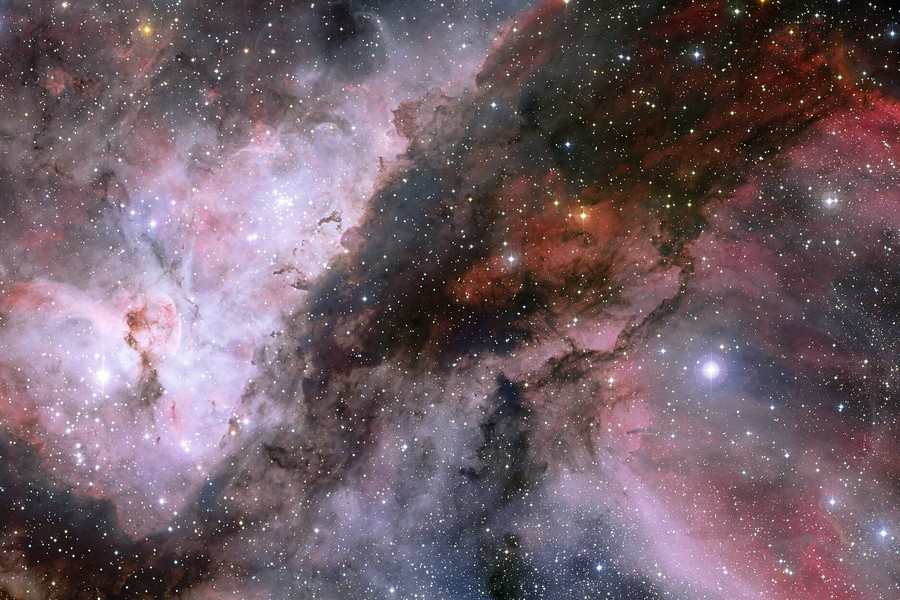
Image: European Southern Observatory
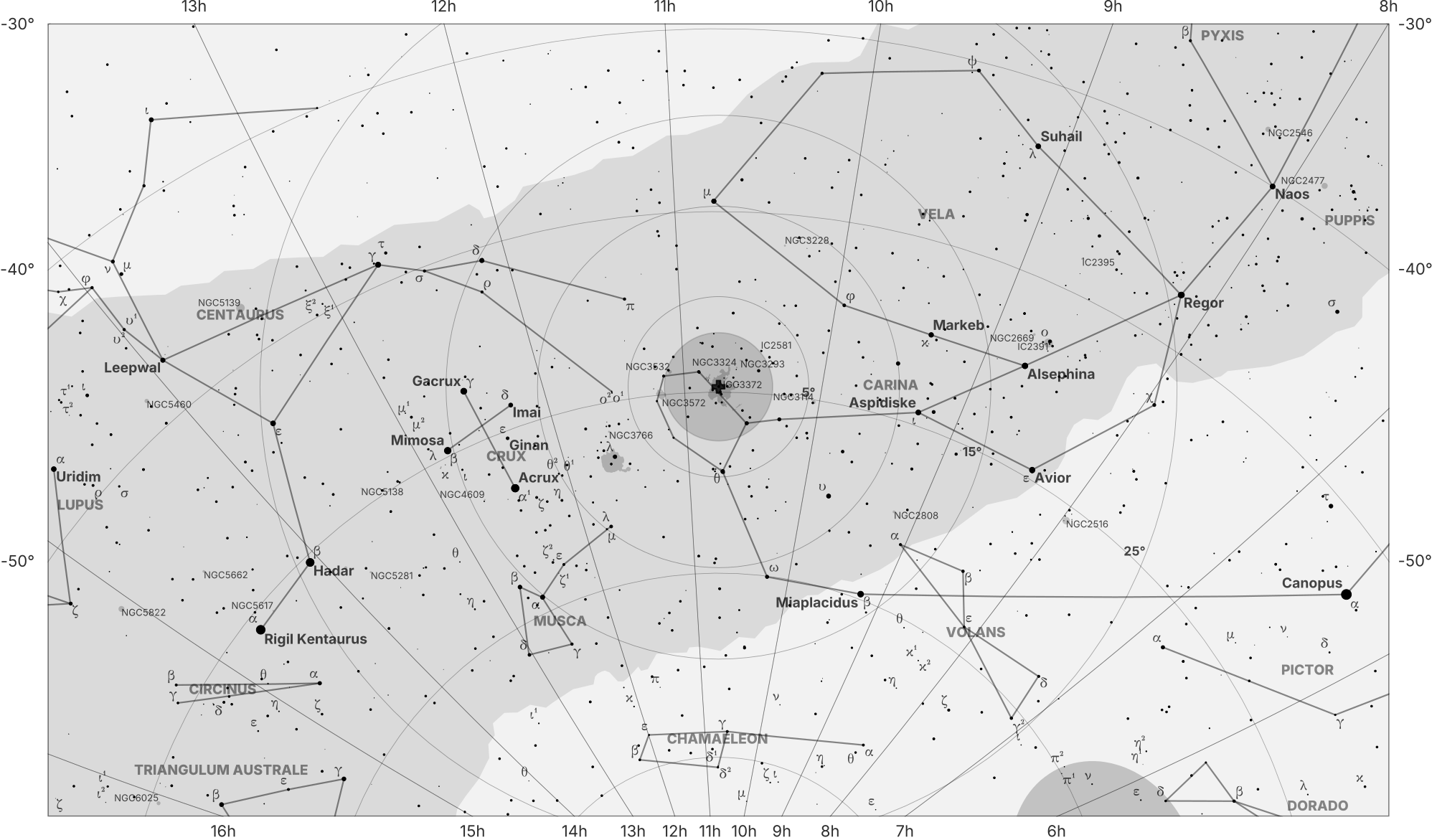
Finder map for Carina Nebula
A premier celestial showpiece for the Southern Hemisphere, analogous to the Orion Nebula for northern observers. It is a cornerstone of public outreach and a symbol of cosmic birth and destruction. Best from the Southern Hemisphere and low northern latitudes < 20° N Appreciating the immense scale of the nebula and the broad dark lanes that divide its brightest regions. Under dark southern skies, binoculars reveal extensive nebulosity surrounding Eta Carinae, while finer structures such as the Homunculus Nebula and Bok globules remain the domain of large telescopes and imaging.
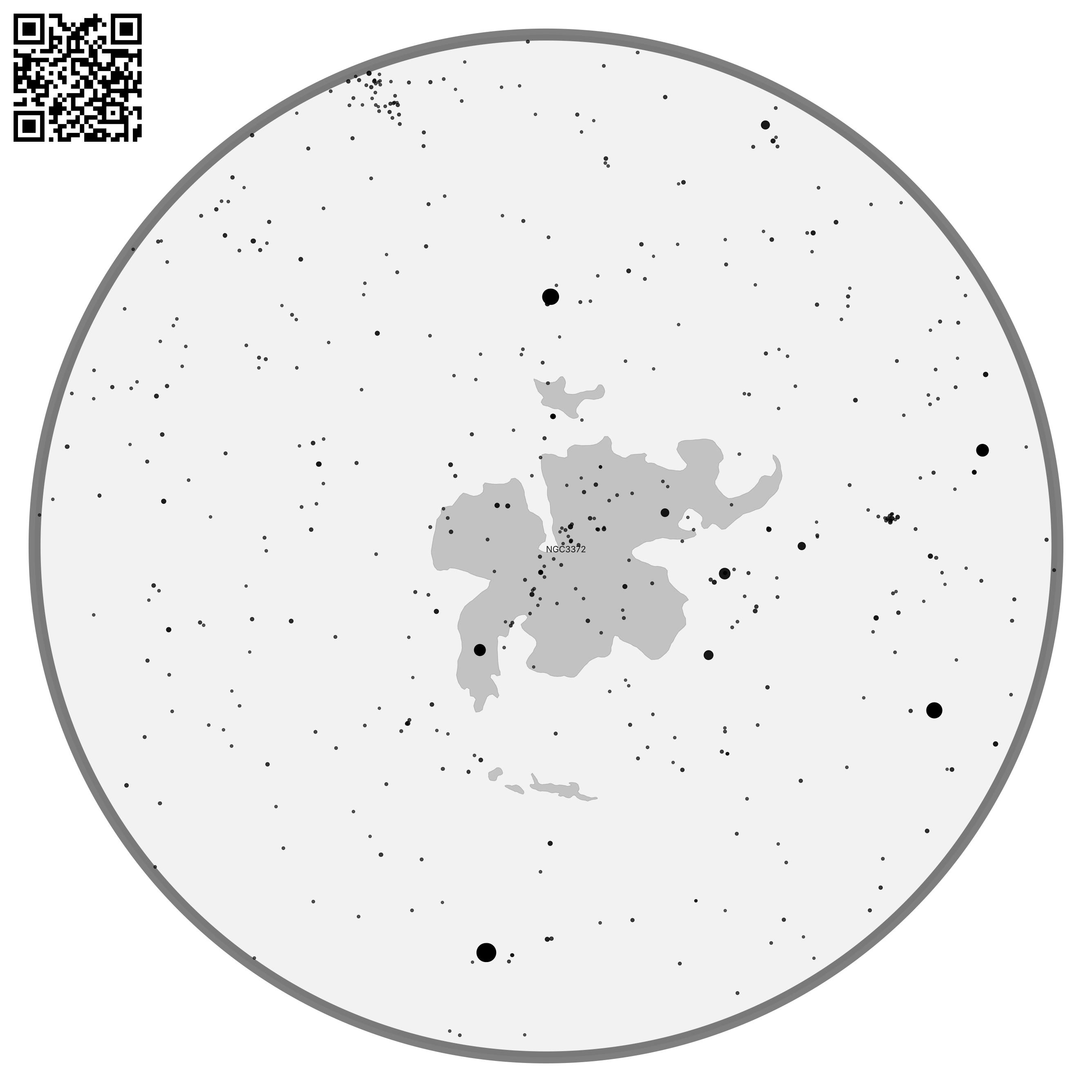
Finder scope & binocular view of Carina Nebula
| Property | Value |
|---|---|
| Common names | Eta Carinae Nebula, Great Nebula in Carina |
| Catalog names | C 92, NGC 3372, Ced 109a |
| Type | Interstellar Medium |
| Subtype | HII Region |
| Coordinates | 10h 45m 02.23s, -59° 41’ 59.80” |
| Season | February - April |
| Best month | March |
| Beginner friendly | Yes |
| Visual reward | High |
| Filters required | UHC, OIII |
| LP tolerance | Medium |
| Minimum equipment | Naked eye |
| Optimal equipment | Binoculars |
| Magnitude | 1.0 |
| Size | 120.0 arcminutes x 120.0 arcminutes |
| Constellation | Carina |
Observation Notes
Naked Eye
From dark southern sites, it appears as an enormous, exceptionally bright patch of light in the Milky Way, clearly non-stellar and noticeably larger than the Orion Nebula.
Binoculars
Reveals the immense extent of the glowing nebula with broad variations in brightness and large dark regions cutting into the glow. The embedded Trumpler clusters stand out as bright starry concentrations. The small Keyhole Nebula is generally difficult in binoculars and is better observed with a telescope.
Small Telescope
Shows extensive structure, with prominent dark dust lanes and bright nebular regions. The embedded open clusters resolve into many stars, giving the view a rich, complex appearance.
Medium Telescope
Provides a highly detailed and immersive view, with strong contrast between bright and dark regions and extensive nebulosity filling the field at low power. Narrowband filters such as UHC are effective at enhancing the emission structure.
Large Telescope
Enhances the visibility of subtle brightness variations and faint outer extensions of the nebula. While increased aperture reveals greater complexity and depth, all features remain diffuse and visual in nature rather than sharply defined.