47 Tucanae
Binoculars • Globular Clusters
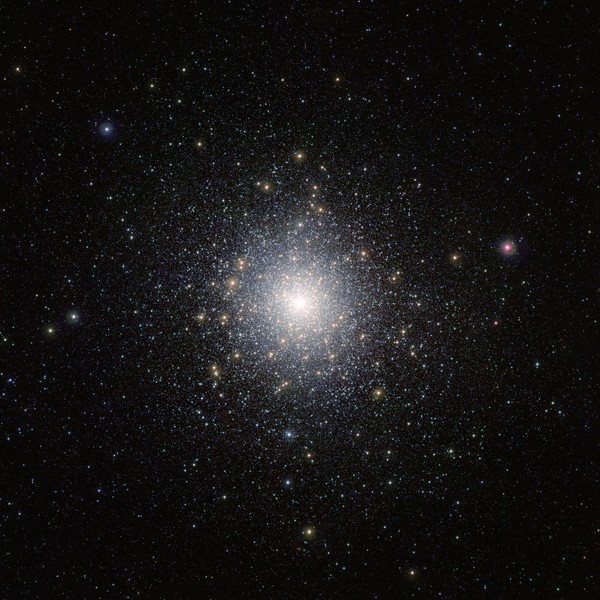
Image: ESO/M.-R. Cioni/VISTA Magellanic Cloud survey
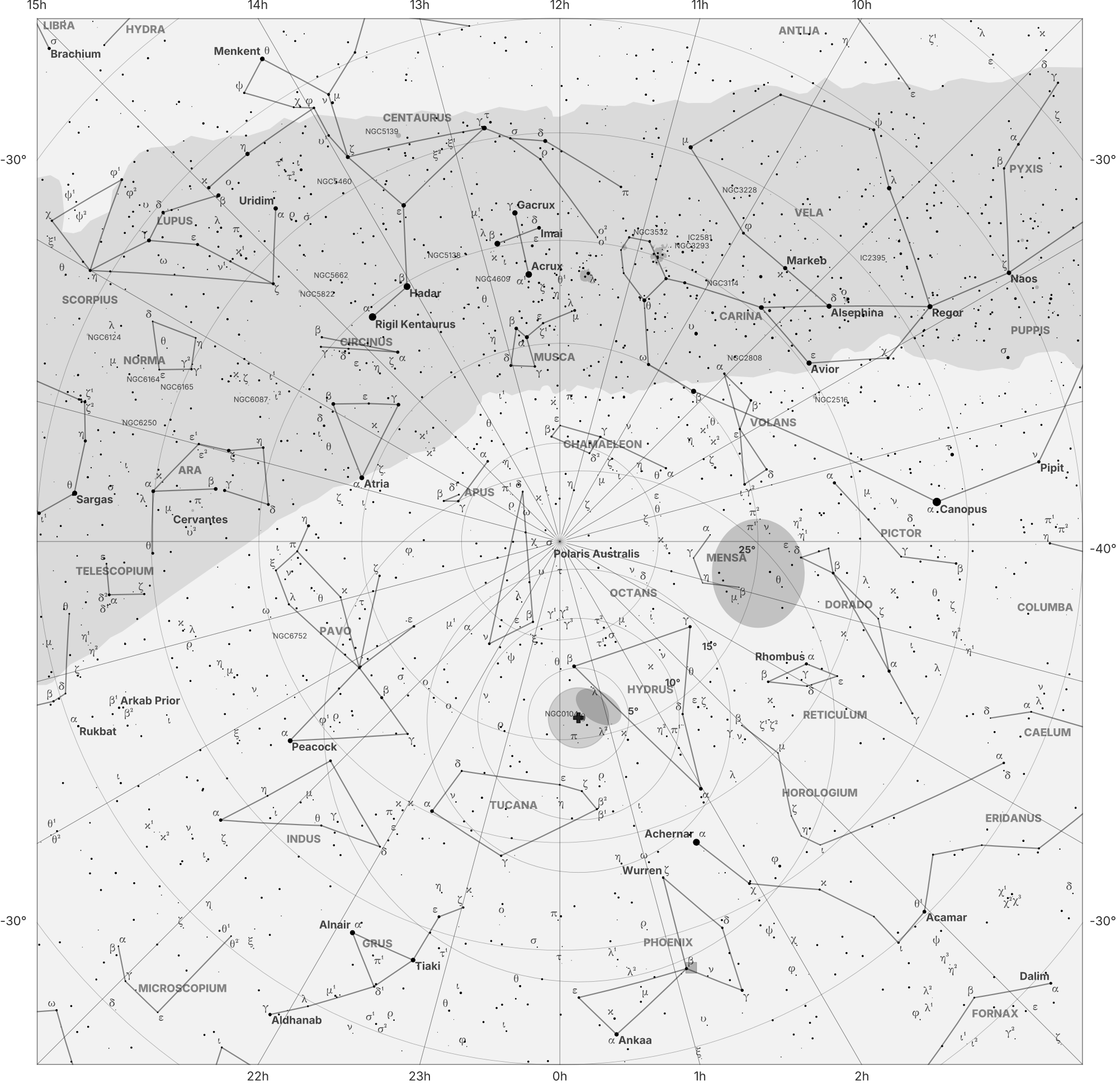
Finder map for 47 Tucanae
A premier ‘showpiece’ object for the Southern Hemisphere, analogous to the Hercules Cluster (M13) or Andromeda Galaxy (M31) for northern observers. It is a bucket-list target for all amateur astronomers. A Southern Hemisphere object. Not visible from mid-northern latitudes. Requires a clear southern horizon for lower norther latitudes Resolving the extremely dense core requires large aperture, high magnification, and excellent atmospheric seeing.
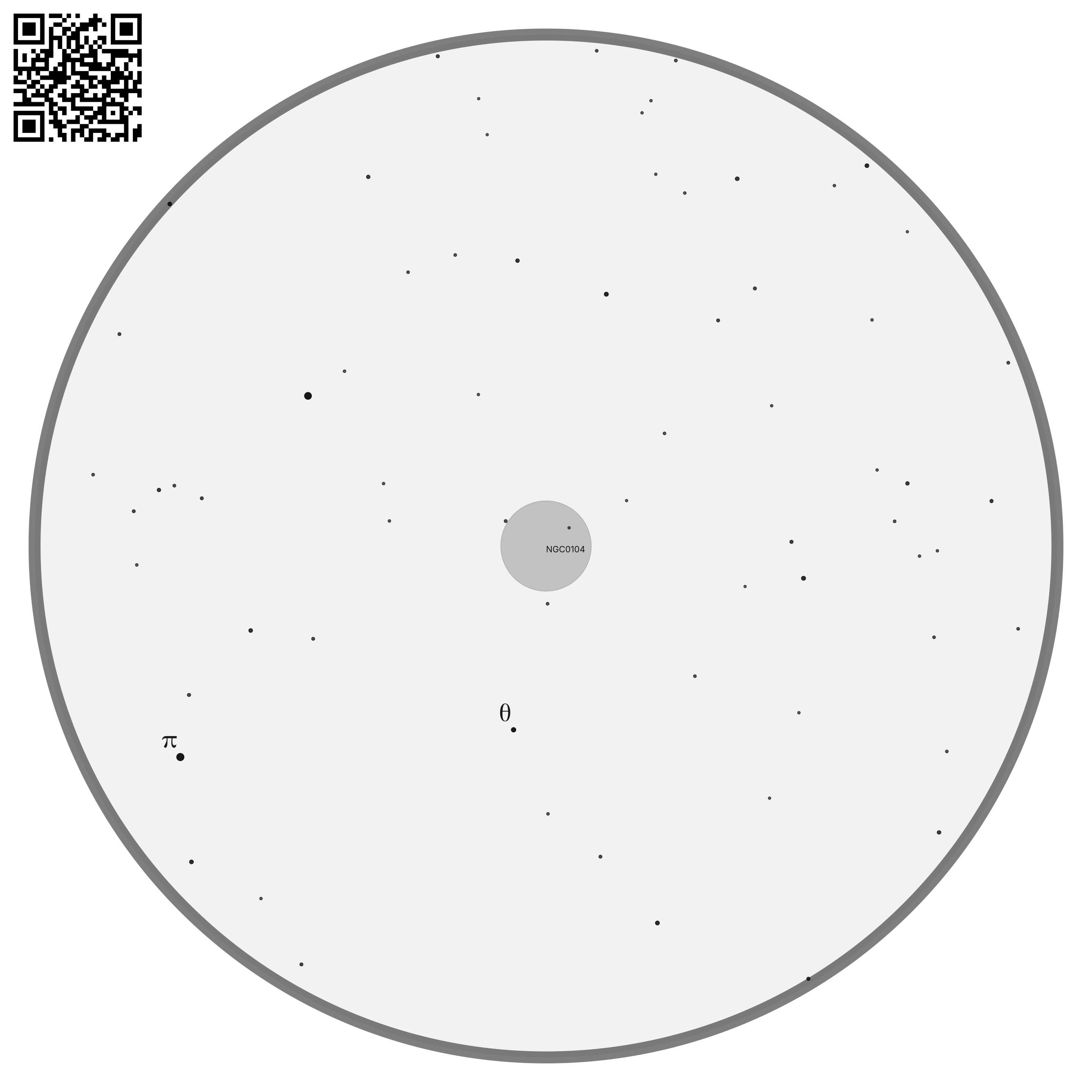
Finder scope & binocular view of 47 Tucanae
| Property | Value |
|---|---|
| Common names | 47 Tuc, NGC 104 |
| Catalog names | C 106, NGC 104, Mel 1 |
| Type | Stellar Cluster |
| Subtype | Globular Cluster |
| Coordinates | 0h 24m 05.36s, -72° 04’ 53.20” |
| Season | September - November |
| Best month | October |
| Beginner friendly | Yes |
| Visual reward | High |
| Filters required | None |
| LP tolerance | High |
| Minimum equipment | Naked eye |
| Optimal equipment | Small telescope |
| Magnitude | 4.0 |
| Size | 50.0 arcminutes x 50.0 arcminutes |
| Constellation | Tucana |
Observation Notes
Naked Eye
Appears as a moderately bright, fuzzy star west of the Small Magellanic Cloud. Under dark southern skies it is clearly non-stellar.
Binoculars
A bright, large, circular nebulous patch with a strongly condensed center. The object is unmistakable, though individual stars are not resolved.
Small Telescope
A brilliant ball of unresolved light with an intensely bright, concentrated core. The outer edges may show a hint of granularity or sparkle with averted vision.
Medium Telescope
Resolves into a spectacular swarm of tiny pinprick stars around the periphery, while the dense core remains a blazing, unresolved mass.
Large Telescope
Reveals an extraordinarily rich and three-dimensional star field, with extensive resolution across most of the cluster. The central core, however, remains intensely condensed and only partially granular rather than fully resolved, even at large apertures.