Messier 53
4-8 inch Telescope • Globular Clusters Detailed
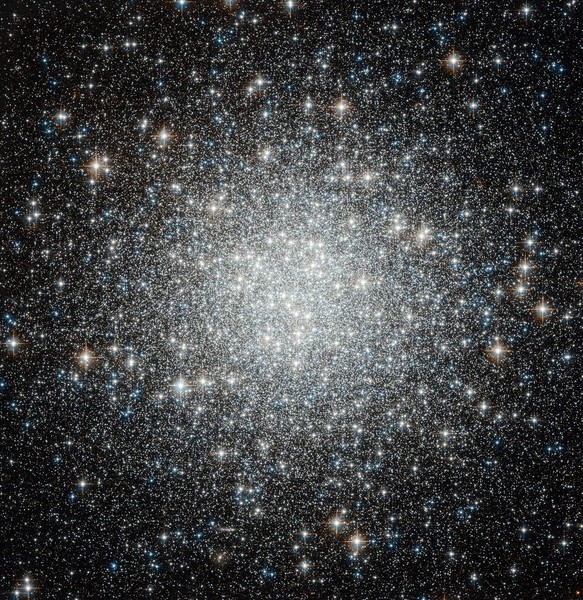
Image: ESA/Hubble & NASA
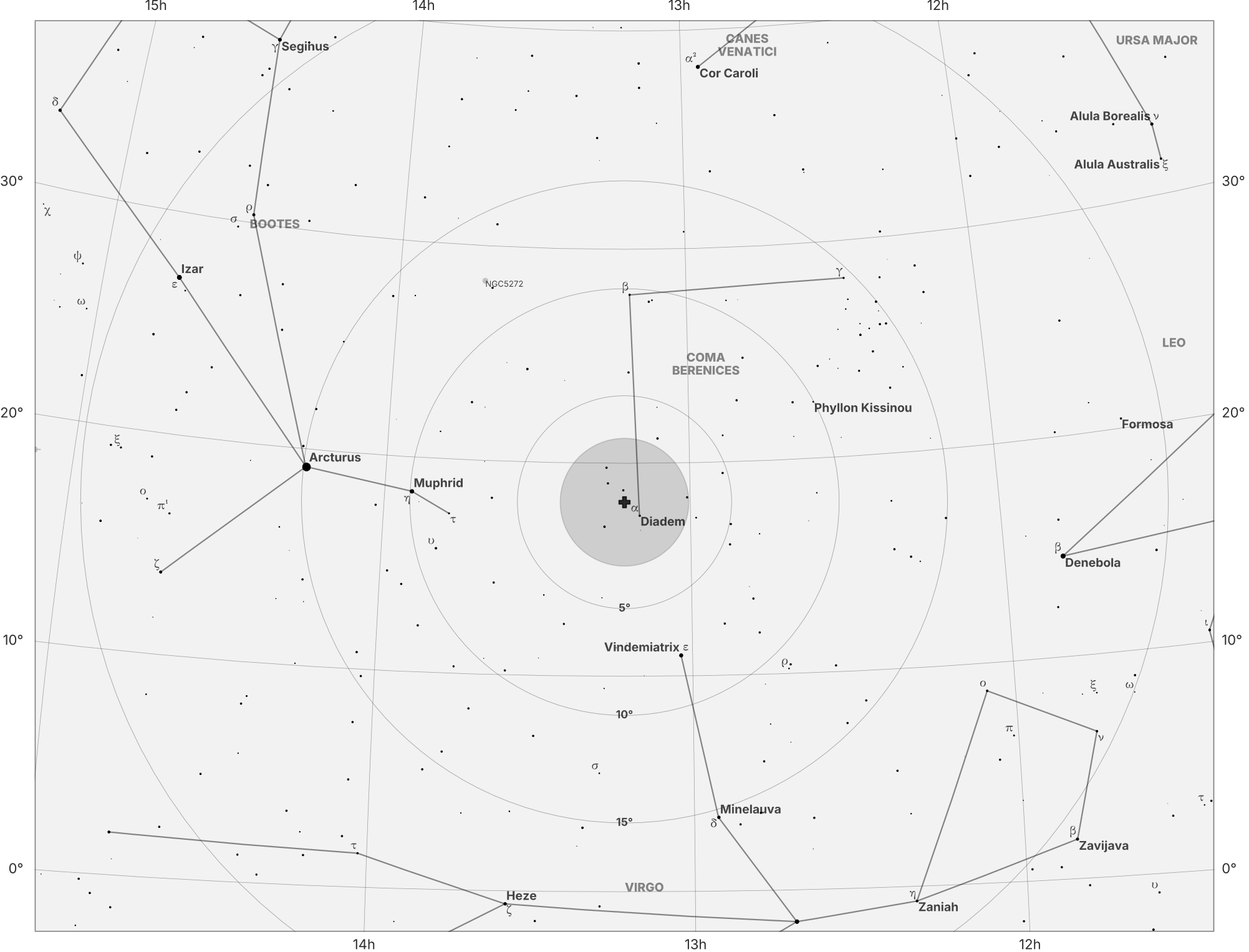
Finder map for Messier 53
Discovered by Johann Elert Bode in 1775 and cataloged by Charles Messier in 1777. Like other globular clusters, its resolution into stars by William Herschel helped show that some ‘nebulae’ are star clusters within the Milky Way. Best observed when high in the sky, ideally above about 30°, to reduce atmospheric extinction and benefit from steadier seeing. Resolving the dense core in smaller telescopes. Distinguishing it from the nearby, much fainter globular cluster NGC 5053 in the same field of view.
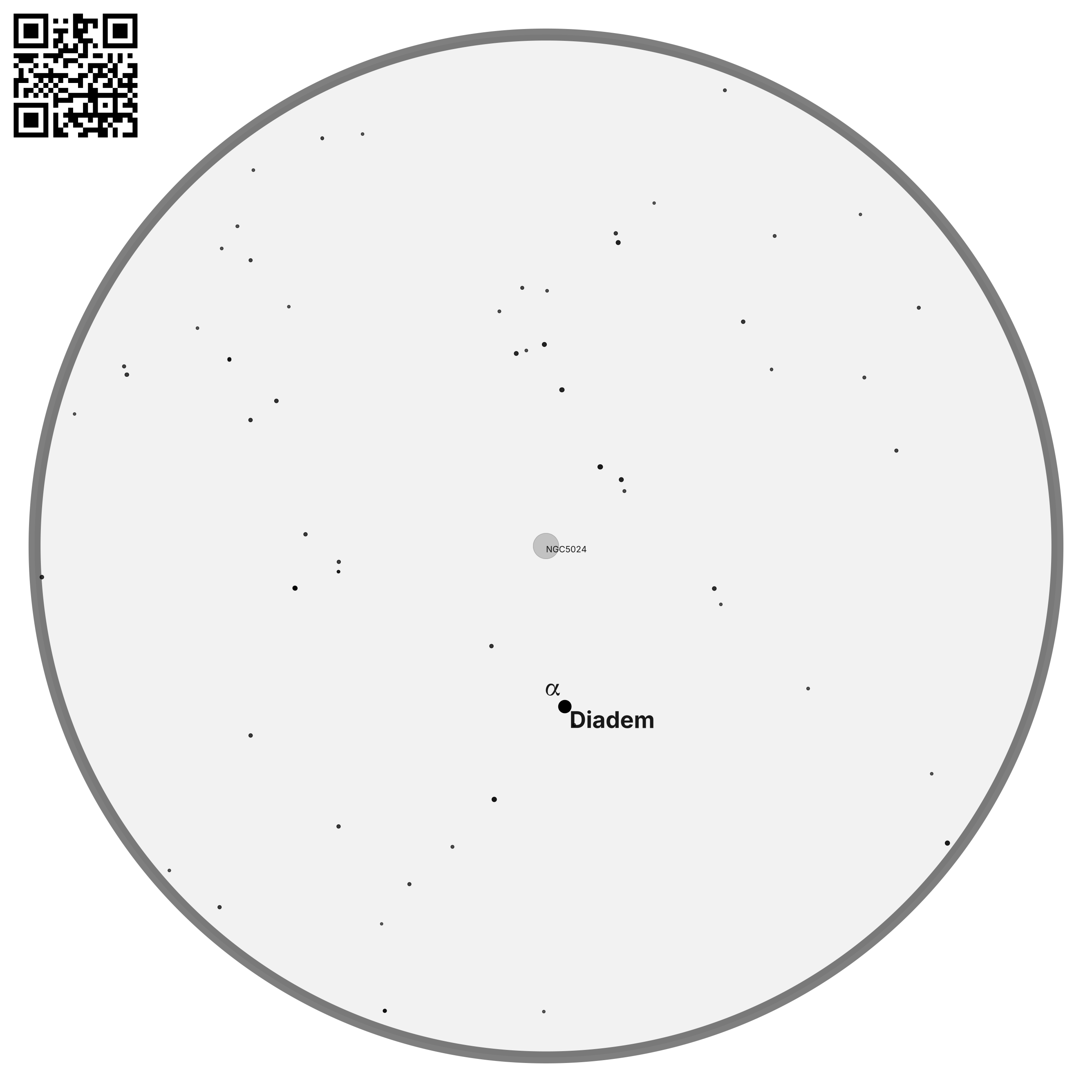
Finder scope & binocular view of Messier 53
| Property | Value |
|---|---|
| Common names | M53 |
| Catalog names | M 53, NGC 5024, Mel 117 |
| Type | Stellar Cluster |
| Subtype | Globular Cluster |
| Coordinates | 13h 12m 55.25s, +18° 10’ 05.40” |
| Season | March - May |
| Best month | Mid-April |
| Beginner friendly | Marginal |
| Visual reward | Moderate |
| Filters required | None |
| LP tolerance | Medium |
| Minimum equipment | Medium telescope |
| Optimal equipment | Large telescope |
| Magnitude | 7.7 |
| Size | 13.0 arcminutes x 13.0 arcminutes |
| Constellation | Coma Berenices |
Observation Notes
Naked Eye
Not visible.
Binoculars
Under dark, transparent skies, appears as a small, faint, round, fuzzy patch of light, requiring averted vision and careful attention to detect.
Small Telescope
In 4–6 inch apertures, shows a moderately condensed central region surrounded by a diffuse halo. At higher magnification, slight graininess may be suspected toward the edges under good conditions.
Medium Telescope
With 8–10 inches, individual stars begin to resolve around the periphery, giving the cluster a lightly sparkling, granular appearance, while the core remains a bright, unresolved glow.
Large Telescope
In apertures of roughly 12–14 inches and larger, many stars are resolved across the outer regions and well inward, though the central core remains dense and unresolved. Subtle chains and arcs of stars may be noticed, and the nearby globular NGC 5053 can be seen in the same wide-field view as a very faint, diffuse patch with extremely low surface brightness.