M3
4-8 inch Telescope • Globular Clusters Detailed
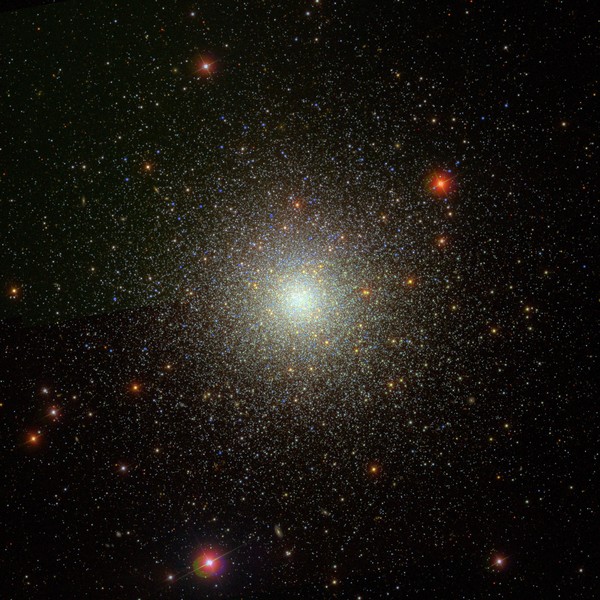
Image: Sloan Digital Sky Survey
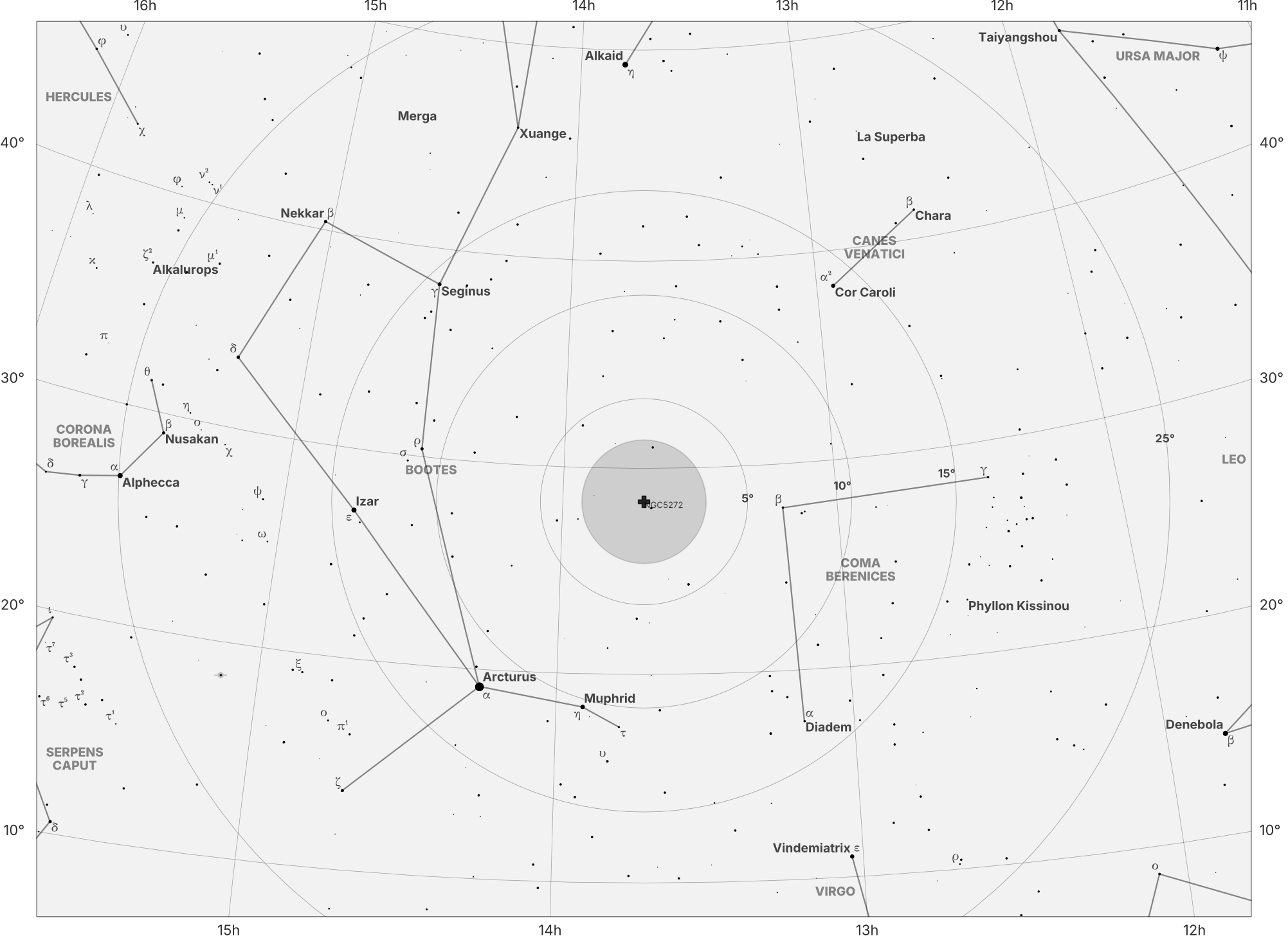
Finder map for M3
As one of the ‘big three’ northern globular clusters (along with M13 and M5), M3 is a cornerstone object for amateur astronomy and a frequent target at public star parties. It is a classic showpiece of the spring sky. Best observed when high in the sky to reduce atmospheric extinction and maximize contrast. Its high galactic latitude means there is little obscuration by interstellar dust. The challenge lies in resolving stars as deeply toward the bright, densely packed core as possible. In 4–8 inch telescopes, the outer regions are richly resolved, while the central core remains only partially resolved even under good seeing.
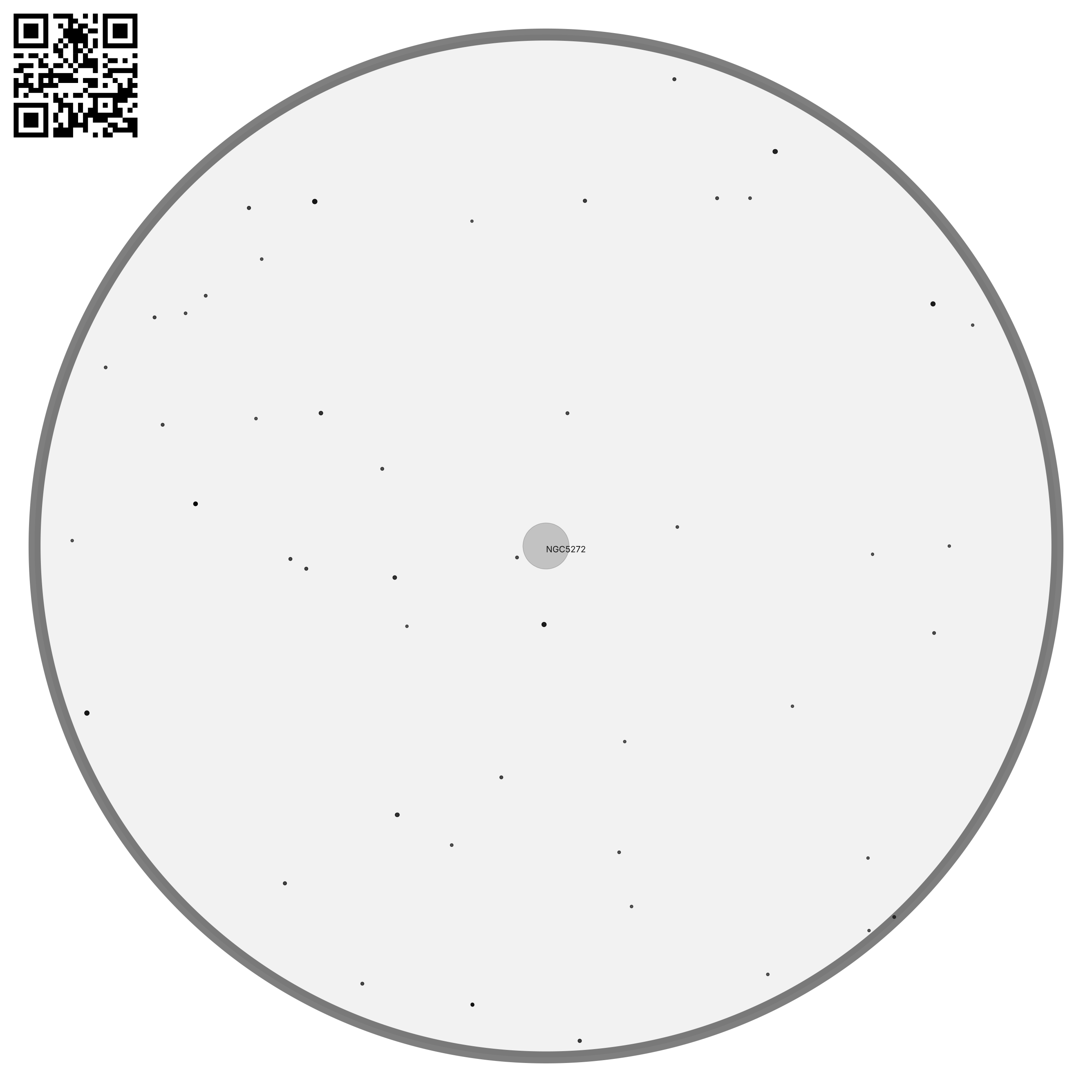
Finder scope & binocular view of M3
| Property | Value |
|---|---|
| Common names | Messier 3 |
| Catalog names | M 3, NGC 5272, Mel 119 |
| Type | Stellar Cluster |
| Subtype | Globular Cluster |
| Coordinates | 13h 42m 11.62s, +28° 22’ 38.20” |
| Season | March - May |
| Best month | Mid-April |
| Beginner friendly | Yes |
| Visual reward | High |
| Filters required | None |
| LP tolerance | High |
| Minimum equipment | Small telescope |
| Optimal equipment | Medium telescope |
| Magnitude | 6.3 |
| Size | 18.0 arcminutes x 18.0 arcminutes |
| Constellation | Canes Venatici |
Observation Notes
Naked Eye
Generally not visible; although a few experienced observers report rare naked-eye suspicions under pristine skies, detection without optical aid is uncertain and not reliable.
Binoculars
Easily visible in 7×50 or 10×50 binoculars as a small, bright, circular, fuzzy patch of light that is clearly non-stellar but unresolved.
Small Telescope
In 4–6 inch apertures, appears as a bright, compact globular with a strongly condensed core surrounded by a grainy halo. Only the faintest hints of resolution may be suspected at the extreme edges under excellent conditions.
Medium Telescope
With 6–8 inches, numerous stars resolve across the outer halo, producing a rich, sparkling appearance, while the core remains a bright, unresolved mass.
Large Telescope
In apertures of roughly 10–14 inches and larger, stars are resolved deep toward the core, and intricate chains and arcs of stars become apparent. The cluster’s structure is revealed through stellar density and contrast rather than true dark lanes.