Messier 15
4-8 inch Telescope • Globular Clusters Detailed
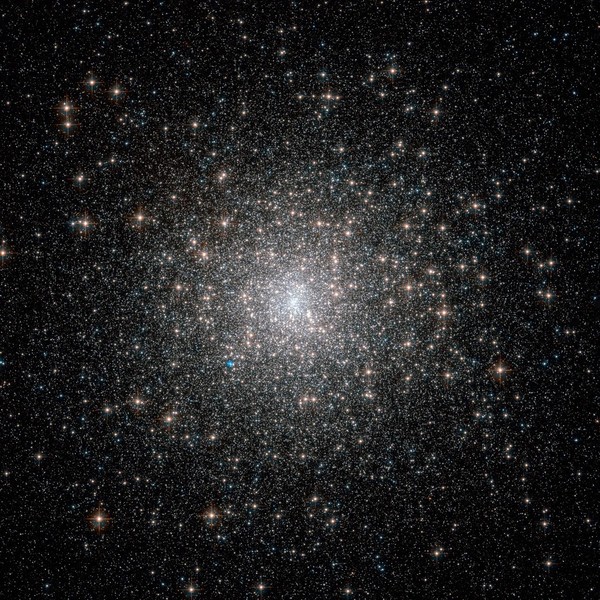
Image: ESA/Hubble & NASA
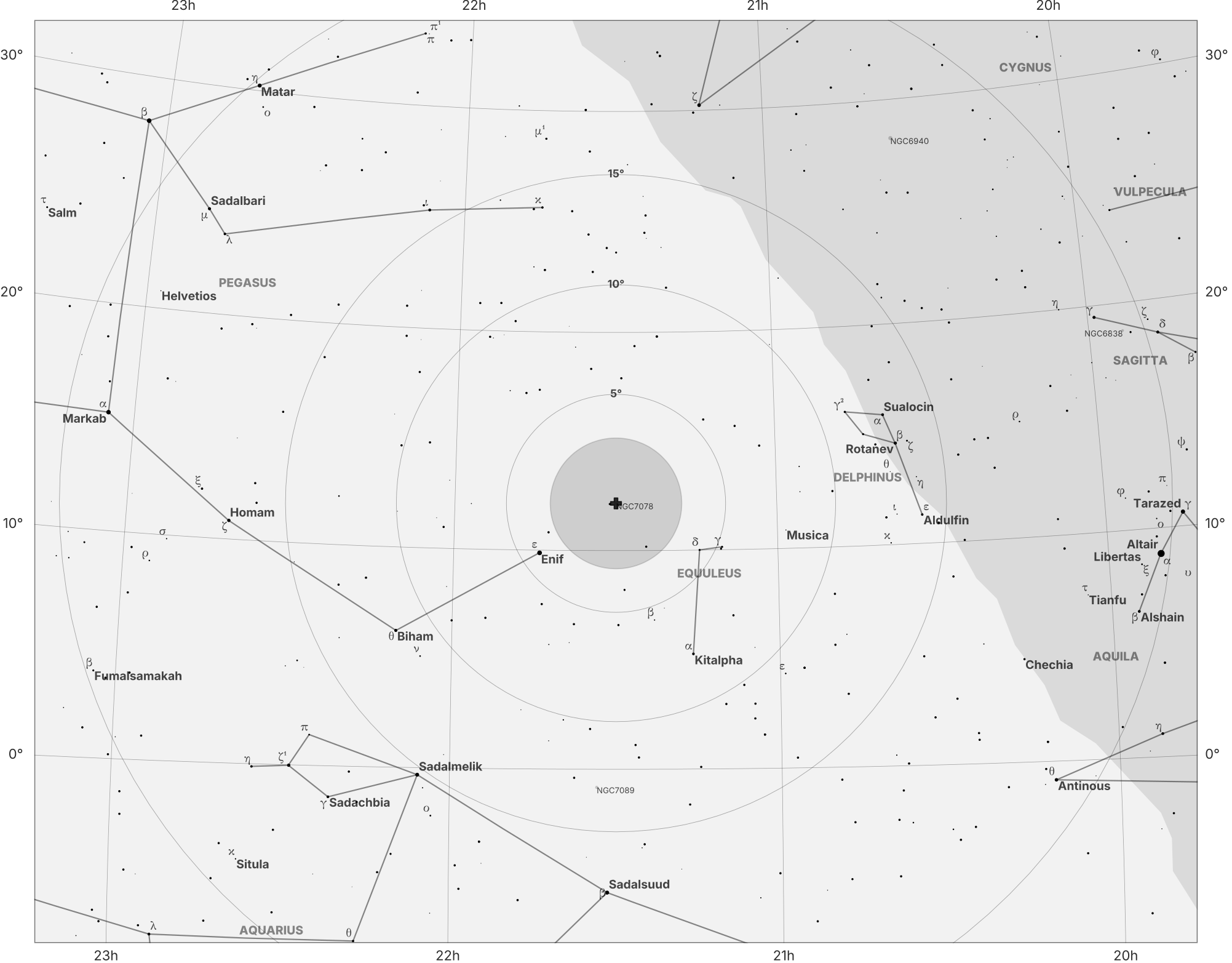
Finder map for Messier 15
A classic showpiece globular cluster for amateur astronomers, M15 is also historically important in professional astronomy for studies of dense stellar systems. Best observed when above about 30° altitude to reduce atmospheric extinction and take advantage of steadier seeing for stellar resolution. Resolving the extremely dense core. Visually identifying the planetary nebula Pease 1 requires a large aperture (16”+) and a filter.
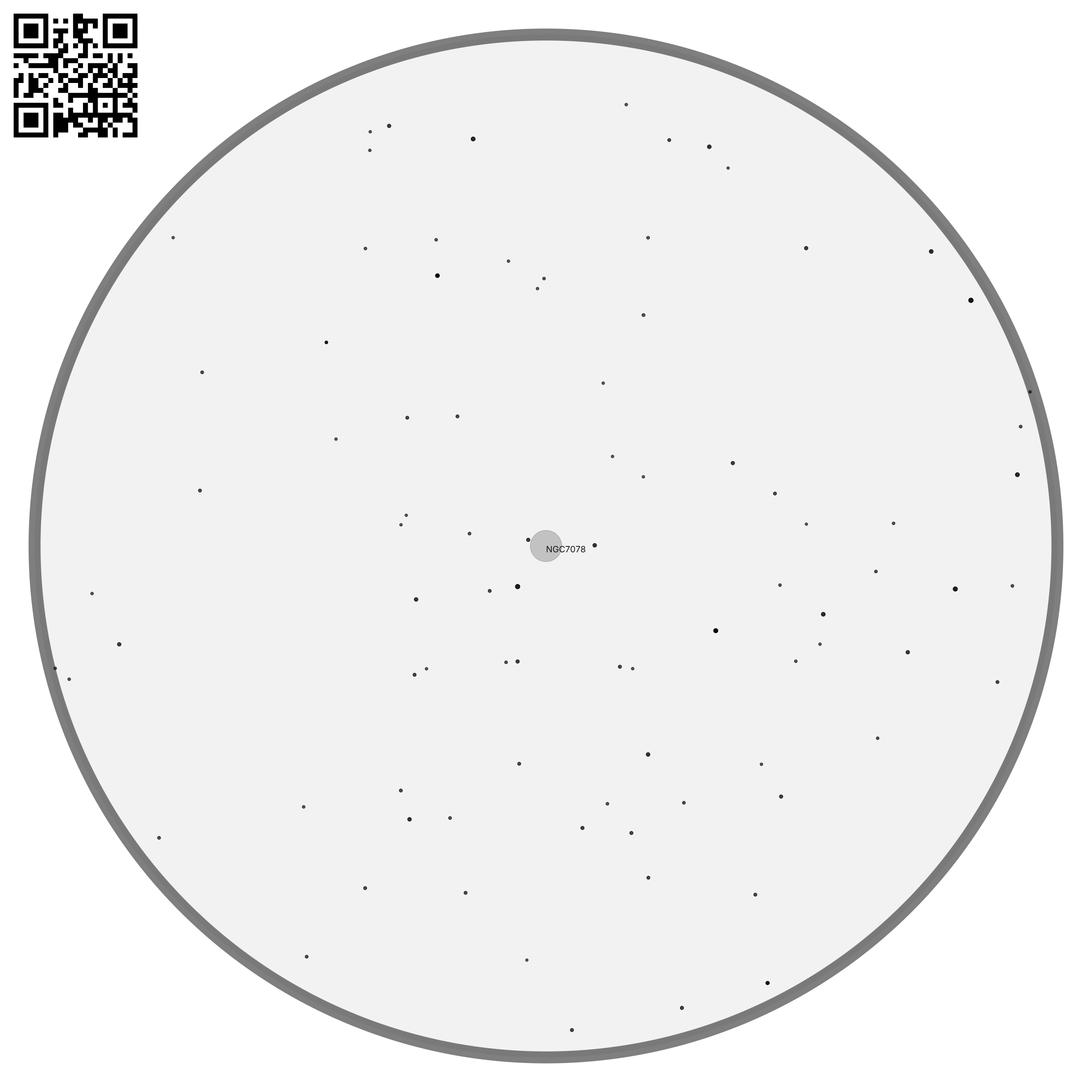
Finder scope & binocular view of Messier 15
| Property | Value |
|---|---|
| Common names | Great Pegasus Cluster, M15 |
| Catalog names | M 15, NGC 7078, Mel 234 |
| Type | Stellar Cluster |
| Subtype | Globular Cluster |
| Coordinates | 21h 29m 58.33s, +12° 10’ 01.20” |
| Season | July - September |
| Best month | Mid-August |
| Beginner friendly | Yes |
| Visual reward | High |
| Filters required | None |
| LP tolerance | High |
| Minimum equipment | Small telescope |
| Optimal equipment | Large telescope |
| Magnitude | 6.3 |
| Size | 18.0 arcminutes x 18.0 arcminutes |
| Constellation | Pegasus |
Observation Notes
Naked Eye
Generally not visible; under pristine, very dark skies a few experienced observers report a barely perceptible, diffuse suspicion with averted vision, but naked-eye detection is rare and uncertain.
Binoculars
Easily visible as a small, bright, circular, fuzzy patch of light that is clearly non-stellar but completely unresolved.
Small Telescope
In 4–6 inch apertures, shows a bright, strongly concentrated core surrounded by a compact, hazy halo. The cluster remains largely unresolved, with only the slightest hint of edge granulation at higher magnification.
Medium Telescope
With 8–12 inches, individual stars begin to resolve around the outer regions, giving a grainy, sparkling appearance, while the core remains an intensely bright, unresolved mass.
Large Telescope
In apertures of roughly 14 inches and larger, stars are resolved across much of the cluster’s face, though the innermost core remains extremely dense. Radial chains and arcs of stars may be perceived extending outward from the center, emphasizing the cluster’s high concentration; the overall impression is of immense brightness and stellar density rather than fine internal detail.