Messier 13
Binoculars • Globular Clusters
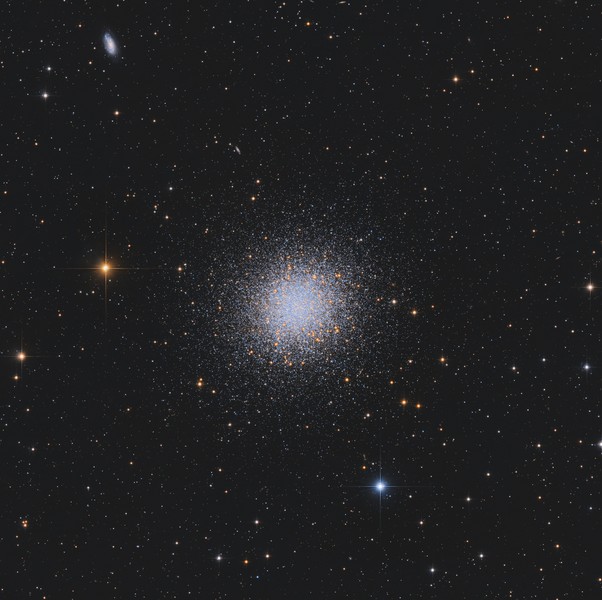
Image: Chuck Ayoub
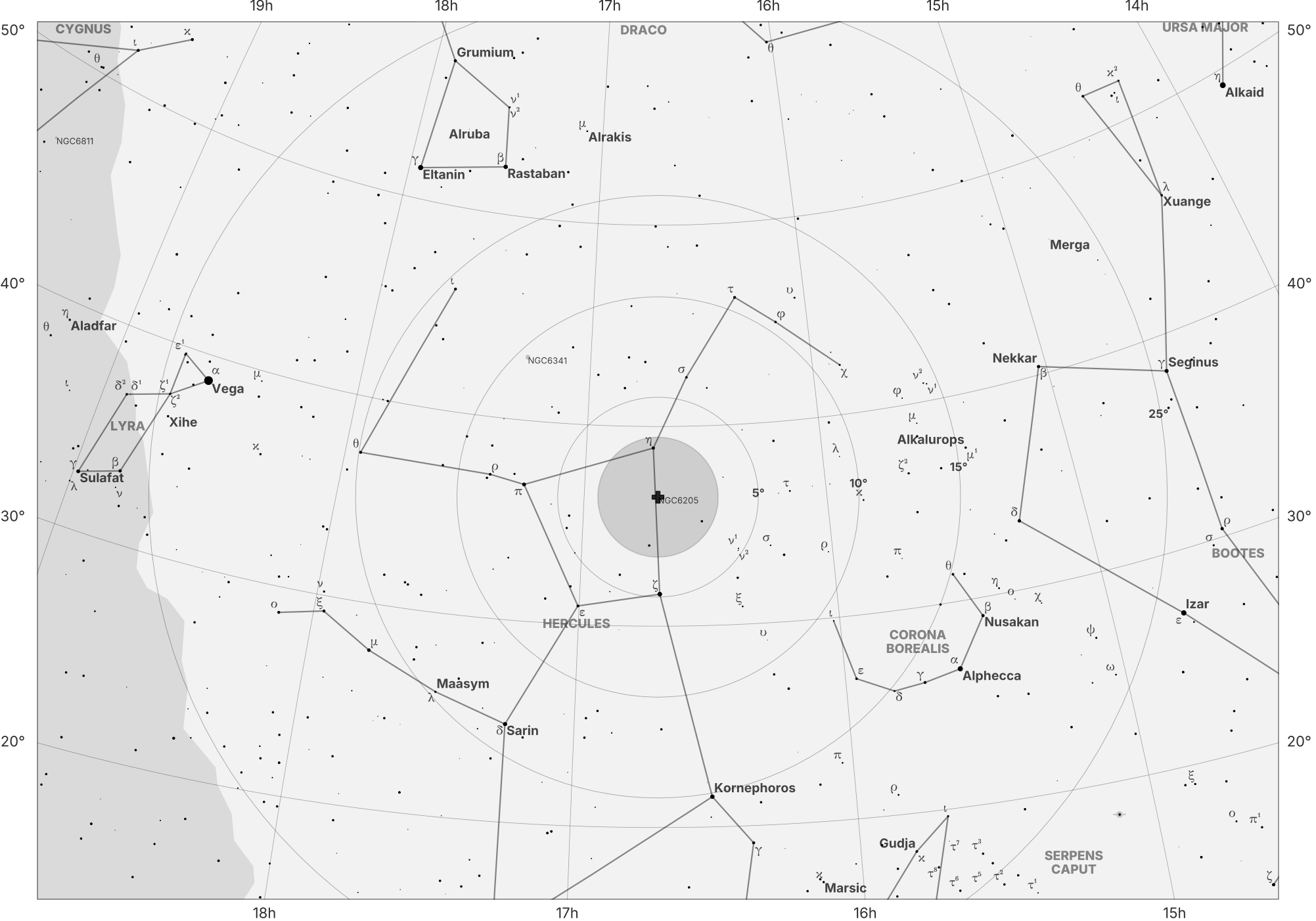
Finder map for Messier 13
A premier showpiece object for amateur astronomers and a frequent subject in popular astronomy. Its selection as the target for the Arecibo message has cemented its place in discussions about the search for extraterrestrial intelligence (SETI). High in the sky for Northern Hemisphere observers during summer. Remains low on the northern horizon for most Southern Hemisphere observers. Noticing the cluster’s increasing granularity toward the edges and the strong central concentration. Fully resolving the dense core and detecting subtle features such as the dark “Propeller” region require larger telescopes, high magnification, and excellent seeing.
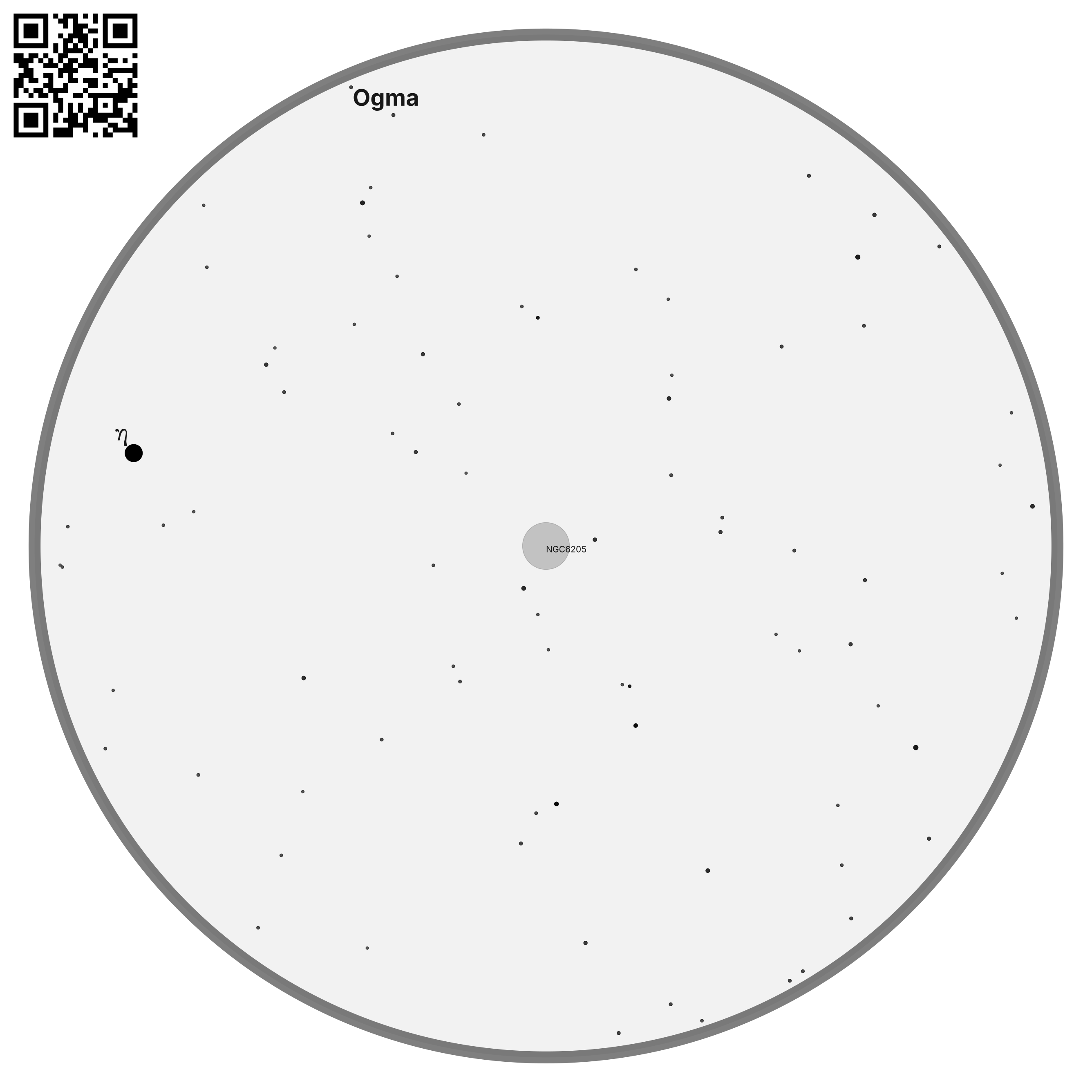
Finder scope & binocular view of Messier 13
| Property | Value |
|---|---|
| Common names | Hercules Globular Cluster, Great Globular Cluster in Hercules |
| Catalog names | M 13, NGC 6205, Mel 150 |
| Type | Stellar Cluster |
| Subtype | Globular Cluster |
| Coordinates | 16h 41m 41.63s, +36° 27’ 40.75” |
| Season | May - July |
| Best month | June |
| Beginner friendly | Yes |
| Visual reward | High |
| Filters required | None |
| LP tolerance | High |
| Minimum equipment | Binoculars |
| Optimal equipment | Medium telescope |
| Magnitude | 5.8 |
| Size | 20.0 arcminutes x 20.0 arcminutes |
| Constellation | Hercules |
Observation Notes
Naked Eye
Visible to experienced observers under very dark, moonless skies (typically Bortle 1–2) as a faint, fuzzy, star-like patch.
Binoculars
Easily seen as a small, round, nebulous glow with no individual stars resolved.
Small Telescope
(3–5 inches) Appears as a bright, round cluster with a grainy or sparkling texture toward the edges, while the central region remains a solid, bright glow.
Medium Telescope
(6–10 inches) Resolves large numbers of individual stars across much of the cluster, creating a striking “diamond dust” appearance. The central core remains intensely bright and only partially resolved.
Large Telescope
(12 inches and larger) Reveals extremely rich star resolution and pronounced granularity throughout most of the cluster. The very core remains densely packed rather than fully resolved. Under excellent conditions and with apertures around 16 inches or more, the subtle “Propeller” feature—a Y-shaped region of slightly reduced star density—may be detected with careful averted vision, but it is challenging and not always visible.