NGC 6712
4-8 inch Telescope • Globular Clusters Detailed
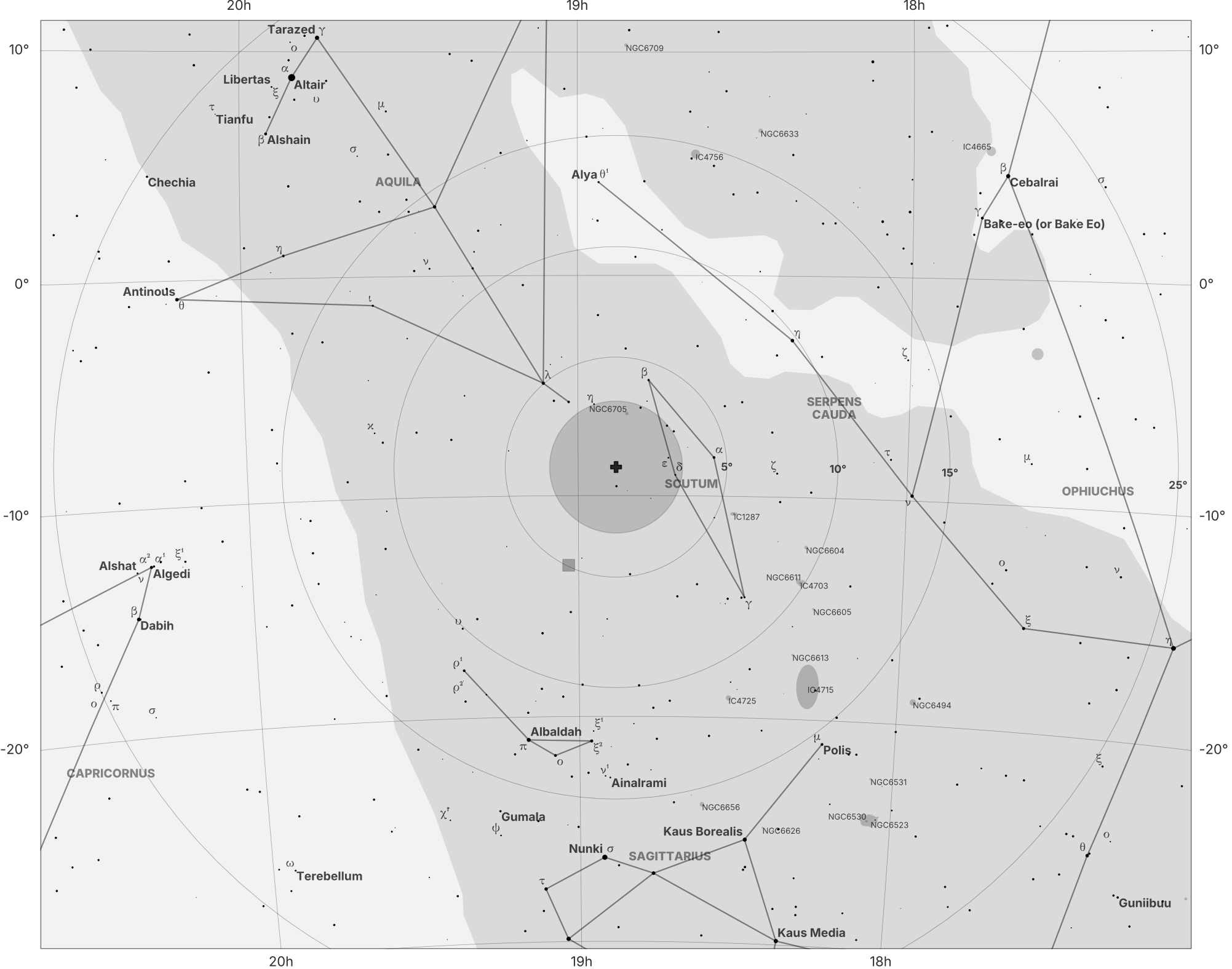
Finder map for NGC 6712
Best observed when transiting the meridian. Due to its southerly declination, it appears lower in the sky for most Northern Hemisphere observers. Resolving individual stars, especially towards the loose core. Its location within the dense Scutum Star Cloud can make it difficult to distinguish from the rich background star field.
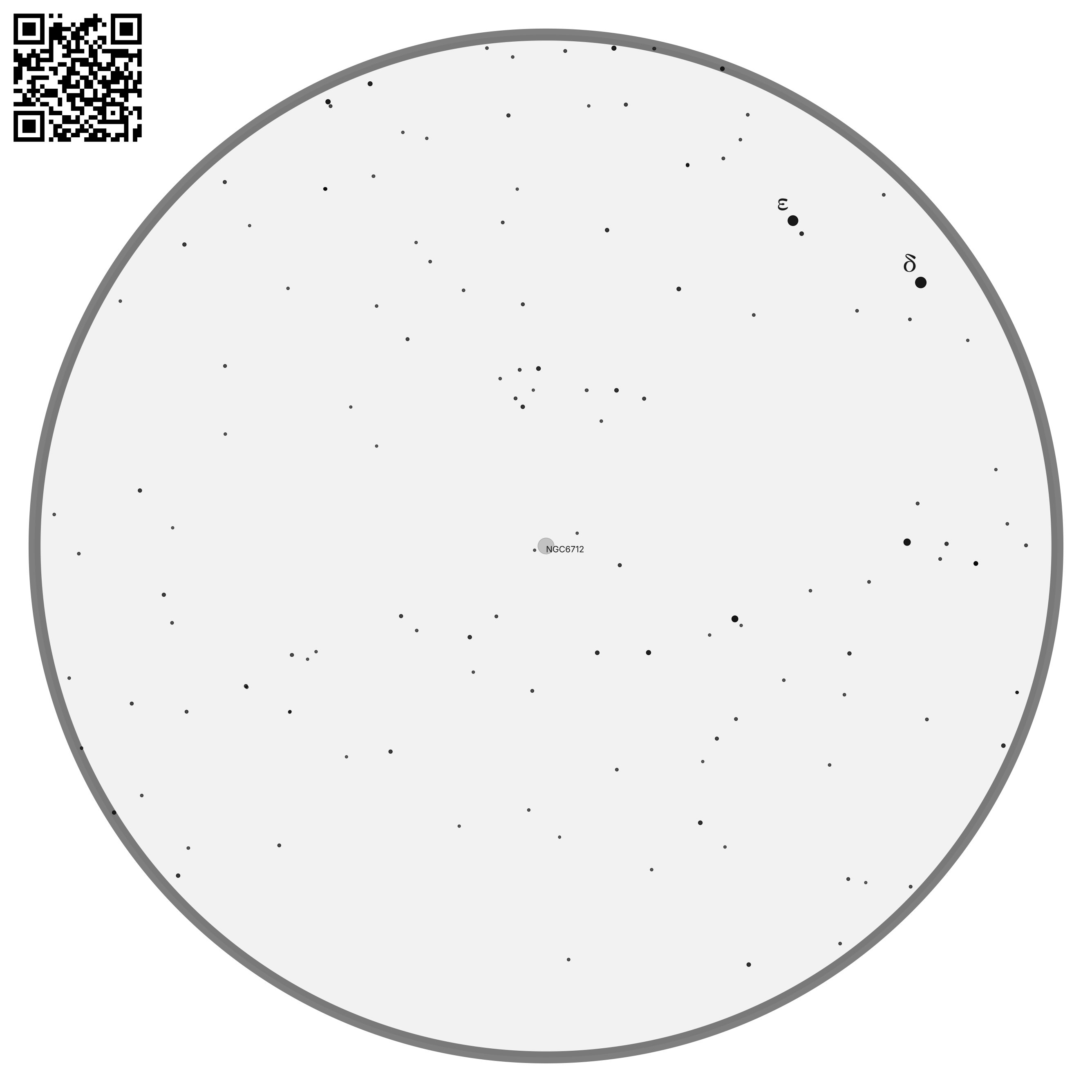
Finder scope & binocular view of NGC 6712
| Property | Value |
|---|---|
| Common names | - |
| Catalog names | NGC 6712, Mel 215 |
| Type | Stellar Cluster |
| Subtype | Globular Cluster |
| Coordinates | 18h 53m 04.32s, -8° 42’ 21.50” |
| Season | June - August |
| Best month | July |
| Beginner friendly | Marginal |
| Visual reward | Moderate |
| Filters required | None |
| LP tolerance | Medium |
| Minimum equipment | Small telescope |
| Optimal equipment | Medium telescope |
| Magnitude | 8.1 |
| Size | 9.8 arcminutes x 9.8 arcminutes |
| Constellation | Scutum |
Observation Notes
Naked Eye
Not visible.
Binoculars
Extremely difficult; under very dark, transparent skies and with large binoculars it may be suspected as a faint, diffuse glow, but detection is uncertain and not routine.
Small Telescope
In 4–6 inch apertures, appears as a small, faint, round haze with no resolution, sometimes resembling a weak, compact comet against the Milky Way background.
Medium Telescope
With 8–12 inches at moderate to high magnification, a subtle granular texture may be noticed toward the edges, while the central region remains a diffuse, unresolved glow.
Large Telescope
In apertures of roughly 14 inches and larger, many faint stars are resolved across the cluster, emphasizing its loose, low-concentration nature. The central region remains only partially resolved, and the cluster is seen projected against a very rich Milky Way star field, which can make detection and contrast more challenging.