Omega Centauri
Binoculars • Globular Clusters
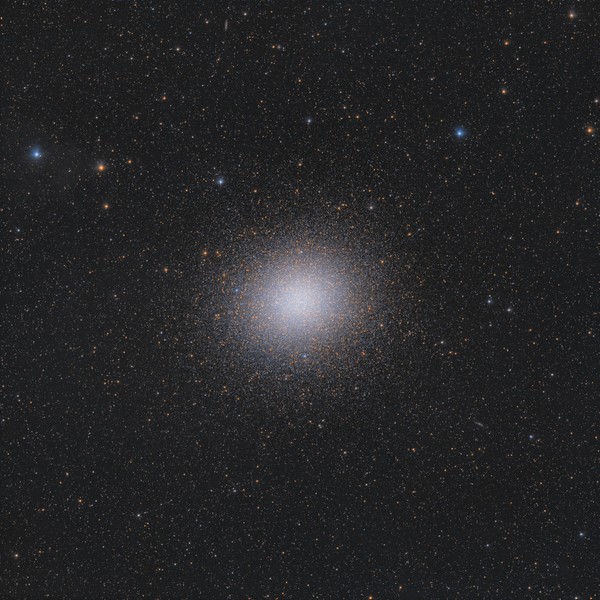
Image: Chuck Ayoub
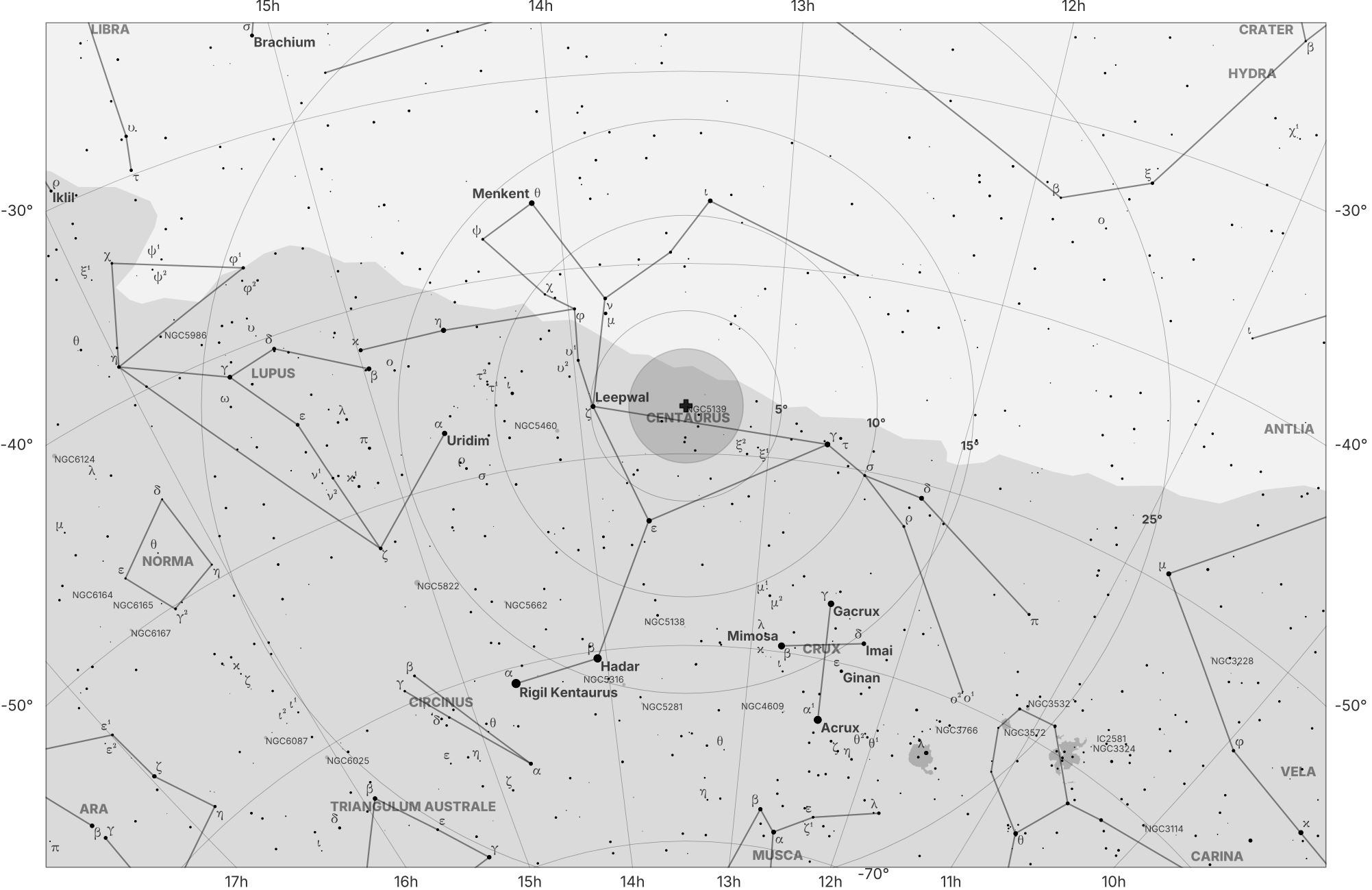
Finder map for Omega Centauri
As a prominent naked-eye object, it was recognized by Indigenous cultures in the Southern Hemisphere, notably in Australian Aboriginal sky traditions. Today, it holds a legendary status among amateur astronomers as arguably the finest globular cluster in the entire sky Best observed from the Southern Hemisphere. From the Northern Hemisphere it rises only south of about 42°N latitude and culminates very low; you need an exceptionally clear, unobstructed southern horizon. Resolving the extraordinarily dense core requires high magnification and excellent atmospheric seeing. Appreciating the cluster’s immense richness and complex structure visually is itself a challenge, with many of its stellar populations revealed fully only through advanced imaging and professional study.
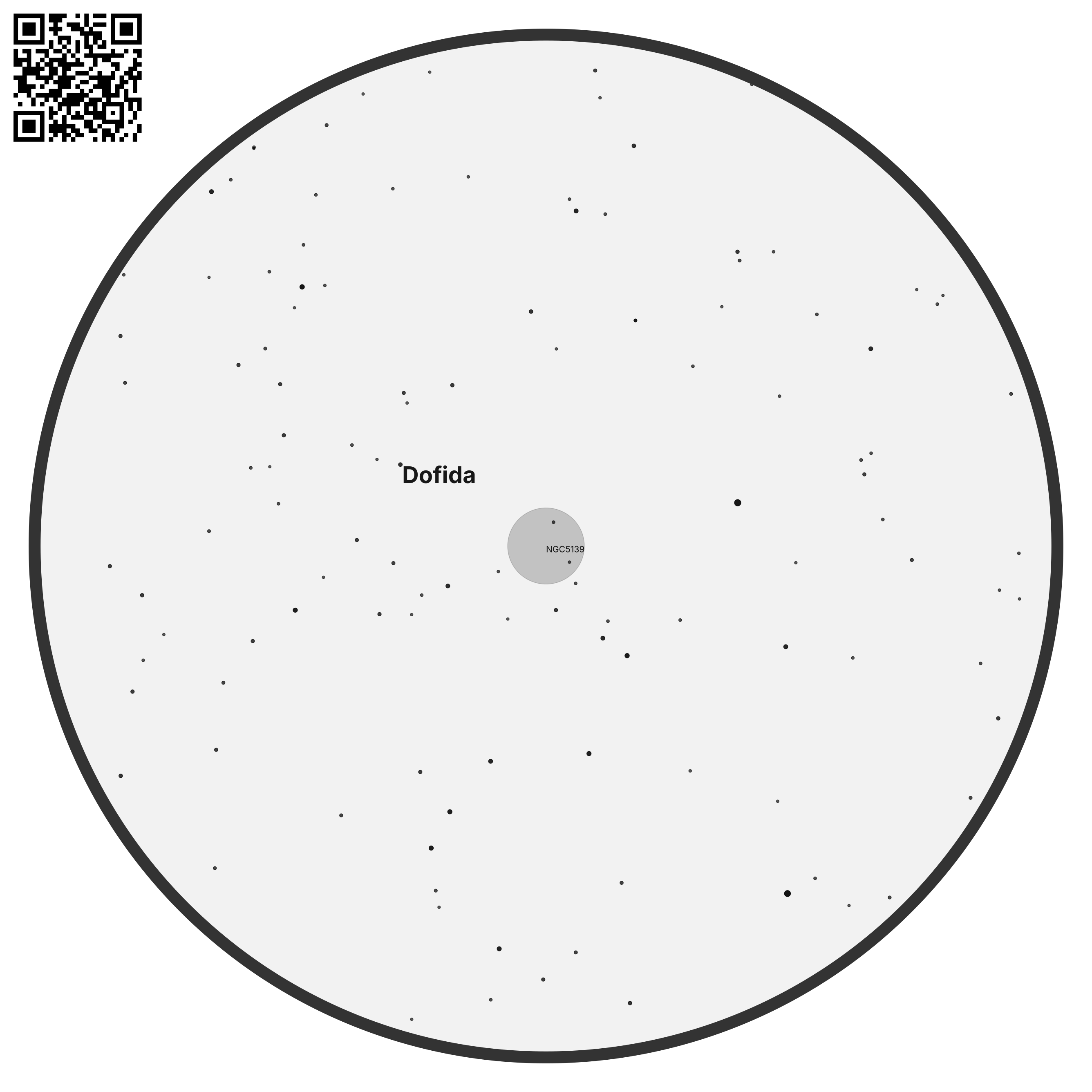
Finder scope & binocular view of Omega Centauri
| Property | Value |
|---|---|
| Common names | ω Centauri, Omega Cen |
| Catalog names | C 80, NGC 5139, Mel 118 |
| Type | Stellar Cluster |
| Subtype | Globular Cluster |
| Coordinates | 13h 26m 47.28s, -47° 28’ 46.10” |
| Season | March - May |
| Best month | Mid-April |
| Beginner friendly | Yes |
| Visual reward | High |
| Filters required | None |
| LP tolerance | High |
| Minimum equipment | Naked eye |
| Optimal equipment | Small telescope |
| Magnitude | 5.3 |
| Size | 55.0 arcminutes x 55.0 arcminutes |
| Constellation | Centaurus |
Observation Notes
Naked Eye
Appears as a large, hazy, non-stellar patch of light, easily mistaken for a faint cloud or fuzzy star. Its unusually large apparent size is noticeable even without optical aid under dark southern skies.
Binoculars
Reveals a vast, bright, circular glow with a strongly condensed center and a mottled texture, immediately impressive in scale and brightness.
Small Telescope
Begins to resolve individual stars around the periphery, producing a sparkling, salt-on-velvet appearance. The core remains an intensely bright, unresolved mass.
Medium Telescope
Resolves enormous numbers of stars across much of the cluster, with pronounced granularity and numerous star chains and uneven density patterns. The central region shows strong granulation but remains highly concentrated.
Large Telescope
Provides one of the richest visual star fields in the sky, with extensive resolution and a striking three-dimensional appearance throughout most of the cluster. Even at large apertures, the very core remains densely packed and only partially resolved rather than fully broken into individual stars.