Messier 68
4-8 inch Telescope • Globular Clusters Detailed
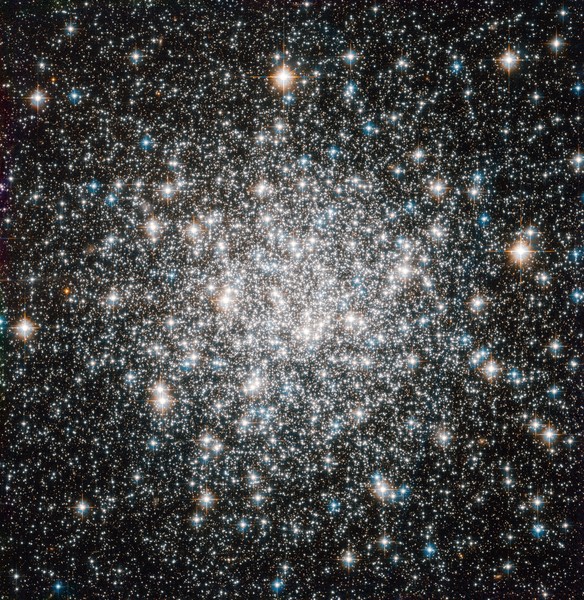
Image: ESA/Hubble & NASA
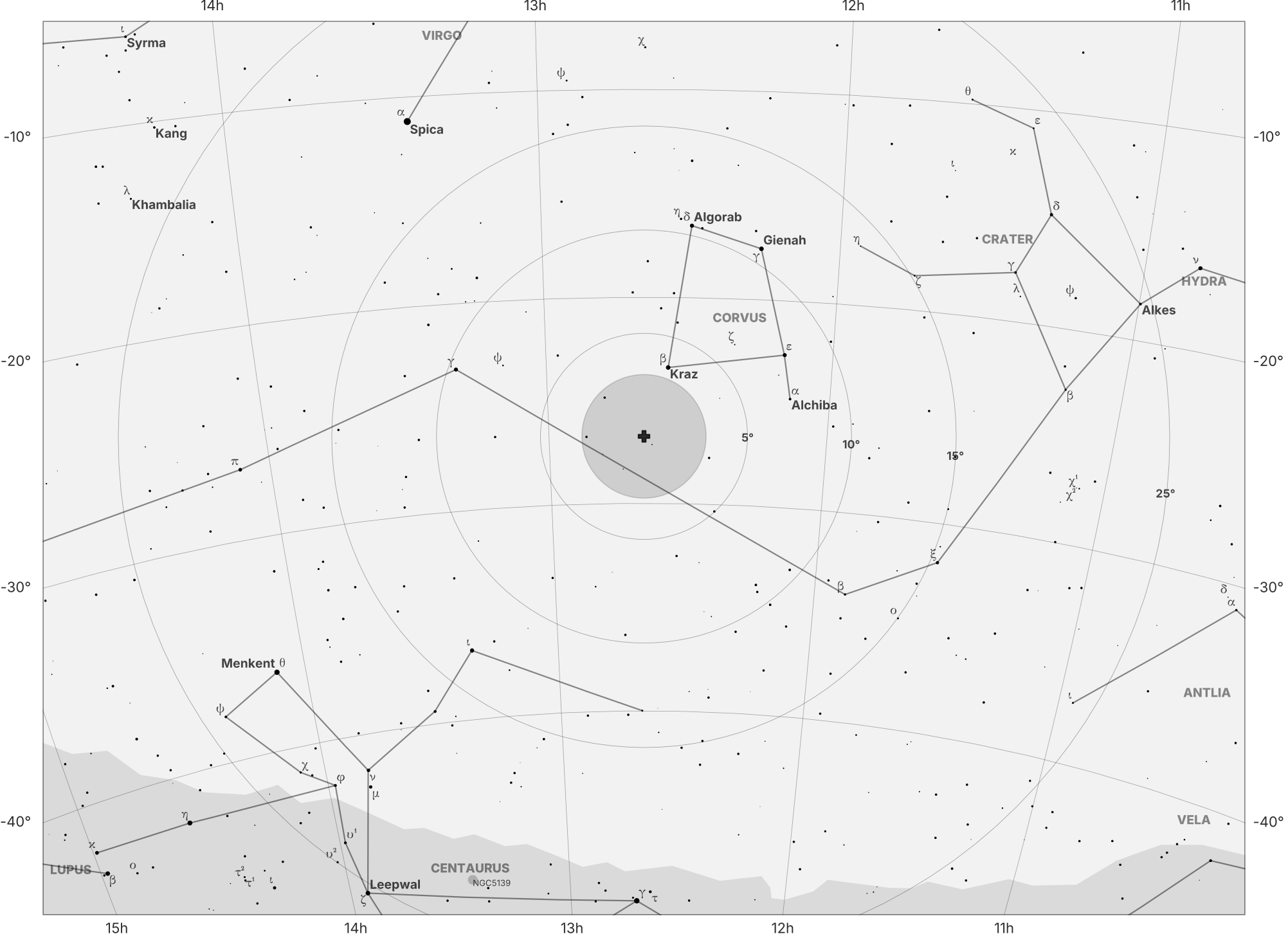
Finder map for Messier 68
No known ancient or mythological significance. M68 is of modern scientific interest as a metal-poor globular cluster and has played a role in studies of stellar populations within the Milky Way. Requires a clear southern horizon for most observers in the mid-northern latitudes as it does not rise very high. Its low altitude for many northern observers and the difficulty of resolving its core in small instruments.
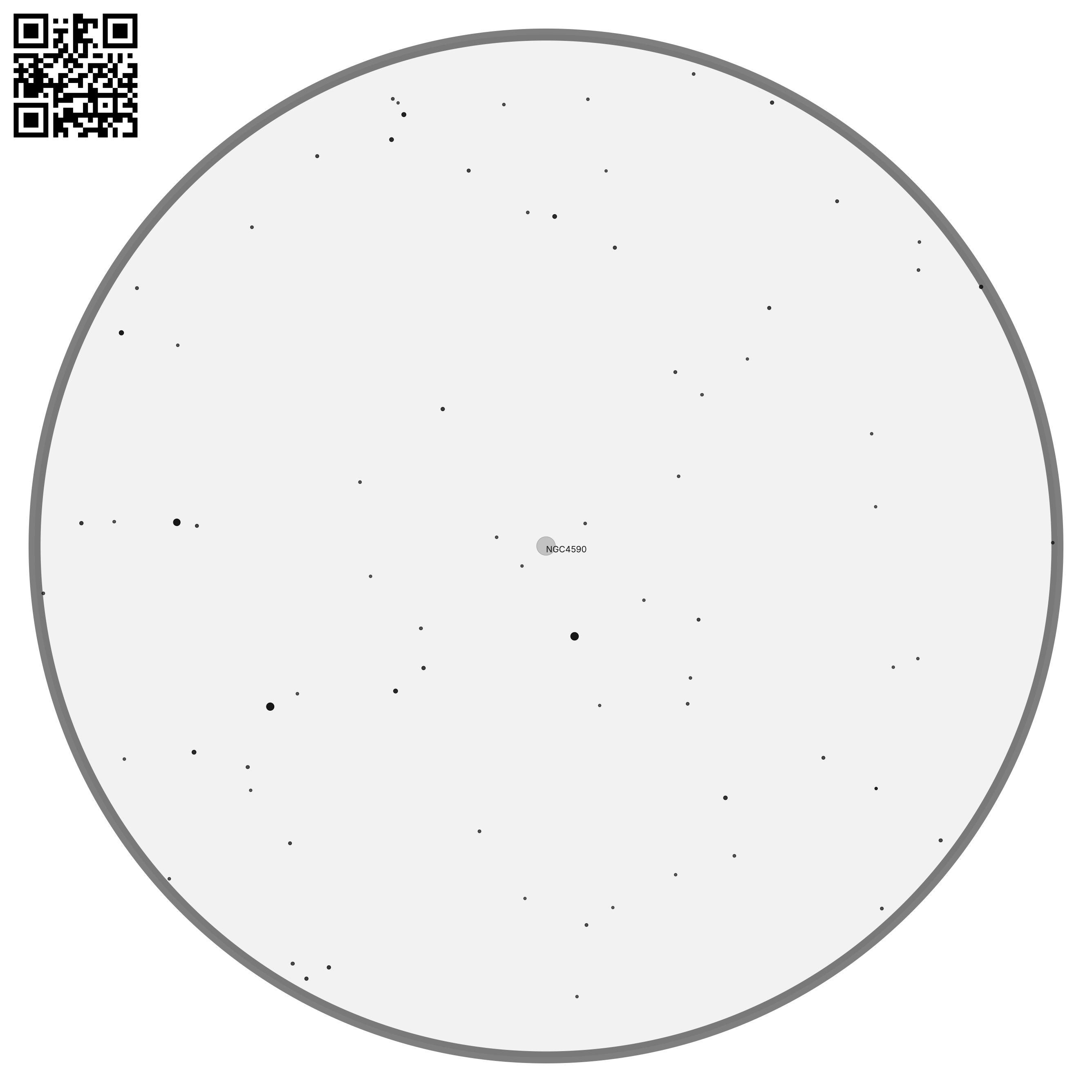
Finder scope & binocular view of Messier 68
| Property | Value |
|---|---|
| Common names | M68 |
| Catalog names | M 68, NGC 4590, Mel 113 |
| Type | Stellar Cluster |
| Subtype | Globular Cluster |
| Coordinates | 12h 39m 27.98s, -26° 44’ 38.60” |
| Season | March - May |
| Best month | April |
| Beginner friendly | Marginal |
| Visual reward | Moderate |
| Filters required | None |
| LP tolerance | Medium |
| Minimum equipment | Small telescope |
| Optimal equipment | Medium telescope |
| Magnitude | 7.3 |
| Size | 11.0 arcminutes x 11.0 arcminutes |
| Constellation | Hydra |
Observation Notes
Naked Eye
Not visible.
Binoculars
Under dark, transparent skies, appears as a small, faint, round, fuzzy patch of light; detection is subtle and it can be overlooked or confused with a weakly nebulous star in smaller binoculars or less-than-ideal conditions.
Small Telescope
In 4–6 inch apertures, shows as a distinct, diffuse glow with mild central brightening. The cluster remains unresolved, though a very slight graininess may be suspected at the edges under excellent skies.
Medium Telescope
With 8–12 inches, individual stars begin to resolve in the outer halo, especially with averted vision, while the central region remains a bright, unresolved glow.
Large Telescope
In apertures of roughly 14 inches and larger, many stars are resolved across much of the cluster, emphasizing its loose structure. The central region remains relatively sparse and only partially resolved, giving the cluster an overall lightly sparkling, low-concentration appearance rather than a dense core.