Messier 5
Binoculars • Globular Clusters
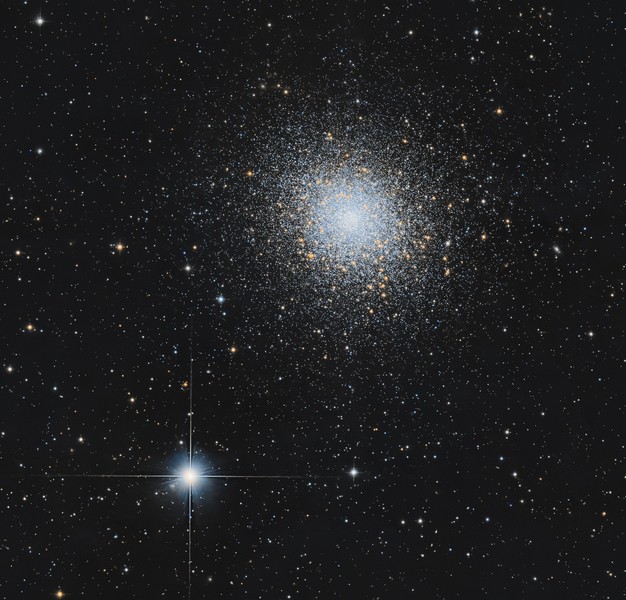
Image: Chuck Ayoub
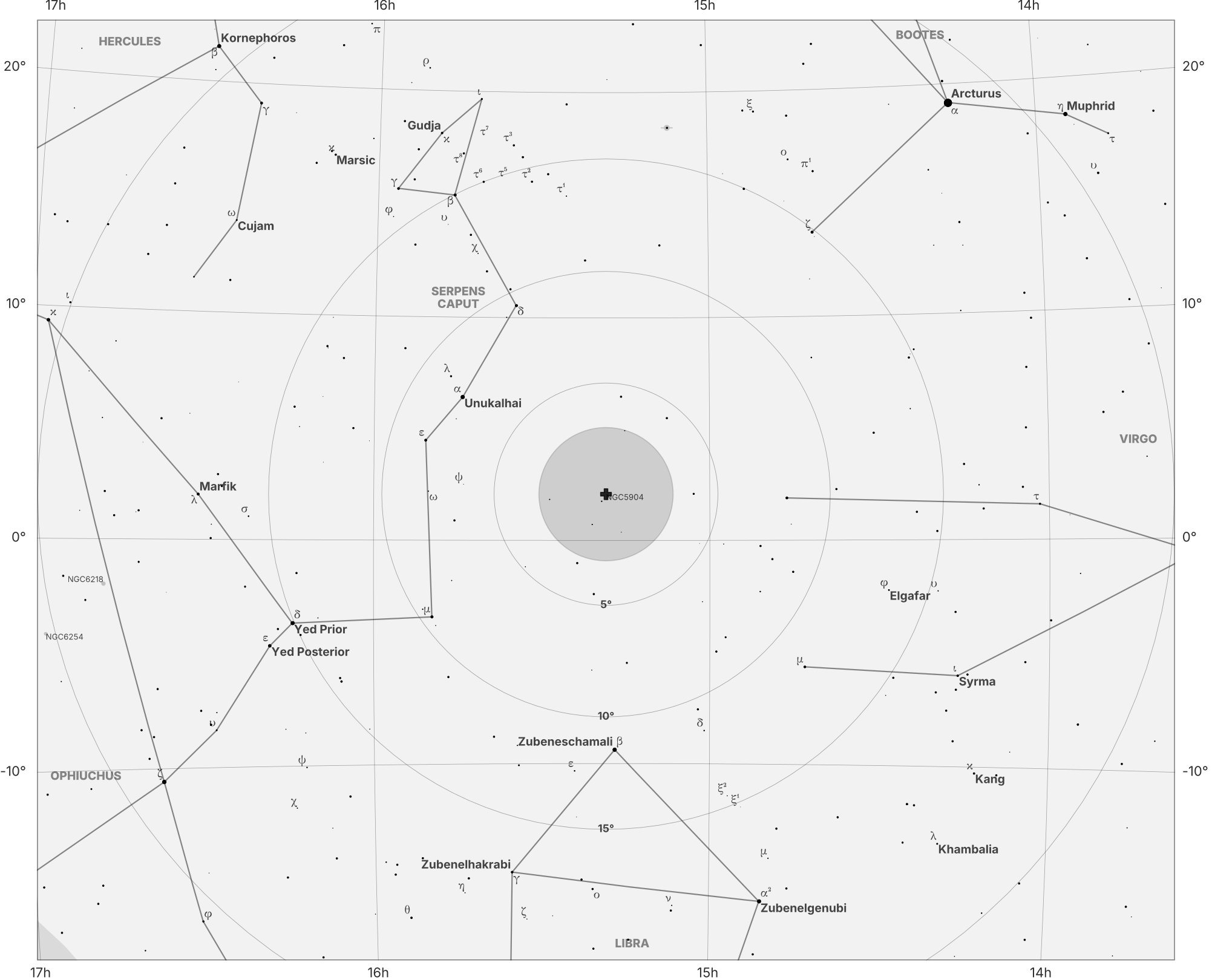
Finder map for Messier 5
Considered one of the finest globular clusters visible from the Northern Hemisphere, serving as a classic example of its type in astronomy textbooks and public outreach. Well-placed for observers in both hemispheres due to its proximity to the celestial equator. Best observed when it culminates high in the sky. Resolving individual stars within the extremely dense core requires high magnification, large aperture, and excellent seeing conditions.
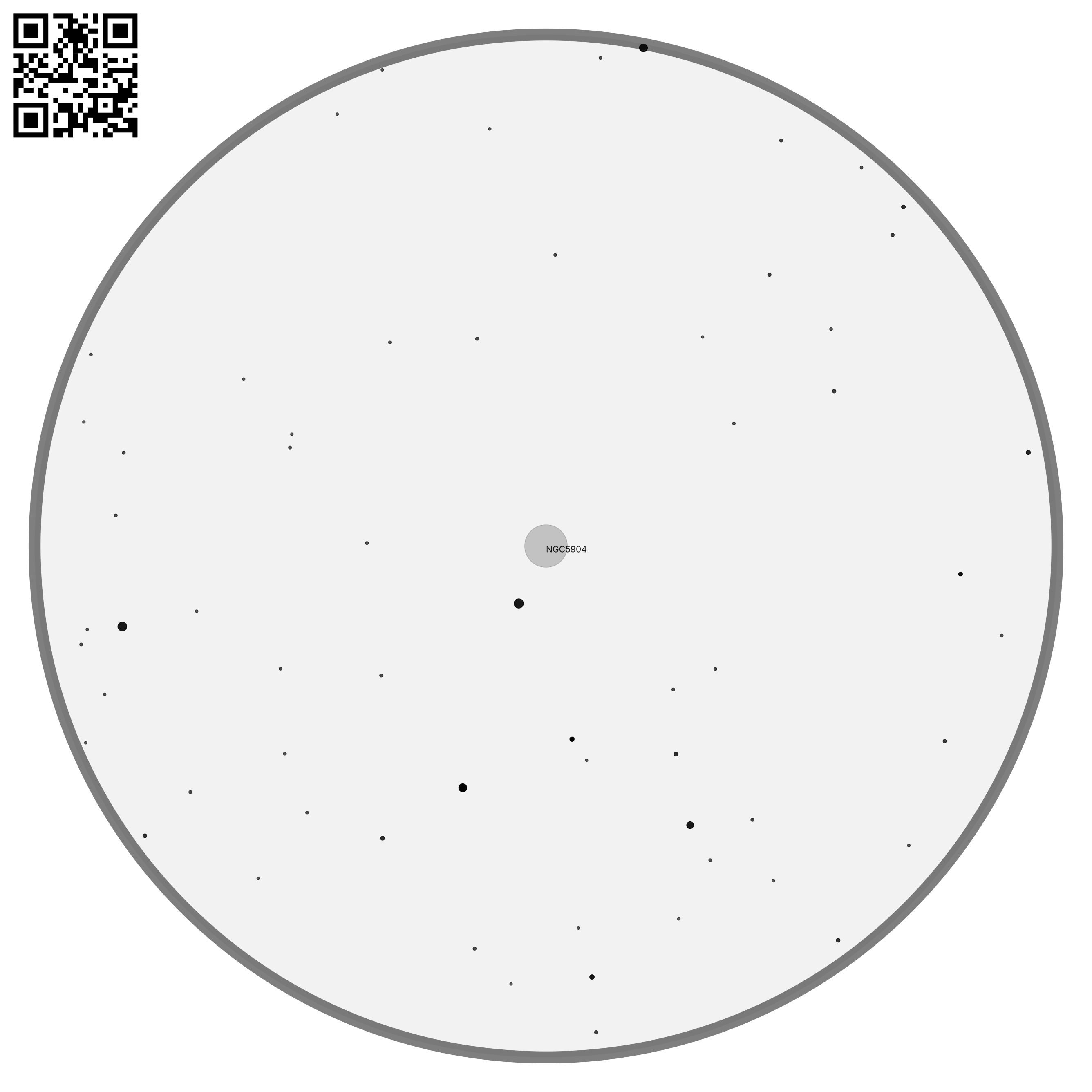
Finder scope & binocular view of Messier 5
| Property | Value |
|---|---|
| Common names | M5, Globular Cluster in Serpens |
| Catalog names | M 5, NGC 5904, Mel 133 |
| Type | Stellar Cluster |
| Subtype | Globular Cluster |
| Coordinates | 15h 18m 33.22s, +2° 04’ 51.70” |
| Season | April - June |
| Best month | Mid-May |
| Beginner friendly | Marginal |
| Visual reward | Moderate |
| Filters required | None |
| LP tolerance | High |
| Minimum equipment | Binoculars |
| Optimal equipment | Medium telescope |
| Magnitude | 5.7 |
| Size | 23.0 arcminutes x 23.0 arcminutes |
| Constellation | Serpens |
Observation Notes
Naked Eye
Marginally detectable to experienced observers under exceptionally dark and transparent skies (typically Bortle 1–2) as a very faint, star-like patch, often requiring averted vision.
Binoculars
Easily visible as a small, round, fuzzy glow, clearly non-stellar but without resolved stars.
Small Telescope
Appears as a bright central concentration surrounded by a hazy halo. The outer edges begin to show a grainy or mottled texture, hinting at stellar resolution.
Medium Telescope
Resolves large numbers of tiny pinprick stars around the periphery and across much of the cluster, while the dense core remains a brilliant, unresolved blaze.
Large Telescope
Provides extensive star resolution and a richly textured appearance, with pronounced granularity throughout most of the cluster. Subtle star chains and uneven density patterns may be noticed, but the innermost core remains densely packed and only partially resolved rather than fully broken into individual stars.