M92
4-8 inch Telescope • Globular Clusters Detailed
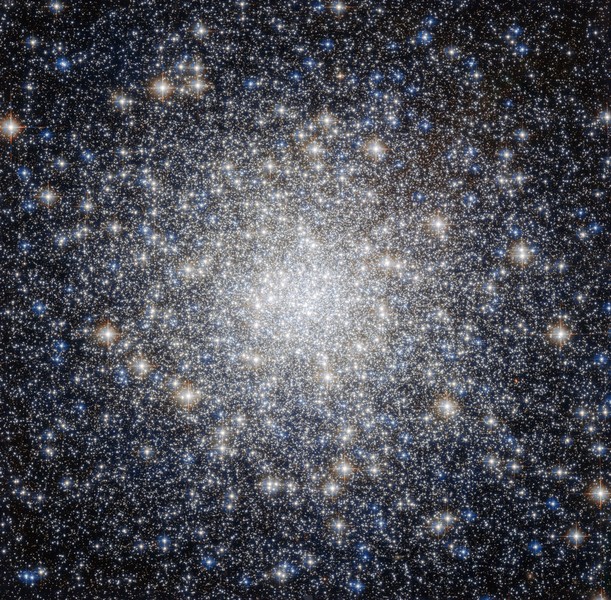
Image: ESA/Hubble & NASA
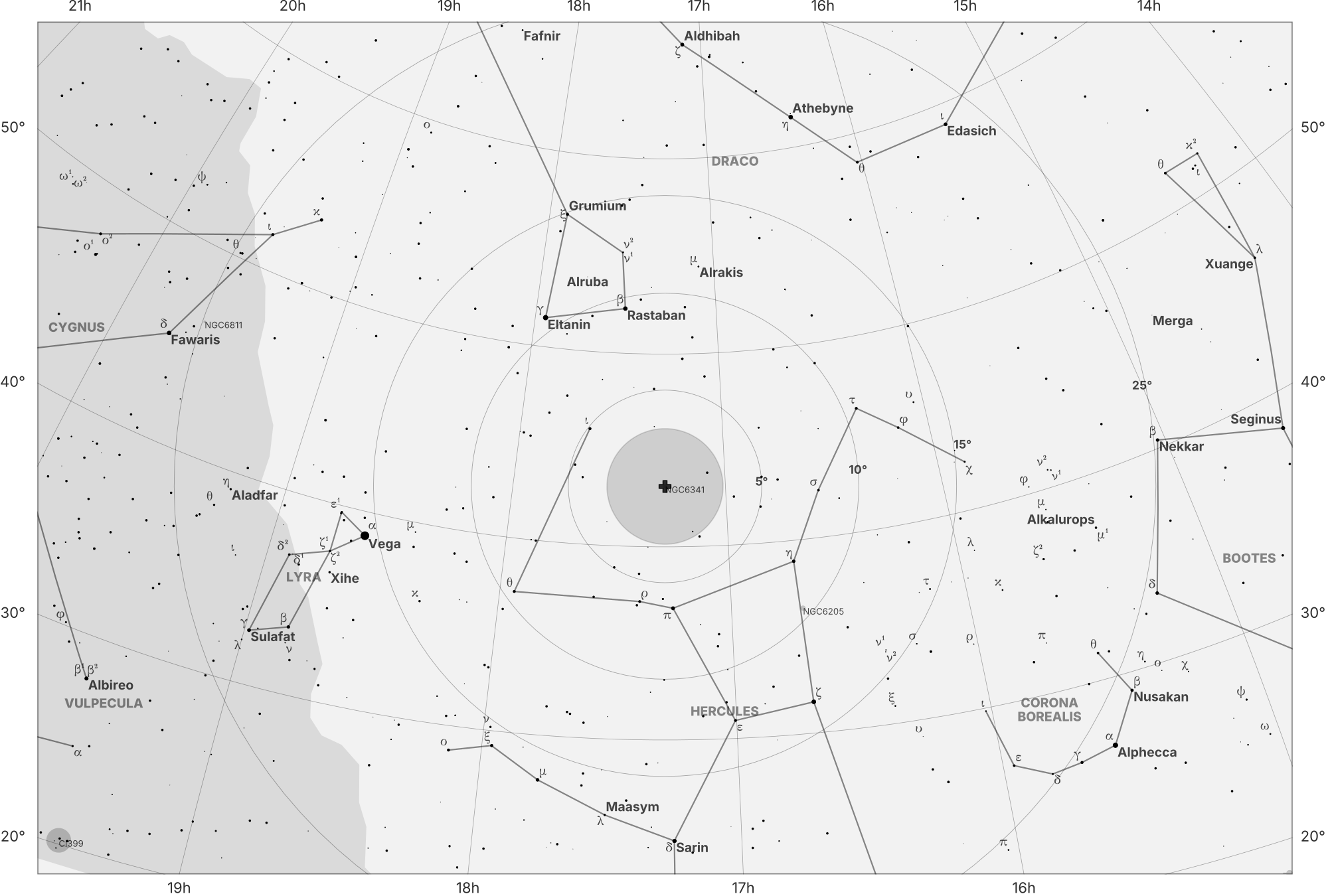
Finder map for M92
A classic ‘showpiece’ object for amateur astronomers, often viewed alongside its brighter neighbor M13. It serves as a textbook example of a dense, old globular cluster. Best observed when high in the sky to reduce atmospheric extinction and take advantage of steadier seeing for resolving stars. The main challenge is resolving stars as deeply toward the cluster’s intensely condensed core as possible. In 4–8 inch telescopes, the outer regions are well resolved, while the core remains only partially resolved, and the faint outer halo can be difficult to trace under less-than-ideal skies.
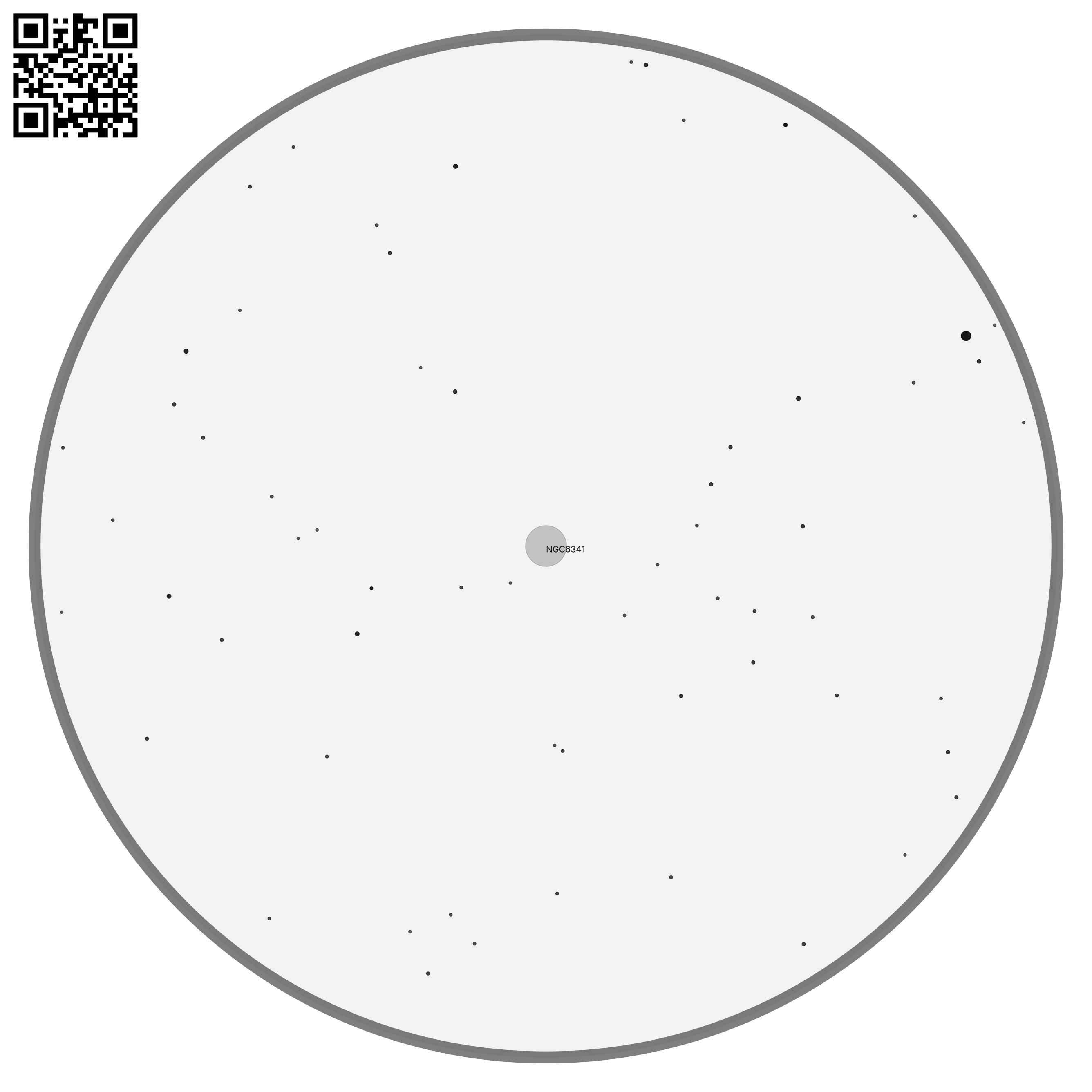
Finder scope & binocular view of M92
| Property | Value |
|---|---|
| Common names | Messier 92, Hercules Globular Cluster |
| Catalog names | M 92, NGC 6341, Mel 168 |
| Type | Stellar Cluster |
| Subtype | Globular Cluster |
| Coordinates | 17h 17m 07.39s, +43° 08’ 09.40” |
| Season | May - July |
| Best month | Mid-June |
| Beginner friendly | Yes |
| Visual reward | High |
| Filters required | None |
| LP tolerance | High |
| Minimum equipment | Small telescope |
| Optimal equipment | Medium telescope |
| Magnitude | 6.5 |
| Size | 14.0 arcminutes x 14.0 arcminutes |
| Constellation | Hercules |
Observation Notes
Naked Eye
Generally not visible; under pristine, very dark skies a few experienced observers report a barely perceptible, diffuse suspicion with averted vision, but naked-eye detection is rare and uncertain.
Binoculars
Easily visible as a small, bright, circular, fuzzy patch of light that is clearly non-stellar but unresolved.
Small Telescope
In 4–6 inch apertures, appears as a bright, compact globular with a strongly condensed core surrounded by a grainy halo. Under excellent conditions, a few of the brightest peripheral stars may be suspected with averted vision, while the core remains unresolved.
Medium Telescope
With 8–12 inches, numerous stars resolve around the outer regions, producing a finely sparkling appearance, while the core remains an intensely bright, unresolved mass.
Large Telescope
In apertures of roughly 14 inches and larger, stars are resolved well inward from the halo toward the center, giving the cluster a rich, densely packed appearance. The core remains extremely concentrated and only partially resolved, emphasizing stellar density rather than open structure.