Coathanger
Binoculars • Special Asterisms
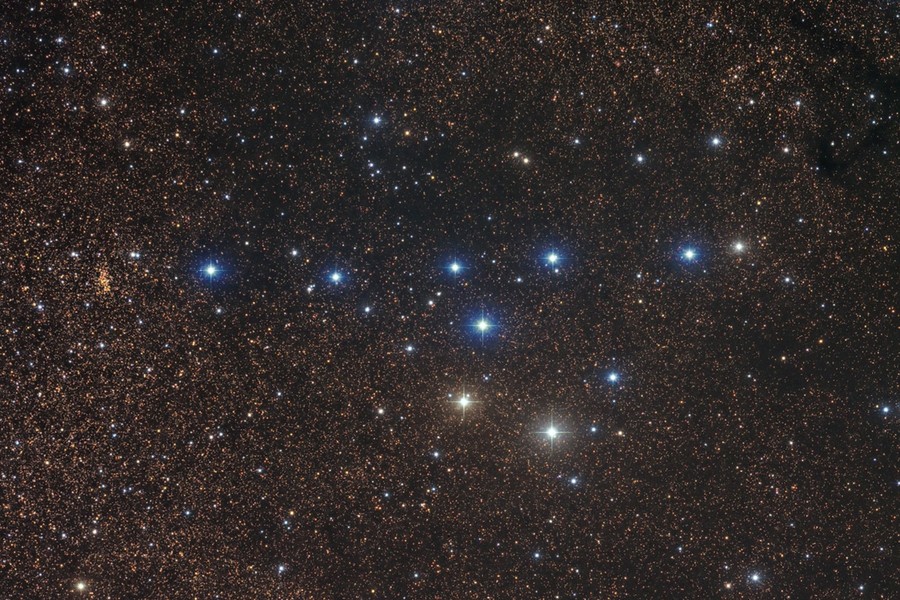
Image: Petr Novák
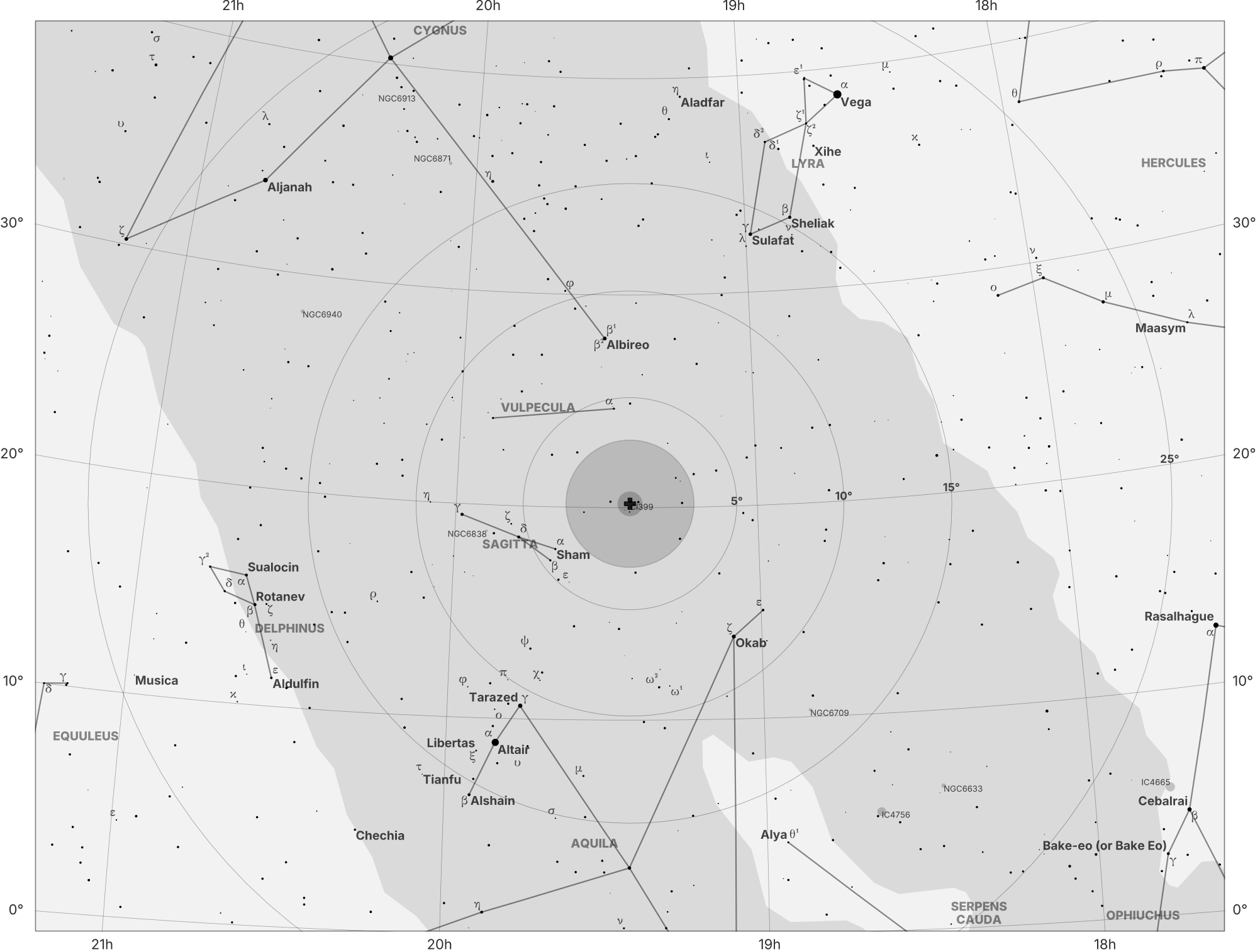
Finder map for Coathanger
A famous and beloved target for amateur astronomers, often one of the first objects shown to beginners due to its clear and recognizable shape in binoculars. Best observed when high in the sky to maximize contrast and minimize atmospheric extinction. Well placed for Northern Hemisphere observers during summer and early autumn. The main challenge is framing the entire object, as it is too large for most telescope eyepieces at typical magnifications.
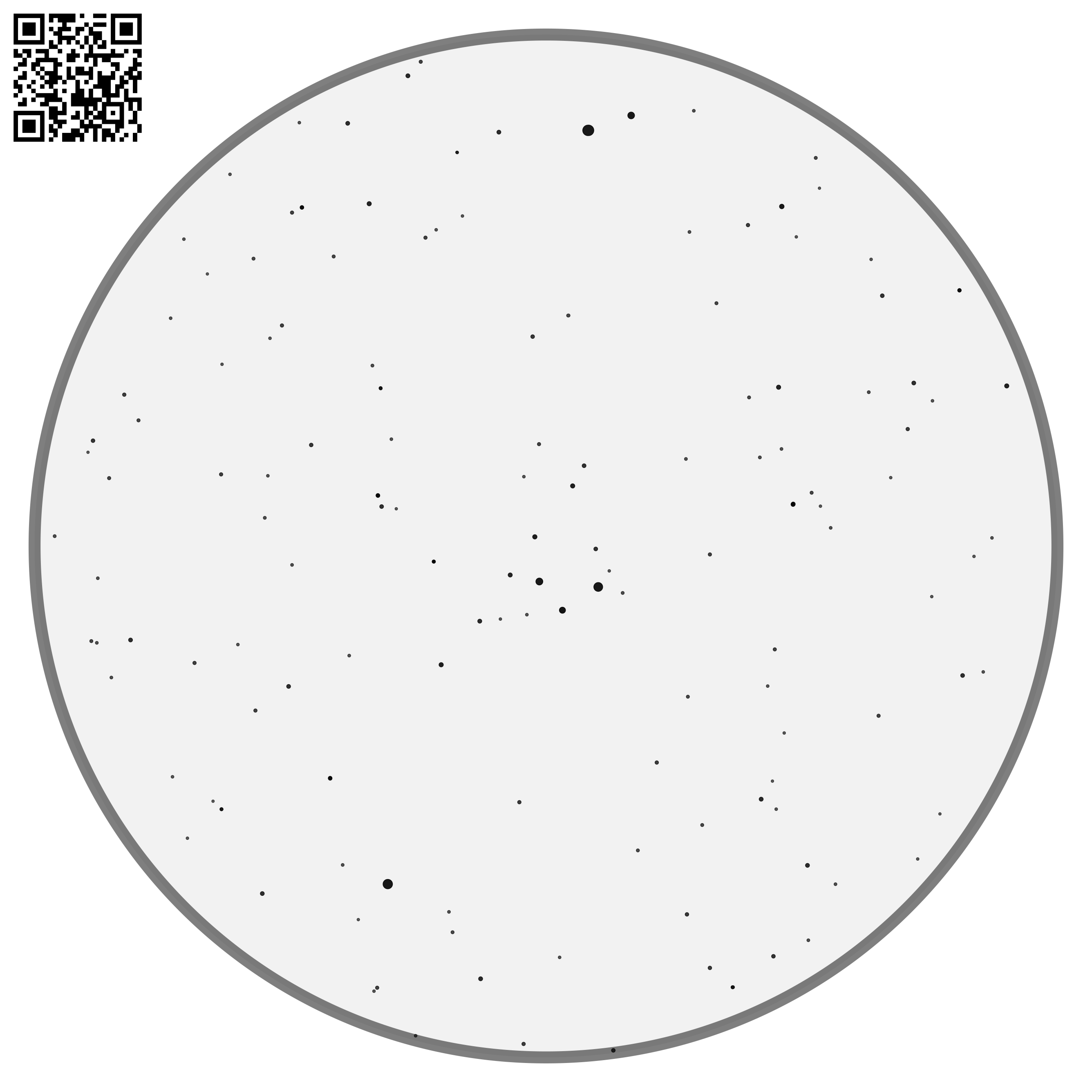
Finder scope & binocular view of Coathanger
| Property | Value |
|---|---|
| Common names | Brocchi’s Cluster, Al-Sufi’s Cluster |
| Catalog names | Cr 399 |
| Type | Stellar Cluster |
| Subtype | - |
| Coordinates | 19h 25m 23.9s, +20° 11’ 13.5” |
| Season | June - August |
| Best month | Mid-July |
| Beginner friendly | Yes |
| Visual reward | High |
| Filters required | None |
| LP tolerance | High |
| Minimum equipment | Naked eye |
| Optimal equipment | Binoculars |
| Magnitude | - |
| Size | - |
| Constellation | Vulpecula |
Observation Notes
Naked Eye
Visible under dark, transparent skies (roughly Bortle 3 or better) as a faint but recognizable hook- or hanger-shaped chain of stars. The shape is subtle and easily missed in light-polluted skies, where only a few brighter members may be seen.
Binoculars
The ideal instrument. The full coathanger shape snaps into view immediately and unmistakably against the rich Milky Way background, making this one of the most rewarding binocular asterisms.
Small Telescope
Requires the lowest possible magnification and a wide-field eyepiece to frame the entire pattern. At higher powers, the asterism breaks apart and loses its visual identity.
Medium Telescope
Not recommended for viewing the asterism as a whole. Better suited for examining individual member stars, including a few attractive optical double stars.
Large Telescope
Unsuitable for viewing the asterism as a pattern. Can be used to study individual stars (colors, separations), but this offers limited aesthetic reward.