Kemble’s Cascade
Binoculars • Special Asterisms
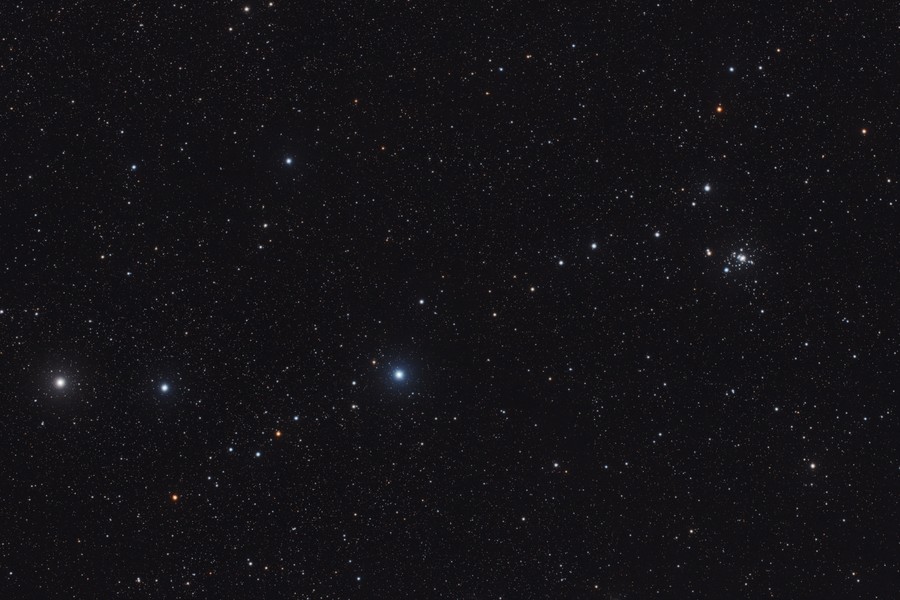
Image: Nielander
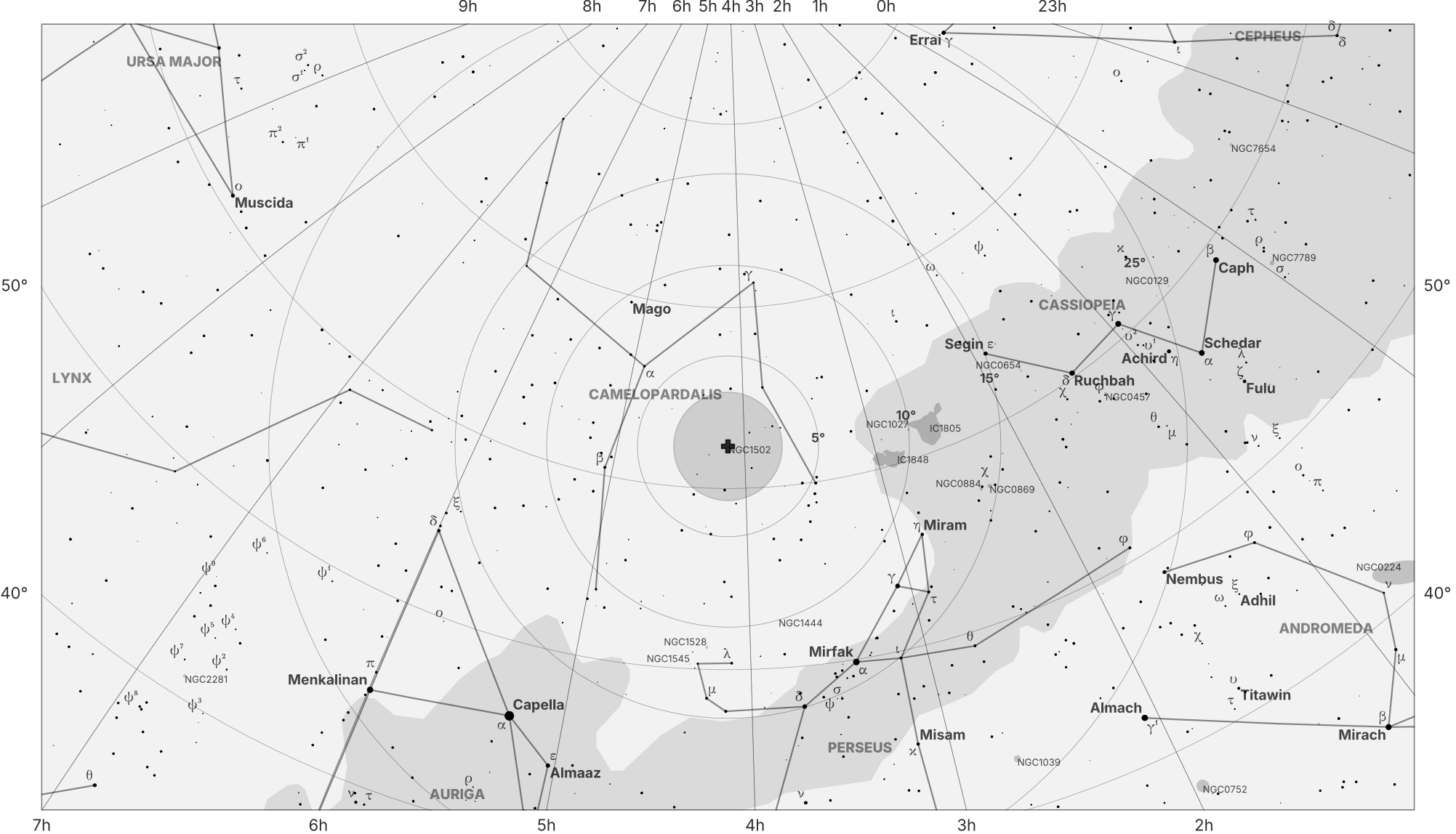
Finder map for Kemble's Cascade
A beloved showpiece object for amateur astronomers, demonstrating that significant discoveries and beautiful sights are accessible with modest equipment. It is a modern, well-known asterism. Circumpolar for most mid-northern latitudes, making it visible year-round. Best observed when it is highest in the sky. Distinguishing the full extent of the chain from the background Milky Way star field. Resolving the open cluster NGC 1502 at its southern end in smaller instruments.
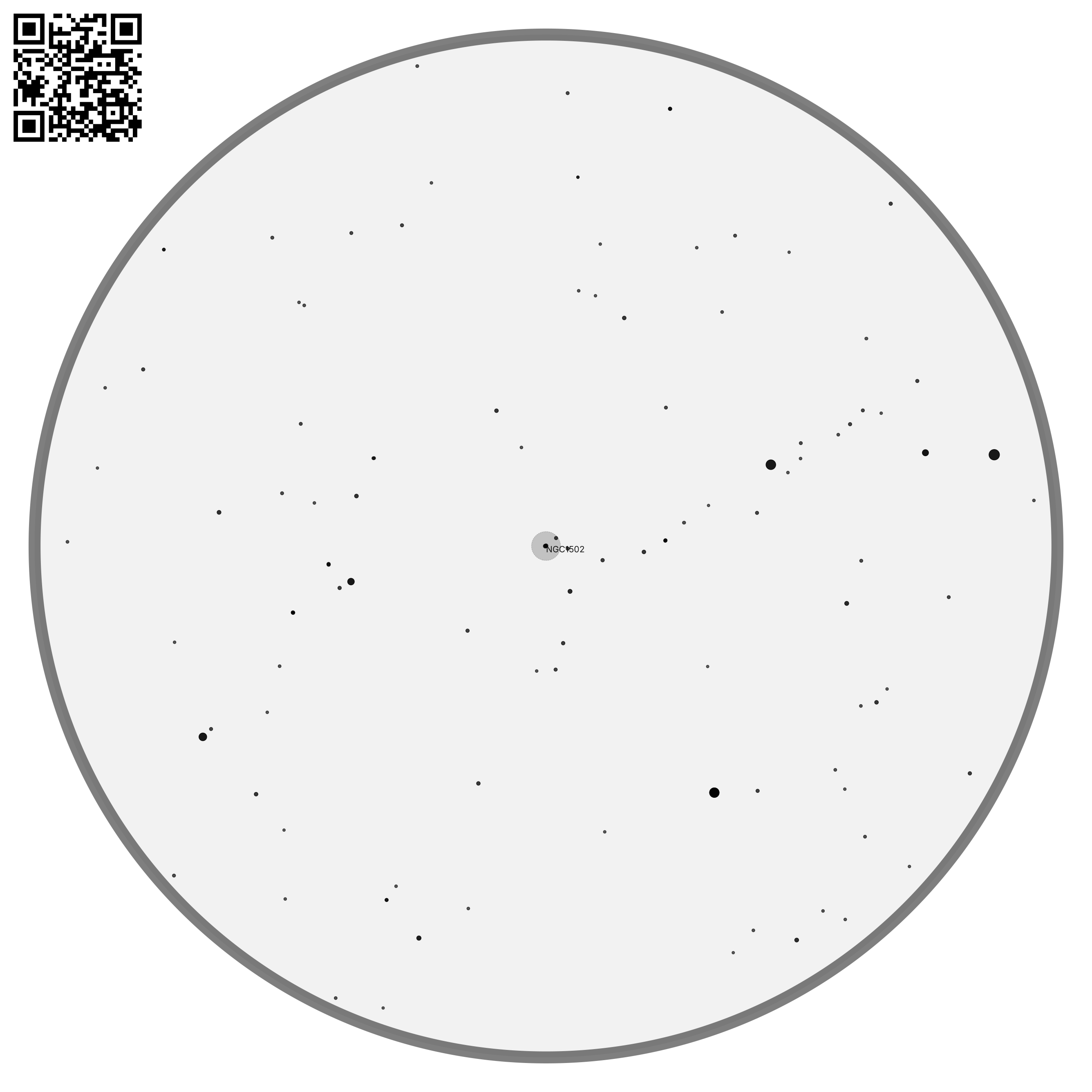
Finder scope & binocular view of Kemble's Cascade
| Property | Value |
|---|---|
| Common names | Kemble 1 |
| Catalog names | NGC 1502, Cr 45 |
| Type | Stellar Cluster |
| Subtype | Open Cluster |
| Coordinates | 04h 07m 52.2s, +62° 19’ 48.9” |
| Season | November - January |
| Best month | December |
| Beginner friendly | Yes |
| Visual reward | Moderate |
| Filters required | None |
| LP tolerance | High |
| Minimum equipment | Binoculars |
| Optimal equipment | Small telescope |
| Magnitude | - |
| Size | - |
| Constellation | Camelopardalis |
Observation Notes
Naked Eye
The cascade itself is not visible to the naked eye. From very dark sites, one or two brighter stars in the general area (including mag ~5 HD 24479) may be glimpsed, but no linear pattern is apparent.
Binoculars
The ideal instrument. Kemble’s Cascade appears as a striking, nearly straight chain of stars stretching roughly 2.5–3 degrees across the field, terminating in the compact open cluster NGC 1502, which appears as a small, tight stellar knot rather than a diffuse glow.
Small Telescope
Low power and a wide-field eyepiece provide an excellent view of the terminal region of the cascade, with NGC 1502 clearly resolved into several bright stars. Higher magnification improves the cluster view but sacrifices the cascade’s overall geometry.
Medium Telescope
Very good for resolving NGC 1502 into individual members and for observing the multiple star system Struve 485 (SZ Camelopardalis) within the cluster. Also useful for examining subtle color differences among the brighter stars.
Large Telescope
Not suitable for viewing the cascade as a whole due to its large angular extent. Can be used to study individual stars or faint cluster members, but the visual impact is diminished.