Job’s Coffin
Naked Eye • Asterisms
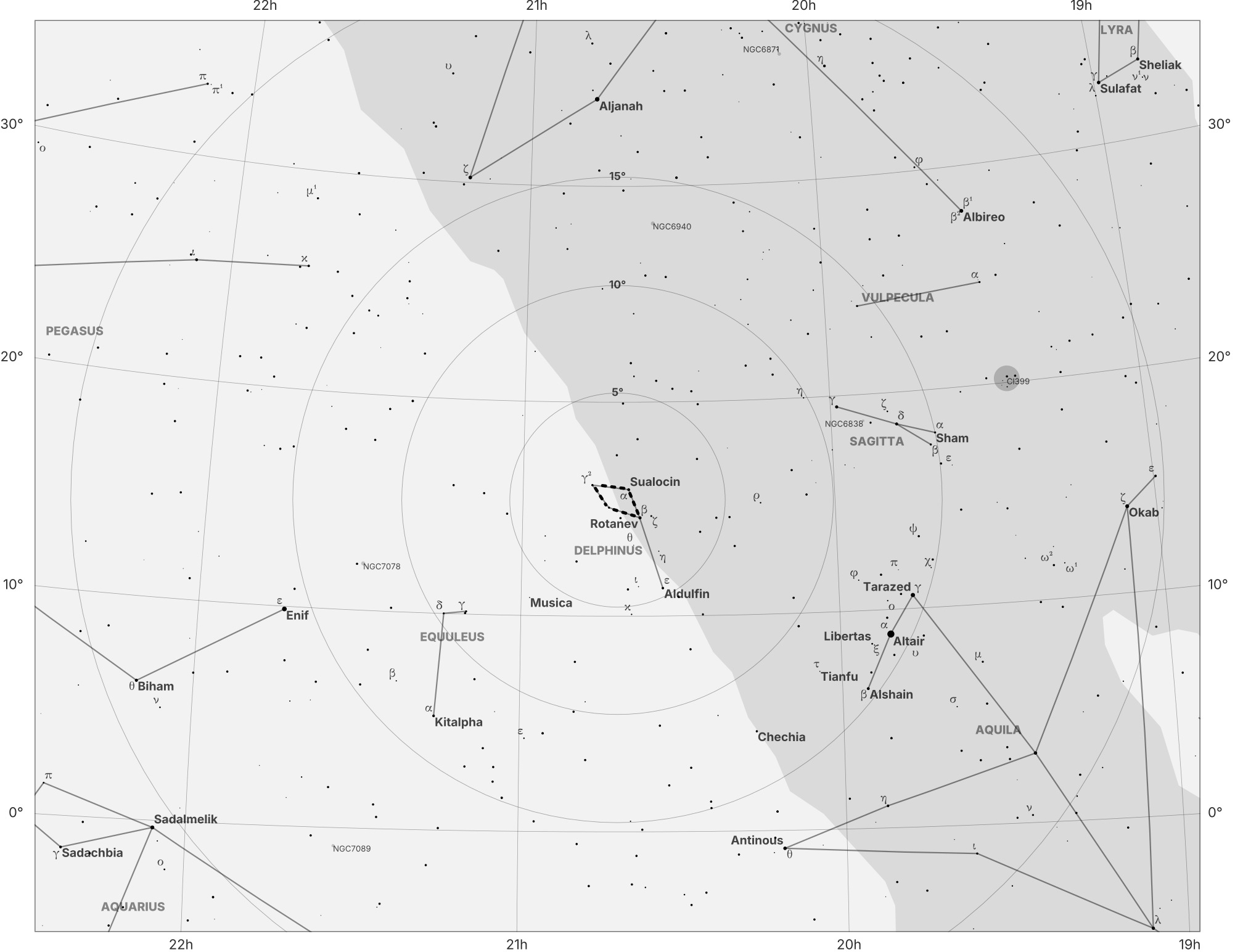
Finder map for Job's Coffin
n Greek mythology, the constellation Delphinus represents the dolphin that rescued the musician Arion. The asterism has also been known historically in English tradition as “Job’s Coffin,” a folk name of uncertain origin with no securely established biblical connection. Best viewed when well clear of the horizon, where its compact pattern is easier to recognize. Splitting the beautiful double star Gamma Delphini is a rewarding challenge for small telescopes. Resolving the closer components of Rotanev (Beta Del) is an advanced challenge
| Property | Value |
|---|---|
| Common names | Delphinus Diamond |
| Catalog names | - |
| Type | Asterism |
| Subtype | - |
| Coordinates | 20h 41m 48.0s, +15° 25’ 30.2” |
| Season | July - September |
| Best month | August |
| Beginner friendly | Yes |
| Visual reward | High |
| Filters required | None |
| LP tolerance | Medium |
| Minimum equipment | Naked eye |
| Optimal equipment | Naked eye |
| Magnitude | - |
| Size | - |
| Constellation | Delphinus |
Observation Notes
Naked Eye
A compact and easily recognized diamond-shaped group of four stars of roughly magnitude 3.6–4.9, forming the body of the dolphin in the small constellation Delphinus. Its tight geometry makes it stand out despite the constellation’s modest size.
Binoculars
Frames the entire asterism cleanly, making the diamond pattern crisp and unmistakable. The surrounding star field is relatively sparse compared to the Milky Way, and no significant double stars are resolved at this scale.
Small Telescope
Easily splits Gamma Delphini into a beautiful color-contrast pair, often described as gold and bluish or blue-green, even at modest magnification. This is the principal telescopic highlight of the asterism.
Medium Telescope
Enhances the color contrast of Gamma Delphini. Beta Delphini (Rotanev) remains a difficult, very close pair and is not reliably split except under excellent seeing and with sufficient aperture.
Large Telescope
Offers little added value for the asterism itself, but provides the best chance to resolve the tight components of Beta Delphini and to study the multiple-star systems within the group under steady atmospheric conditions.