15 Monocerotis
4-8 inch Telescope • Challenging Doubles
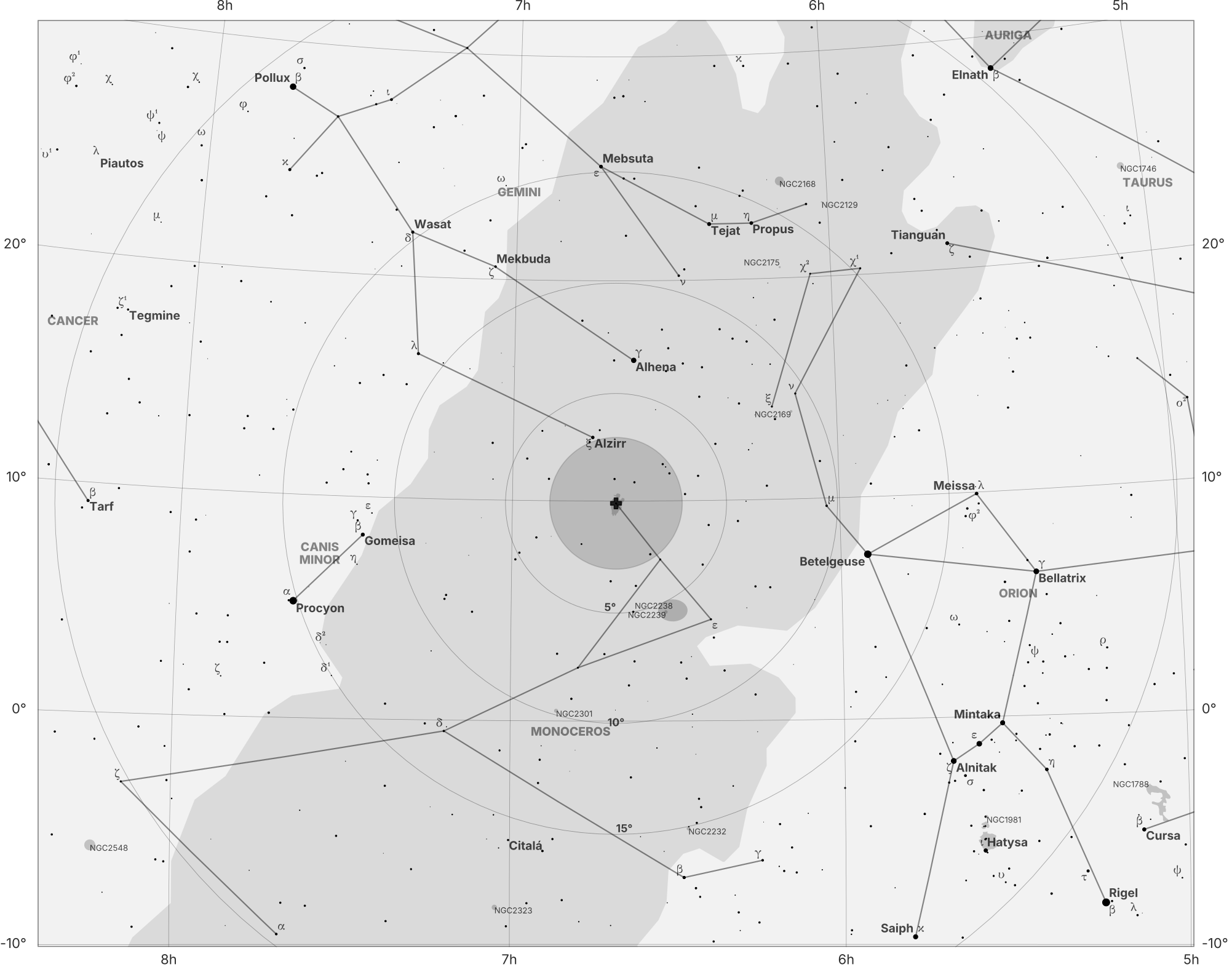
Finder map for 15 Monocerotis
S Monocerotis is the dominant star of the NGC 2264 region, commonly known as the Christmas Tree Cluster, a well-known winter object for Northern Hemisphere observers. The nearby Cone Nebula contributes to the region’s fame, primarily through astrophotography. Best observed when well above the horizon to reduce atmospheric extinction and improve seeing, particularly when examining its multiple-star structure. Resolving the fainter companions of S Monocerotis can be difficult due to the system’s brightness contrast and the glare of its dominant primary star. Careful focusing and steady seeing are required to distinguish the surrounding components in small apertures.
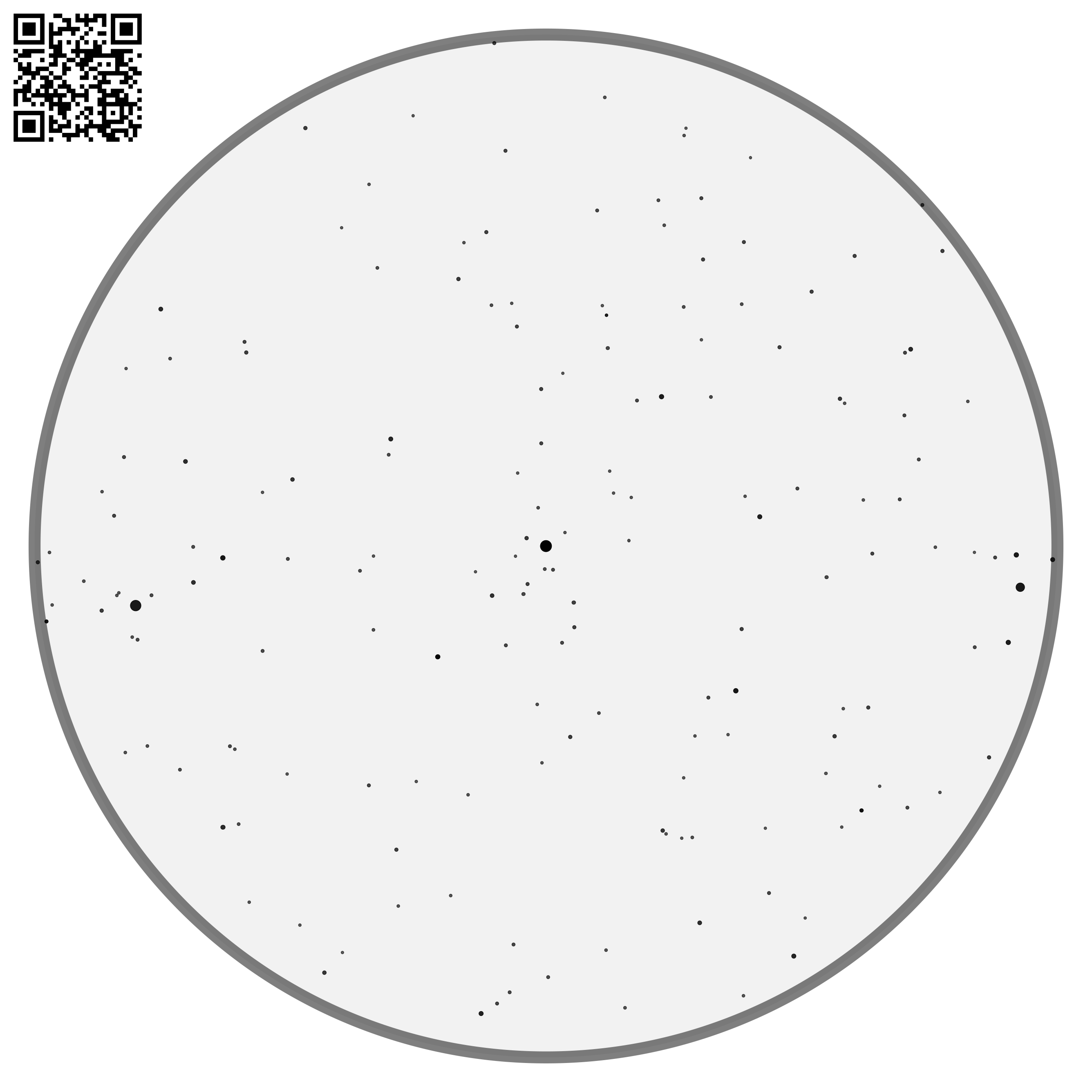
Finder scope & binocular view of 15 Monocerotis
| Property | Value |
|---|---|
| Common names | S Monocerotis, Christmas Tree Cluster Star |
| Catalog names | - |
| Type | Main Sequence Star |
| Subtype | Be Star |
| Coordinates | 6h 40m 58.66s, +9° 53’ 44.72” |
| Season | December - February |
| Best month | January |
| Beginner friendly | No |
| Visual reward | Moderate |
| Filters required | None |
| LP tolerance | High |
| Minimum equipment | Medium telescope |
| Optimal equipment | Medium telescope |
| Magnitude | 4.7 |
| Size | - |
| Constellation | Monoceros |
Observation Notes
Naked Eye
Visible as a moderately bright star marking the southern end of the Christmas Tree Cluster (NGC 2264). It is easily identified even from suburban skies.
Binoculars
Frames the Christmas Tree Cluster well, revealing its characteristic triangular outline. S Monocerotis shines prominently at the base of the pattern, but no duplicity is visible.
Small Telescope
Reveals numerous cluster members scattered across the field. S Monocerotis appears as an intensely bright blue-white star. The star itself is not resolvable into multiple components in amateur telescopes.
Medium Telescope
The surrounding star field becomes richer, but any associated nebulosity remains extremely subtle. Visual detection of the Fox Fur Nebula is uncertain and should not be expected except possibly as a vague, uneven brightening under excellent skies.
Large Telescope
Under exceptionally dark, transparent skies and with very large apertures (roughly 18 inches or more), highly experienced observers may suspect the presence of the Cone Nebula as a very faint, dark intrusion against the background glow. This is an extreme visual challenge and remains an uncertain and rare observation.